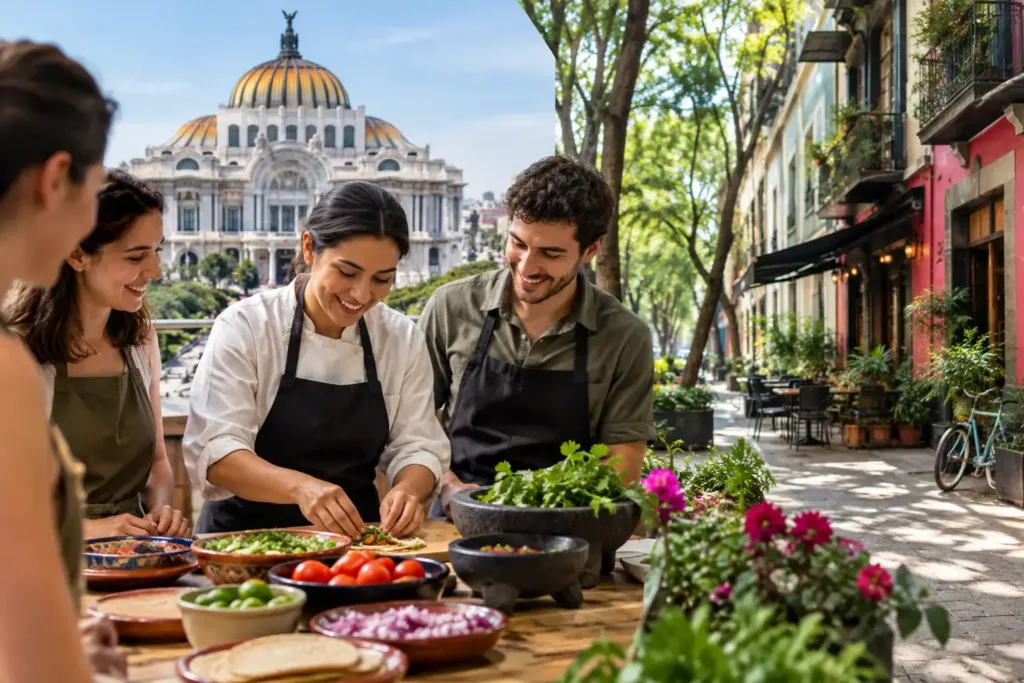
Mexico City reveals itself at the market counter: a vendor pressing a ripe avocado into your palm, the sharp green scent of cilantro, a stack of blue-corn tortillas still warm from the comal. The best CDMX cooking classes begin there, before the apron and the recipe card, with a closer look at the ingredients that give Mexican food its depth. For travelers who prefer to understand a place through its everyday rituals, a cooking class can turn one meal into a much richer memory.
A useful class is not simply a way to learn how to make tacos at home. It is an invitation into the city’s food culture: how cooks balance acid, heat, fat, and texture; why one chile is toasted and another is soaked; why salsa is rarely an afterthought. Choose well, and you will leave with practical skills, a fuller appreciation for regional cooking, and a new confidence ordering from menus around town.
How to Choose CDMX Cooking Classes
The first decision is not which dish you want to make. It is what kind of day you want to have. Some classes are intimate, hosted in a home kitchen with a small group and a long lunch. Others are polished workshops in dedicated cooking studios, where the pace is more structured and techniques are explained step by step. Market-to-table experiences add a neighborhood walk and ingredient shopping, which can be especially rewarding if it is your first visit to the city.
A market visit is worth prioritizing when the teacher has a real relationship with the vendors and can explain what is in season. A quick pass through a market for photos is pleasant, but it is not the same as learning why a particular squash blossom, herb, or dried chile has made it into that day’s menu. Ask whether shopping is part of the class, how much time is spent at the market, and whether the menu changes with availability.
Class size changes the experience, too. Groups of six to 10 usually offer a social, energetic afternoon, while smaller classes provide more hands-on time at the stove. Larger groups can be fun for friends or team gatherings, but they may involve more demonstration than cooking. Neither approach is automatically better. It depends on whether you want a lively shared meal or detailed guidance on your knife work, masa handling, and sauce technique.
Location matters more than it may seem. A class near Roma, Condesa, or the historic center can fit easily around a day of galleries, bookstores, and dinner plans. A session farther south may offer a quieter residential perspective or access to a specific market, but build in travel time. Mexico City traffic can turn a simple cross-city plan into a rushed start, especially on weekday afternoons.
Look for a Menu With a Point of View
Mexico is not one cuisine, and the most memorable classes make that clear. You may cook dishes rooted in Oaxaca, Puebla, Yucatán, the Bajío, Veracruz, or Mexico City’s own street-food traditions. A menu built around a single region can be more revealing than a broad sampler of familiar favorites. It gives the instructor room to explain the ingredients, methods, and history behind a dish rather than moving quickly through a greatest-hits list.
That said, a classic Mexican menu can still be excellent when it is taught with care. Fresh tortillas, several salsas, a slow-cooked filling, and a proper dessert are more than enough for a satisfying afternoon. What matters is whether the class teaches the decisions behind the recipe. You should come away understanding when to char tomatoes instead of boil them, how to taste for salt after reducing a sauce, and how chile heat shifts once it is toasted.
Be cautious of menus that promise to cover everything from mole to tamales to ceviche in a few hours. Those dishes deserve time. Mole, in particular, is a broad family of sauces with regional identities and layered preparation. A good instructor may teach a shorter, approachable version, but should be honest about what has been adapted for a class setting.
The value of hands-on cooking
Read the description closely for verbs. “Prepare,” “grind,” “shape,” and “cook” usually signal real participation. “Watch,” “learn about,” and “enjoy a tasting” may point to a more demonstrative format. Demonstrations are useful when a technique is complex or time-consuming, but travelers looking to bring skills home should choose classes where each guest has a role.
Masa is a good example. Watching someone press a tortilla is one thing; feeling when the dough is too dry, too sticky, or perfectly soft is another. The same is true of salsa made in a molcajete, where pressure and rhythm affect the final texture. These small tactile details are difficult to absorb from a screen or cookbook.
What a Market Class Can Teach You
Markets are not museums, and that is precisely the point. They are working places with vendors who know their products, shoppers with errands to run, and a constant flow of conversation. A respectful cooking class helps you move through that environment with curiosity rather than treating it as a backdrop.
You may encounter produce that is unfamiliar: chayote, nopales, huitlacoche, hoja santa, mamey, or a spectrum of chiles that ranges far beyond jalapeños. The goal is not to memorize every name in one morning. It is to start noticing how Mexican cooks build flavor with fresh herbs, dried peppers, toasted seeds, sour fruits, and deeply seasoned stocks.
The best teachers also give context without turning the outing into a lecture. They might explain the difference between a taco made with a handmade tortilla and one made from a packaged product, or point out why certain ingredients are tied to a holiday, a region, or a family tradition. Food history is most engaging when it arrives naturally, while you are tasting a spoonful of salsa or choosing tomatoes for the pot.
Practical Details That Make the Day Better
Book a class early in your trip if possible. The experience gives you a useful vocabulary for the rest of your meals, whether you are reading a menu in Roma or stopping at a neighborhood fonda for lunch. You may recognize an ingredient you saw at the market or understand why a server asks how spicy you want your salsa.
Tell the host about dietary needs before confirming. Vegetarian options are often possible, and many classes can adapt for pescatarians or guests who avoid gluten, but Mexican cooking uses ingredients such as lard, chicken stock, cheese, and dried shrimp in ways that are not always obvious. Vegan cooking can be especially rewarding with the right instructor, though it may require a menu designed around plants from the start rather than simple substitutions.
Wear comfortable shoes for market walks and avoid scheduling a major meal immediately afterward. Most classes end with a generous lunch, often with aguas frescas, beer, or a small pour of mezcal. Arrive hungry, but not rushed. The shared table is usually where the best conversation happens.
A little Spanish helps, but fluency is not required. Many instructors teach in English or bilingually, and the tactile nature of cooking makes communication easier than visitors expect. Still, learning a few ingredient words is part of the pleasure. Ask questions, taste often, and let the instructor know if you are sensitive to spice rather than assuming every dish will be fiery.
Bring the Lesson Back Into the City
After a cooking class, keep the learning going in small ways. Order a dish you prepared at a restaurant and notice how another cook approaches it. Visit a tortillería and compare the fragrance and texture of fresh corn tortillas. Pick up a packet of dried chiles or a jar of salsa macha to take home, following current customs rules for your destination.
The point is not to recreate Mexico City perfectly in your own kitchen. Some ingredients travel poorly, and the city’s food is inseparable from its markets, climate, labor, and daily rhythm. Instead, bring home the habits: toast before blending, taste before serving, respect the ingredient, and make room at the table for a long lunch. That is a lesson worth planning a day around.