
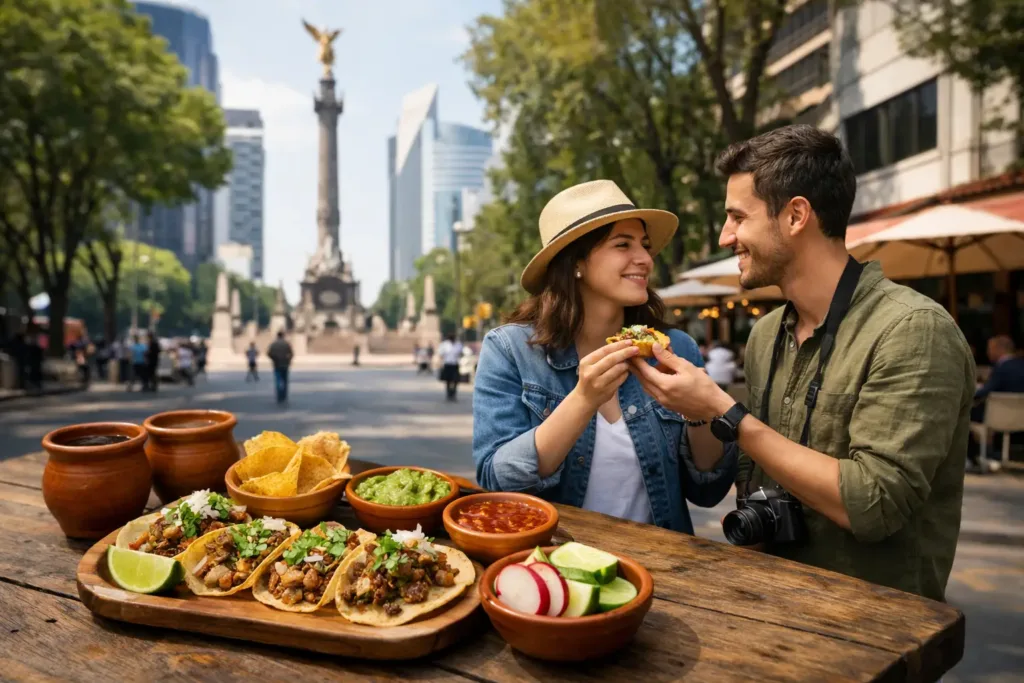
The best CDMX food tours do more than point you toward a famous taco. They give shape to a city that can feel wonderfully overwhelming at first bite: the taco stand with a perfect salsa balance, the market counter where regulars order without looking at a menu, the family recipe that only makes sense once someone explains its history. For travelers who want to feel the rhythm of Mexico City rather than collect restaurant reservations, a thoughtful food tour can be one of the smartest first plans on the itinerary.
Mexico City is not a single food scene. It is thousands of daily rituals happening across neighborhoods, mercados, sidewalks, bakeries, and dining rooms. The right tour helps you arrive with curiosity and leave with the confidence to keep eating well on your own.
What Makes CDMX Food Tours Worth It
A good tour is not simply a tasting menu in motion. It is a shortcut to context. Mexico City’s food culture is expansive, regional, and deeply personal, shaped by migration, Indigenous ingredients, family businesses, and the changing pace of city life. You might taste a tlacoyo made from blue corn, then learn why its shape matters. You might stand in front of a trompo of al pastor and hear how Lebanese migration helped shape one of the city’s most loved tacos.
That context changes the experience. A dish becomes more memorable when you know how it fits into the neighborhood around it.
Food tours are especially helpful early in a trip. They answer practical questions that guidebooks often skip: Which salsa is mild? How do you order at a busy stand? What time should you arrive at a market? Which dishes are best for breakfast, and which are worth saving for late night? A local guide can also introduce places that are easy to pass without noticing, particularly in neighborhoods where the most rewarding food is tucked behind an unassuming counter or reached through a market aisle.
There is a trade-off, of course. A tour follows a schedule, and even the most relaxed group experience will not have the complete freedom of an afternoon spent wandering. If you already know the city well and prefer to linger over long meals, a self-guided day may suit you better. But for a first or second visit, a tour can provide a strong foundation without turning the day into a checklist.
Choose a Tour by Neighborhood, Not Just by Menu
The strongest food experiences in CDMX are rooted in place. Before booking, consider which part of the city you want to understand more deeply, rather than choosing only by the number of tastings promised.
Roma and Condesa for a modern local lens
Roma and Condesa are often associated with design-forward cafés, natural wine, polished dining rooms, and a creative crowd, but their food story has more layers than their most photographed tables. A well-curated walk here can move between old-school bakeries, street snacks, neighborhood markets, and contemporary kitchens that reinterpret Mexican ingredients with real respect.
This is a good fit for travelers who want a mix of familiar ease and local texture. It is also a practical first-day choice if you are staying nearby, working remotely, or easing into the city’s pace. The best routes do not treat the neighborhood as a trend. They show how its everyday food traditions sit alongside its newer restaurant culture.
Centro Histórico for history on the plate
In Centro, every few blocks can shift the mood of the day. There are long-standing cantinas, sweet shops, street stalls, and markets serving people who work in the historic core. Tours here tend to carry more history, from pre-Hispanic ingredients and colonial-era foodways to the evolution of the city’s public markets.
Come hungry and wear comfortable shoes. This area is best for visitors who enjoy stories as much as snacks, and who do not mind a busier, more sensory route. It can feel intense at peak hours, which is precisely why an experienced guide is valuable: they can help the neighborhood feel legible rather than chaotic.
Markets for the widest range of flavors
A market-focused tour is often the fastest way to understand how Mexico City eats. Markets are where you see the everyday ingredients behind the dishes: baskets of chiles, piles of herbs, fresh tortillas, prepared moles, tropical fruit, and stalls devoted to one regional specialty.
The experience is less polished than a restaurant crawl, and that is part of the point. Markets are working spaces first. Expect narrow aisles, quick service, and plenty of sounds and smells competing for your attention. If you are curious about ingredients, regional cooking, and the city’s daily routines, this is usually the route to choose.
What You Might Eat Along the Way
The exact menu should remain a little flexible. Freshness, seasonality, weather, and a vendor’s schedule matter more than a fixed promise. Still, many CDMX food tours introduce a balance of street food, market dishes, sweets, and drinks.
Tacos are an obvious part of the picture, but they are not one thing. Suadero, al pastor, canasta, guisado, and barbacoa each come with their own texture, timing, and ideal setting. Beyond tacos, look for quesadillas made with fresh masa, tamales, chilaquiles, esquites, pambazos, tortas, and antojitos such as sopes or tlacoyos.
Drinks deserve the same attention. A cup of atole, a fresh agua fresca, a coffee prepared with Mexican beans, or a small pour of mezcal can open another conversation about regional ingredients and tradition. Not every tour includes alcohol, and that can be a good thing if you want to keep your palate clear for the food. If tasting mezcal is a priority, choose a route where it is thoughtfully integrated rather than added as a generic finale.
Save room for sweets. Pan dulce, flan, churros, fruit with chile and lime, and traditional candies each tell a different story about the city’s appetite for comfort, celebration, and contrast.
How to Get More From the Experience
Arrive with an appetite, but do not skip breakfast so aggressively that you stop enjoying the food halfway through. A light meal beforehand is usually enough, especially if the route begins late morning. Wear shoes made for walking, bring water, and let your guide know about allergies or dietary restrictions well in advance.
Vegetarian and vegan travelers can eat beautifully in Mexico City, but flexibility helps. Corn, beans, squash blossoms, mushrooms, nopales, and seasonal vegetables appear everywhere, yet lard, cheese, broths, and shared cooking surfaces are common. A tour that advertises dietary accommodations should be able to explain what that means in practice. If you have a serious allergy, ask direct questions before booking rather than assuming a dish can be easily adjusted.
The most useful question you can ask a guide is not “What is the best restaurant in the city?” Mexico City has too many good answers for that. Ask where they take their friends for a particular craving, which market stall they return to, or what they would order if they had only one free lunch nearby. Specific questions lead to specific recommendations, and those are the ones you will remember.
It also helps to resist the urge to photograph every plate before tasting it. Take the photo if you want it, then pay attention to the details: the temperature of the tortilla, the texture of the salsa, the way a vendor moves through a crowded lunch rush. Food is one of the most immediate ways to understand a neighborhood, and it asks for a little presence.
Turn One Tour Into a Better Week of Eating
The real value of a food tour often arrives after it ends. Keep a short note on your phone with the names of dishes you loved, the markets you want to revisit, and any ordering tips you learned. Return to one place independently. Order the thing that looked good at the next table. Sit at the counter when there is one.
At Casa Aimée, we believe the most lasting Mexico City memories are built through small local habits: a morning coffee you return to, a favorite taquería after an evening walk, a market lunch that becomes part of your route. Let a food tour introduce the city, then leave enough space for the city to surprise you on its own terms.
The best meal may not be the most famous one. It may be the second visit to a modest stall, when you know what to order, recognize the rhythm of the line, and feel just a little less like you are passing through.