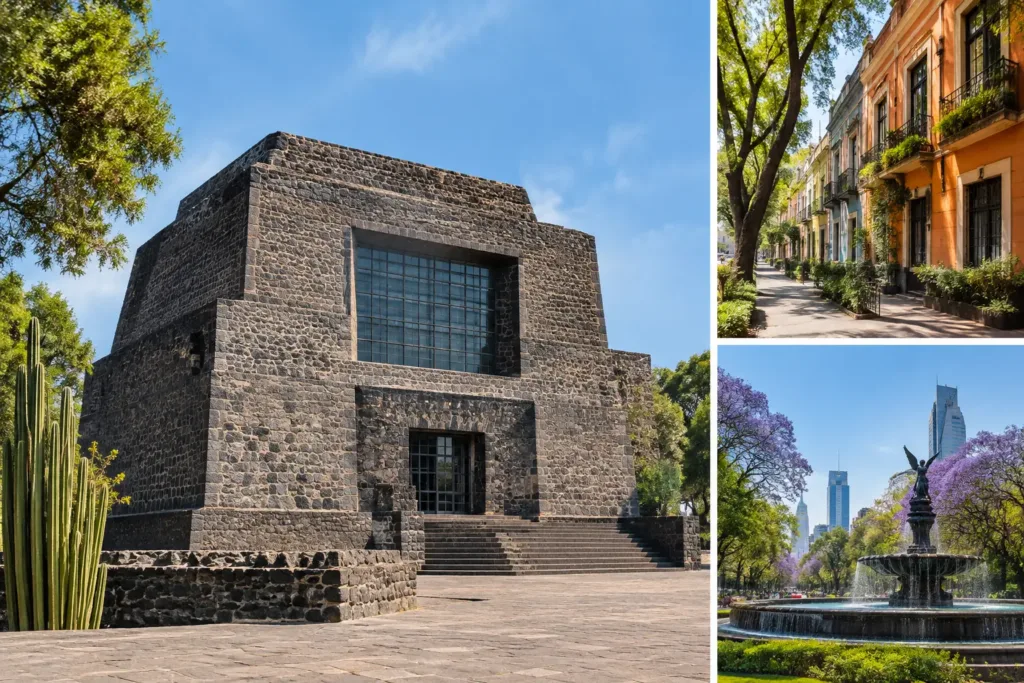
The first surprise in this Anahuacalli museum review is that the building steals your attention before the collection does. Rising from the lava fields of southern Mexico City, Diego Rivera’s museum is dark, geometric, and almost ceremonial. It does not feel like a quick cultural stop between coffee and lunch. It feels like stepping into an artist’s private idea of pre-Hispanic Mexico – one built in volcanic stone and meant to be experienced slowly.
For travelers drawn to design, Mexican history, and places with a real sense of atmosphere, Anahuacalli is absolutely worth the trip. It is less polished and immediately legible than the Frida Kahlo Museum nearby, but that is precisely its strength. This is a museum for looking closely, lingering in quiet rooms, and seeing how one artist turned collecting into architecture.
Anahuacalli Museum Review: The Essential Feel
Anahuacalli, whose name refers to a house on or near water in Nahuatl, was conceived by Rivera as a home for his extensive collection of pre-Hispanic art. The collection is vast, but the museum is not arranged like a standard archaeological institution. Objects appear in stone-lined galleries with dramatic shadows, high ceilings, and windows that frame trees, lava rock, and changing Mexico City light.
The building itself is the main event. Rivera designed it with the architect Juan O’Gorman, drawing from Mesoamerican forms without making a literal reconstruction of a temple or palace. Its black volcanic-stone exterior has a fortress-like presence, while its interiors create a deliberate rhythm of compression and release: a low, dim passage gives way to a room that opens toward the sky.
That mood will not work for everyone. If you want detailed labels, a chronological history lesson, or a fast overview of major civilizations, the National Museum of Anthropology is the better choice. Anahuacalli is more personal and interpretive. Its collection is meaningful because it reveals Rivera’s eye – what he valued, what he gathered, and how he wanted ancient Mexican art to live alongside modern creativity.
Why the Architecture Makes the Visit
Mexico City has many memorable museums, but few have such a complete relationship between art, landscape, and structure. Anahuacalli sits in Pedregal, an area shaped by the centuries-old lava flow from the Xitle volcano. The terrain is not background scenery. It is part of the museum’s visual language.
The black stone walls seem to rise directly from the ground. Inside, small windows turn the landscape into framed images, while the upper levels bring in a surprising amount of daylight. Look for Rivera’s mosaic work and the visual conversation between ancient figurines, carved objects, and the building’s severe geometry.
This is also why the museum photographs so well, although it rewards putting the phone away for a while. The details are tactile: rough stone, carved wood, light on ceramic surfaces, leaves moving beyond a window. For creative professionals, architects, and anyone who notices how a room changes the way art feels, the visit can be more affecting than a checklist of famous works.
What You Will See Inside
The core collection includes thousands of pre-Hispanic objects collected by Rivera, with pottery, masks, figures, vessels, tools, and ritual objects from many parts of Mexico. The displays are dense at times, and the scale can be overwhelming. Rather than trying to identify every object, choose a few pieces that hold your attention and spend time with them.
Some galleries have a reverent, almost theatrical darkness. Others feel more open and domestic, as if you are walking through a very unusual home. Rivera intended Anahuacalli to be a living cultural center, not simply a vault for his collection, and that ambition remains visible in the way the spaces connect.
A newer contemporary-art building and program add another layer to the visit. Depending on the current exhibition, you may find work by contemporary Mexican and international artists in dialogue with the historic collection and grounds. This can be excellent, particularly if you enjoy seeing a living institution rather than a frozen memorial. Still, exhibition quality and relevance naturally vary, so check what is on before building your day around a specific show.
Is Anahuacalli Worth Visiting With the Frida Kahlo Museum?
Yes, but not necessarily on the same rushed morning. Both sites are connected to Rivera and Kahlo, yet they offer very different experiences. The Frida Kahlo Museum is intimate, biographical, and emotionally direct. Anahuacalli is monumental, abstract, and more concerned with cultural memory than personal storytelling.
If you only have time for one and you are especially interested in Frida Kahlo’s life, choose the Blue House. If you want a place that feels less expected and more architecturally transporting, choose Anahuacalli. Travelers with a full cultural day can pair them, but leave breathing room between visits. The distance, traffic, and sensory weight of both museums make a leisurely lunch or coffee break a smart part of the plan.
For many repeat visitors to Mexico City, Anahuacalli becomes the more lasting memory. It offers fewer instantly recognizable photo moments than the Blue House, but more space for private observation.
Practical Notes Before You Go
Plan for about 90 minutes at a relaxed pace. Two hours is better if you enjoy architecture, want to see temporary exhibitions, or tend to read every label. The museum is in Coyoacán’s broader southern area, but it is not in the walkable historic center of Coyoacán. Treat transportation as part of the outing, especially on a weekday when traffic can reshape a simple route across the city.
Mornings generally offer a calmer experience and clearer light for the building. Weekends can be lively, especially when families and local visitors are out, which brings welcome energy but less solitude. Check current hours, ticket policies, photography rules, and exhibition information before leaving, since museum schedules and programming can change.
Wear comfortable shoes. The grounds and stone surfaces are part of the experience, and this is not the kind of place best appreciated while rushing. It also helps to bring water, particularly during warmer months. If mobility is a concern, confirm accessibility details in advance because the original architecture includes stairs and uneven-feeling transitions.
Make a Day of Southern Mexico City
Anahuacalli works best when you let it set the pace. Start with the museum, then continue toward Coyoacán for a late lunch, a market stroll, or a slower afternoon in the neighborhood’s plazas. Alternatively, pair it with a gallery visit in San Ángel if your interests lean toward art and design.
From Roma or Condesa, this is not an impulsive five-minute detour. It is a purposeful cultural excursion, and that is part of its appeal. Mexico City can feel fast, loud, and endlessly expansive. Anahuacalli offers a different register: stone, shadow, trees, and objects made long before the streets around it existed.
The best way to visit is not to hunt for a single famous artifact or rush toward a verdict. Give the museum enough time to feel slightly strange. That strangeness is Rivera’s gift here, and it may be the moment that stays with you long after you return to the city’s busier neighborhoods.