
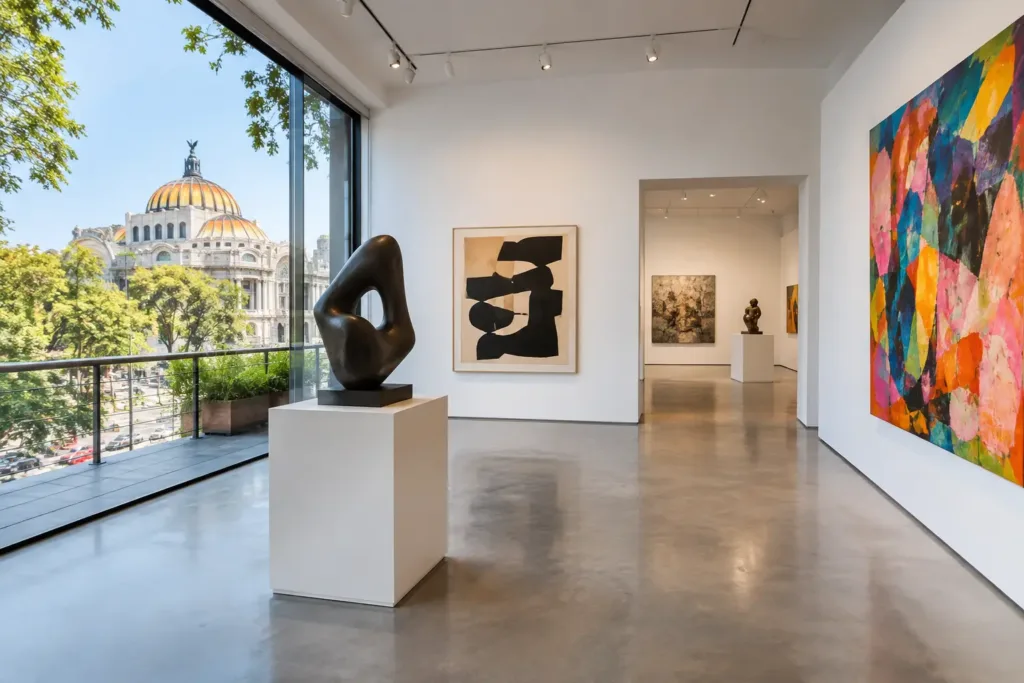
Mexico City’s gallery scene rarely asks you to cross town for one good show. In a single afternoon, you can move from a converted Roma house to an ambitious white-cube space in Juárez, then finish near Chapultepec with a coffee and plenty to discuss. The Best contemporary galleries CDMX offers are not simply places to tick off a cultural list. They are working rooms of ideas, where Mexican and international artists test new forms, challenge familiar narratives, and keep the city’s creative energy in motion.
For travelers who like to understand a neighborhood by walking it, galleries are one of the best entry points. Exhibitions change often, and not every show will land in the same way. That is part of the pleasure. Give yourself time for the work, the architecture, and the conversations that continue afterward over lunch or a late drink.
Best contemporary galleries in CDMX, by neighborhood
The most rewarding way to see art here is to plan by area rather than chase one “must-see” exhibition across the city. Roma Norte and Juárez make an easy, full afternoon. San Miguel Chapultepec has a quieter, more focused rhythm. San Rafael is worth the short trip when you want to move beyond the usual creative circuit.
Kurimanzutto, San Miguel Chapultepec
Kurimanzutto is one of the names that shaped Mexico City’s standing in the global contemporary art conversation. Its program is known for conceptual rigor, ambitious installations, and a roster that includes influential Mexican artists alongside major international voices. The gallery’s former lumberyard setting feels unusually open for a commercial gallery, which gives large-scale works room to breathe.
This is a strong choice if you want an exhibition that rewards a slower visit. The work can be challenging, but it is rarely decorative for decoration’s sake. Pair it with a walk around the leafy streets near Chapultepec, then continue to nearby galleries while you are in the area.
PEANA, San Miguel Chapultepec
PEANA brings a younger, outward-looking perspective to the neighborhood. Its exhibitions often engage with material experimentation, identity, digital culture, and the ways artists respond to an increasingly connected art world. The program feels current without trying too hard to announce itself as such.
It is especially appealing for visitors who enjoy discovering artists before they become the names everyone is discussing at the fair. The space is compact enough for an unhurried stop, and its location makes it easy to combine with Kurimanzutto and Galería Agustina Ferreyra.
Galería Agustina Ferreyra, San Miguel Chapultepec
Galería Agustina Ferreyra is a thoughtful stop for work that sits between disciplines. Expect exhibitions that may bring together sculpture, painting, installation, sound, or research-led practices without forcing them into a neat category. The gallery has a calm, attentive atmosphere that encourages close looking.
For a traveler interested in contemporary Latin American art beyond the most obvious names, this is one to prioritize. The experience is less about spectacle than the pleasure of encountering a distinct curatorial point of view. It also proves why San Miguel Chapultepec deserves more than a quick detour from the park.
OMR, Roma Norte
OMR is a central part of Roma Norte’s cultural fabric. Housed in a striking contemporary building, it presents established and emerging artists with the confidence of a gallery that has been active in Mexico City for decades. The program moves across painting, sculpture, installation, and design-adjacent practices, often with exhibitions that feel immediately visual while still carrying intellectual weight.
The architecture is part of the visit. Light, scale, and movement through the space shape how the work is experienced, so do not rush through on your way to the next address. OMR works particularly well as the first stop on a Roma afternoon, when your attention is fresh and the neighborhood is just beginning to gather momentum.
Galería Karen Huber, Roma Norte
Galería Karen Huber offers a more intimate encounter with contemporary art, often centering artists whose work is grounded in drawing, painting, sculpture, and carefully considered material choices. It is a welcome contrast to larger spaces, especially if you prefer exhibitions that feel personal rather than monumental.
The gallery’s scale makes it easy to spend twenty minutes or an hour, depending on the show. That flexibility matters when you are exploring Roma on foot. Stop in between a long breakfast and a wander through the side streets, and let the visit set a different pace for the rest of the day.
MAIA Contemporary, Roma Norte
MAIA Contemporary has earned attention for a program that feels connected to Mexico City while remaining curious about broader artistic conversations. The gallery often presents emerging and mid-career artists in exhibitions that are polished, approachable, and visually rewarding. It is a good option for travelers who want to see work by artists they may not yet know, without needing a specialist background to enjoy it.
Roma galleries can be busy around openings, but a regular afternoon visit is usually quieter and more reflective. If you have the choice, go earlier in the day, then leave room for an extended lunch nearby. Art viewing in this neighborhood is best treated as part of a day, not an errand squeezed between plans.
Proyectos Monclova, Juárez
Proyectos Monclova is among the essential contemporary galleries in CDMX for visitors drawn to strong, museum-caliber presentations. Its roster includes significant Mexican artists, and its exhibitions frequently offer a useful lens on the country’s evolving visual language, from abstraction and conceptualism to contemporary sculpture and installation.
Juárez has a faster, more urban energy than Roma, and the gallery fits that mood. Come with time to explore the surrounding streets afterward, where independent design shops, bookstores, and restaurants make the neighborhood feel creatively dense. If an exhibition asks more from you than expected, give it that time. The best visits are not always the easiest ones.
Galería Mascota, Juárez
Galería Mascota brings a playful, experimental sensibility to Juárez. Its program has a reputation for backing artists willing to take formal and conceptual risks, so the experience can be surprising in the best way. One visit might center on an immersive installation; another may be spare, graphic, or quietly strange.
This is a gallery for following curiosity rather than looking for a single visual style. It suits creative travelers who enjoy seeing where the edges of a city’s art scene are being tested. Check the current exhibition before you go, since the scale and mood of the visit can shift dramatically from one show to the next.
Lodos, San Rafael
Lodos is worth seeking out when you want to step outside the better-known Roma-Juárez loop. Its approach is independent, experimental, and internationally aware, with a program that often foregrounds emerging practices and unconventional formats. San Rafael itself adds to the appeal: it feels lived-in, layered, and less polished for visitors.
The trade-off is that this is not always the easiest gallery to fold into a casual walk from Roma. Plan it as part of a more intentional outing, ideally with time for the neighborhood rather than a rushed ride there and back. For many art-minded visitors, that extra effort becomes the day’s most memorable detour.
How to plan an art-filled afternoon
Start by checking each gallery’s current hours and exhibition calendar shortly before you go. Mexico City galleries may close between shows, operate on reduced schedules, or keep different opening days than museums. Saturday can be ideal for seeing several spaces, but it can also be crowded during major art weeks and opening weekends.
For a first visit, choose one of two routes. Roma Norte and Juárez offer the easiest walkable combination: begin at OMR or Karen Huber, take a break for lunch, then continue toward Proyectos Monclova and Galería Mascota. For a more concentrated art afternoon, pair Kurimanzutto, PEANA, and Galería Agustina Ferreyra in San Miguel Chapultepec.
Openings are lively, social, and often free, but they are not always the best setting for looking closely at the work. Go on opening night if you want the city’s creative community around you. Choose a weekday afternoon if you want quiet rooms, better conversations with staff, and the chance to form your own impression before hearing everyone else’s.
The gallery scene here rewards attention more than completion. Pick three spaces rather than nine, keep your route loose, and leave time to follow the feeling of a neighborhood. A show you did not expect to love may become the detail you carry home with you.