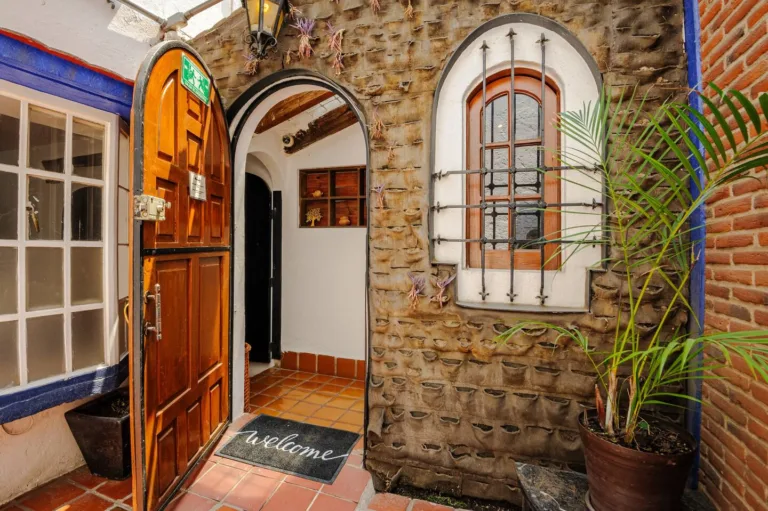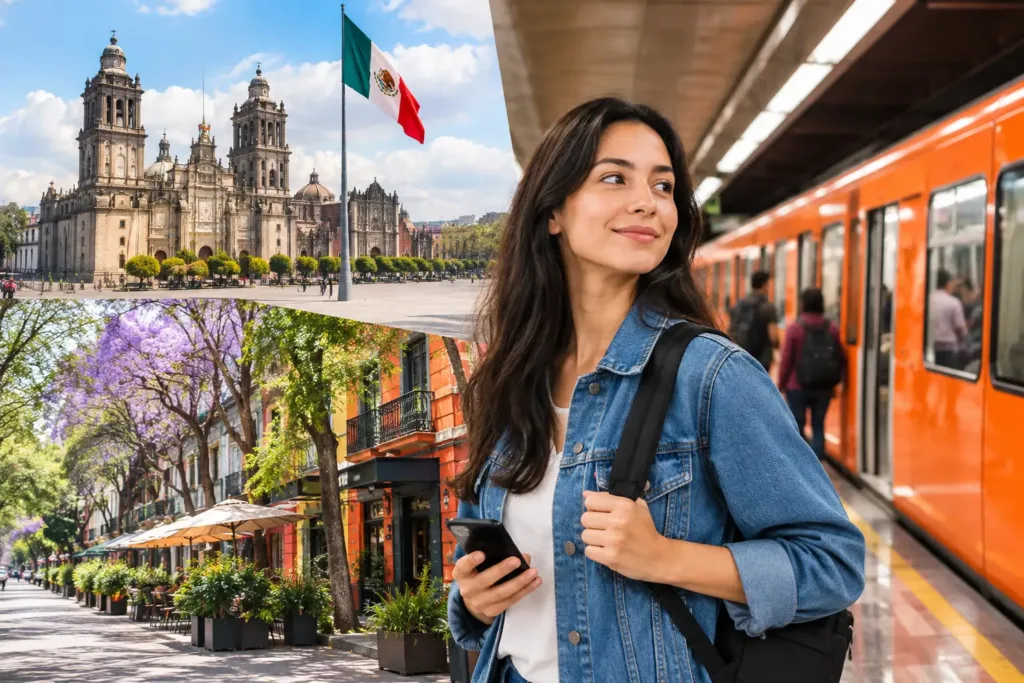
Mexico City reveals itself in layers: a panadería opening before sunrise, a gallery tucked behind a leafy Roma façade, the sound of a street organ drifting through Centro. Learning how to navigate CDMX metro gives you access to all of it. The system is fast, inexpensive, and deeply woven into daily life, but it rewards a little preparation.
For travelers staying around Roma and Condesa, the Metro is not always the best choice for every trip. Walking, Ecobici, and Metrobús can be more pleasant for short neighborhood hops. But when you want to cross town for a museum, a market, or a long lunch in the south, the Metro can save real time.
How to Navigate CDMX Metro Before You Enter
Start with a rechargeable mobility card, called a Tarjeta de Movilidad Integrada. You can buy one at many Metro stations, then add credit at ticket windows or machines. Keep a small amount of cash on hand, as machines and payment options can vary by station. The same card is useful beyond the Metro, including on Metrobús and several other public transportation services, so it is worth holding onto during your visit.
Fares are low, which makes the Metro an exceptional value, but do not rely on an old blog post for the current price. Check the signage at the station when you arrive. Tap your card at the turnstile, pass through, and keep it accessible for your next ride.
The map looks complicated at first because it is. Mexico City is enormous, and the Metro connects broad swaths of it through 12 color-coded lines. Still, the logic is simple: identify your line, identify the station in the direction you need, and follow the colored signs on the platform.
Every line has an endpoint in each direction. If you are taking Line 3 from Centro Médico toward Coyoacán, for example, look for the platform signed toward Universidad, not Indios Verdes. The endpoint is your compass. Before boarding, glance at the route map above the platform and confirm that your destination is on that train’s path.
Station icons are another useful detail. Each station has a graphic symbol, originally designed to help a broad public navigate regardless of literacy. You will see the icons on maps and signs. They quickly become visual landmarks, especially in a busy transfer station.
A note on service changes
The Metro is a living system, with maintenance projects, partial closures, and occasional delays. Line 1 in particular has undergone phased modernization, and service patterns can change. Check a current transit app, official station notices, or local updates on the day you travel. If a section is closed, replacement buses may be available, but the fastest option could be Metrobús or a rideshare depending on your route and the time of day.
Reading the Map Without Overthinking It
Think of the Metro map as a set of colored corridors rather than something you need to memorize. Your route has three parts: the station where you begin, the line you take, and any transfer point between lines. A transfer is marked as a connection between colored lines. Follow signs for the color and endpoint of your next train once you get off.
Transfers can involve a longer walk than expected. Pantitlán, Hidalgo, Tacubaya, Chabacano, and Centro Médico are major interchanges, and they can feel intense during busy periods. Give yourself an extra 10 minutes if you are transferring for the first time, particularly when you have a dinner reservation or museum entry time.
For Roma and Condesa, stations you may use often include Insurgentes, Sevilla, Chilpancingo, Centro Médico, and Hospital General, depending on where you are headed and which lines are operating normally. A map app can suggest the fastest route, but use your judgment once you are on the street. A 15-minute walk through Roma Norte may be more enjoyable than descending underground for a one-stop ride.
The Metro is especially useful for reaching areas that are farther apart than they look on a map. It can make sense for trips toward the Historic Center, Coyoacán, the university area, Chapultepec, or the airport corridor. At the same time, it does not serve every cultural destination directly. For places east or west of the main lines, pairing the Metro with a short rideshare or bus ride is often the more comfortable choice.
When to Ride, and When to Choose Another Route
Weekday rush hour is real. Roughly 7:00 to 10:00 a.m. and 5:00 to 9:00 p.m., trains and platforms can be tightly packed, especially around major transfer stations. If you are carrying a laptop, camera, shopping bags, or a fresh pastry box from your favorite bakery, travel outside those windows when possible.
Midday is usually calmer and works beautifully for museum days. Sunday mornings can also be pleasant, though popular corridors remain active. The Metro is generally a practical daytime option for visitors who stay aware of their surroundings and travel with purpose.
If you are headed only a few neighborhoods away, consider whether walking or Metrobús is better. Metrobús has dedicated lanes on major avenues and can be easier to understand above ground, especially along Avenida Insurgentes. For late-night plans, a rideshare is usually the more practical choice because Metro hours are limited and stations close well before the city’s dinner-and-drinks rhythm winds down.
Etiquette That Makes the Ride Easier
The best Metro etiquette is the same as in any crowded city: move efficiently, notice the people around you, and do not stop in the middle of a stairway to study your phone. Let passengers exit before you board. Once inside, step away from the doors if you are traveling more than one stop, and offer priority seating to older adults, pregnant riders, and passengers with disabilities.
There are designated cars or sections for women and children at certain times and on certain services. Follow the signs and staff guidance rather than guessing. The goal is to give riders more choice in crowded conditions.
Eating is technically not the point of a Metro ride, even though the city may tempt you with something delicious at every turn. Save your tacos, coffee, or juicy fruit for the sidewalk. You will be more comfortable, and your fellow passengers will appreciate it.
Street vendors and musicians are part of the sensory landscape of the system. Some riders enjoy the energy; others prefer headphones. Either way, a polite nod is enough if you are not buying. Avoid photographing people closely without permission, especially inside trains and on platforms.
A Smart Safety Routine for Visitors
CDMX Metro safety is mostly about reducing opportunity, not traveling in fear. Keep your phone and wallet out of back pockets, carry a zipped crossbody bag in front of you in crowded cars, and do not display a large amount of cash. Before entering the station, know which line and direction you need so you are not standing distracted beside the turnstiles.
At peak times, hold your bag close when the train arrives. The push of boarding can be abrupt, and crowded doors are where pickpocketing is most likely. If a car feels uncomfortably packed, let it go and wait a few minutes for the next one. That small pause can make the whole trip easier.
Use a little more caution late in the evening, particularly if you are unfamiliar with the station area. Stations can open onto very different blocks, and a route that feels lively at 2:00 p.m. may be quiet after dark. If you are traveling alone at night, choose a rideshare from a well-lit pickup point instead.
Download an offline city map before leaving Wi-Fi, and screenshot the name of your destination in Spanish. It helps when your signal drops underground and makes it easier to ask for directions. Most people will gladly point you toward the correct exit if you ask simply: “¿Por dónde salgo para…?”
Make the Metro Part of the Experience
The Metro is not polished in the way of some newer transit systems. It can be loud, warm, and crowded. Yet it is also one of the most direct ways to understand the scale and daily rhythm of Mexico City. Office workers, students, families, artists, and market vendors all move through the same tunnels, headed toward entirely different versions of the day.
Plan your route before you leave, travel light, and give yourself room for a wrong turn or an unexpected stop. The city is generous that way: even when you surface at the wrong exit, there is often a coffee counter, a flower stand, or a neighborhood detail worth noticing before you find your way again.