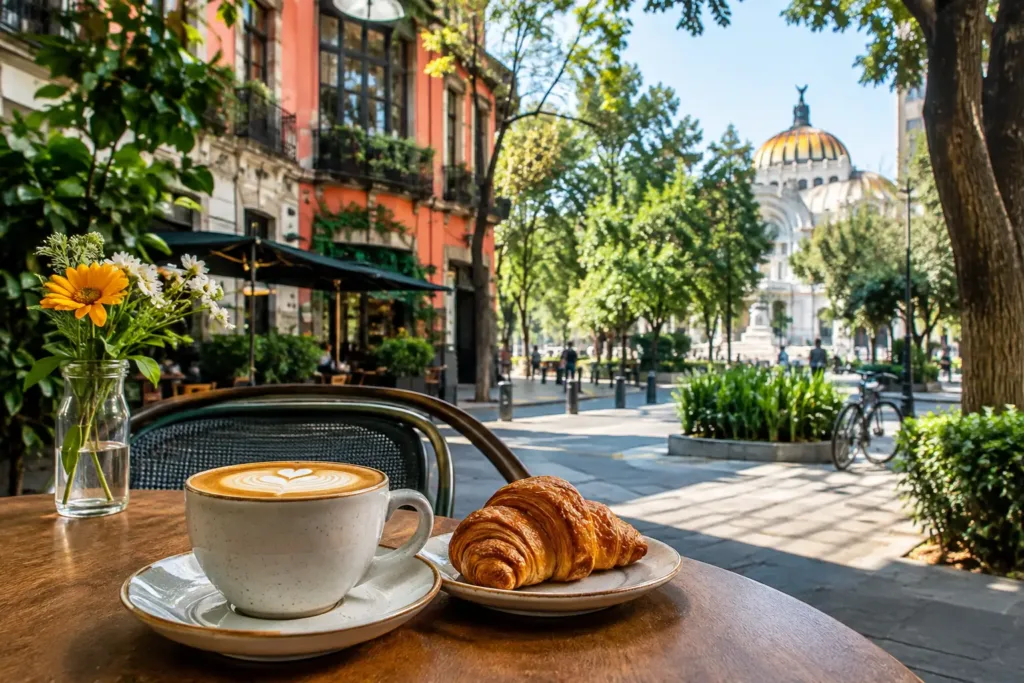
Mexico City mornings have their own tempo: a dog walker under jacaranda trees, a newspaper folded beneath one arm, the sound of a grinder behind a half-open door. This CDMX coffee guide is for finding the places that make you want to stay a little longer – not simply for caffeine, but for a better feel for the neighborhood around you.
Coffee in CDMX is both a daily ritual and a small map of the city’s creative life. You can drink an excellent espresso standing at a narrow bar, settle into a sunlit corner with your laptop, or make a slow morning of it with pan dulce and a walk afterward. The right choice depends less on a single “best” café and more on what kind of day you want to have.
A CDMX Coffee Guide Starts With Your Rhythm
Mexico has a deep coffee-growing tradition, with beans coming from states including Chiapas, Oaxaca, Puebla, and Veracruz. In the city, that agricultural heritage meets a lively specialty-coffee culture. Many independent cafés now name producers, origins, and processing methods alongside familiar drinks like americanos and cappuccinos.
That does not mean every cup needs to be a tasting exercise. A simple café de olla, brewed with cinnamon and piloncillo, still has its place, especially on a cool or rainy morning. The pleasure of coffee here is range: precise pour-overs when you are curious, a strong cortado when you are in motion, and something sweet beside a long conversation when the afternoon opens up.
For first-time visitors, Roma Norte and Condesa are an easy entry point. Their café density makes them wonderfully walkable, though their popularity also means the most photogenic rooms can get busy. Juárez offers a slightly faster, more mixed rhythm, while Coyoacán rewards anyone willing to trade convenience for a more traditional, residential atmosphere.
Roma Norte: Coffee Between Galleries and Long Walks
Roma Norte is where many visitors first encounter the city’s specialty coffee scene, and for good reason. The neighborhood is full of restored houses, leafy side streets, bookstores, galleries, and small food businesses. A coffee stop fits naturally between breakfast and a walk through Parque México or down toward the art deco streets of Hipódromo.
Cucurucho is a useful place to understand the city’s serious-but-unfussy coffee culture. It is known for focused brewing and an approach that lets the beans lead. Come here when the coffee itself is the point, especially if you enjoy trying a filter coffee or asking what is tasting especially good that day.
Quentin has become a familiar name for carefully made espresso and filter drinks, with spaces that suit a quiet morning pause. Its locations can feel polished, but the experience remains grounded in the cup. If you are building a day around design shops, a museum visit, or a leisurely lunch, this is the kind of stop that keeps the day moving without rushing it.
Buna offers another thoughtful introduction to Mexican coffee, with a strong connection to the country’s coffee regions. It is a good choice for travelers who want to drink locally sourced beans without making the experience feel formal. Order a cappuccino if you want something comforting, or ask for a filter option when you have time to notice the differences between regions.
Roma is also where it pays to wander one block beyond the obvious. Some of the most satisfying stops are modest counters with only a few seats, a short pastry case, and regulars ordering by name. A beautiful room is a bonus, but the neighborhood’s best coffee moments often happen when you choose a place that matches your pace rather than your camera roll.
Condesa: For Lingering Mornings and Work Sessions
Condesa is greener, calmer, and especially good for a coffee that leads into a long walk. The neighborhood’s parks, curved streets, and early-20th-century architecture give it a softer rhythm than Roma Norte. It is an ideal place to start slowly before heading elsewhere in the city.
Chiquitito is one of the names closely associated with the neighborhood’s modern café culture. Its compact spaces and careful drinks feel tailored to a morning when you want quality without ceremony. Go early if you prefer a quieter atmosphere, then take your cup into the surrounding streets rather than trying to turn a small café into an office for hours.
Blend Station has a more social, work-friendly energy, making it a natural fit for remote workers and travelers catching up on notes between plans. It can be a practical choice when you need a table, a proper meal, and a well-made coffee in the same stop. Still, table availability and Wi-Fi expectations can change by location and day, so it is worth reading the room when you arrive.
Almanegra is another favorite among people who care about coffee, with a style that can feel more immersive and experimental. This is where you might choose a more unusual preparation or linger over a drink you would not normally order. If your Spanish is limited, do not let that stop you. Pointing to the menu and asking, “¿Qué me recomienda?” – what do you recommend? – is usually enough to start a warm exchange.
Juárez and Cuauhtémoc: Coffee With a City Pulse
Juárez has changed quickly over the past decade, and its café scene reflects that energy. Here, sleek new openings sit close to old-school restaurants, galleries, offices, and the bustle of Reforma. It is a strong choice when you want coffee before a museum visit, an afternoon of browsing, or a walk through the city’s central districts.
The trade-off is that Juárez can feel more kinetic than Condesa. That is part of its appeal. Choose it for a quick, excellent espresso before heading to an exhibition or for a late-morning meeting, rather than expecting every café to be a hushed hideaway.
In and around Colonia Cuauhtémoc, coffee is often part of a larger city day. You may be close to Paseo de la Reforma, Chapultepec, or major cultural institutions, so convenience matters. A good café here can be a reset button: ten quiet minutes at the bar before returning to the noise, traffic, and scale of Mexico City.
Beyond the Usual Neighborhood Loop
A complete CDMX coffee guide should not end in Roma and Condesa. Coyoacán has a different texture, with plazas, markets, older streets, and a more leisurely local rhythm. Coffee there is best paired with a morning visit, when the neighborhood still feels like itself before the busiest hours arrive. Look for independent cafés near the central squares, but leave room for a traditional hot chocolate or café de olla too.
San Rafael and Santa María la Ribera reward travelers who enjoy neighborhoods in transition. Their food and coffee scenes are smaller and less predictable, which can be exactly the point. These are places to explore with curiosity rather than a fixed checklist. Find a café, ask what nearby residents recommend for lunch, and let the next stop emerge from the conversation.
Even within the most popular areas, the city changes block by block. A café near a major avenue may be ideal for people-watching; one tucked into a residential street may feel better for reading. Mexico City is too large to treat coffee as a trophy hunt. Think of each stop as a way to enter a neighborhood.
How to Order and Settle In Like a Regular
You do not need specialist vocabulary to enjoy the city’s coffee scene. “Un americano, por favor” works almost everywhere. For milk drinks, ask for a latte, cappuccino, or cortado as you would in the United States, though proportions and presentation may vary. “¿Con leche entera o vegetal?” means whole milk or plant-based milk, a common question at specialty cafés.
If you need a place to work, be considerate about timing. Order more than one drink or add breakfast if you plan to use a table for a few hours. Avoid taking the only large table during a busy weekend rush, and do not assume every polished café is designed for laptop use. Some places protect their small rooms for conversation and quick service, which is part of what keeps them pleasant.
Tipping is appreciated. For table service, many guests leave around 10 to 15 percent when service is good. At a counter, rounding up or leaving a small amount is a kind gesture. Carrying some pesos makes these small exchanges easier, especially at neighborhood spots.
The most memorable coffee in Mexico City may not be the most technically perfect cup of your trip. It may be the one you drink after getting pleasantly lost on a Roma side street, before a Coyoacán museum visit, or while watching Condesa wake up. Choose a café, put your phone away for ten minutes, and let the neighborhood introduce itself.