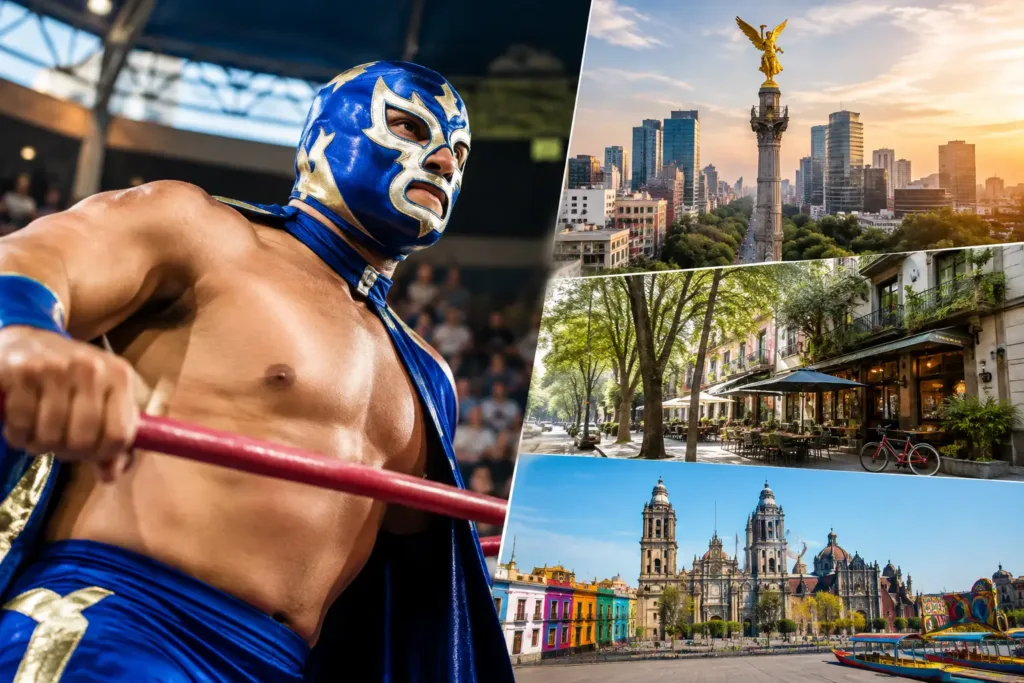
The first roar usually arrives before the opening bell. A masked wrestler steps into the light, a child waves a foam hand, and the crowd decides within seconds whether to cheer or boo. This lucha libre guide is for experiencing that electricity in Mexico City with context – not treating it as a novelty, but as one of the city’s most joyful, theatrical, and deeply rooted nights out.
Lucha libre is sport, performance, family ritual, and pop culture all at once. You do not need to know every wrestler or understand every chant to have a memorable evening. A little local know-how, however, will help you choose the right arena, settle into the atmosphere, and follow the action once the masks start flying.
Why lucha libre belongs on a Mexico City itinerary
Mexico City has museums with hushed galleries, restaurants where every course gets its own story, and late-night bars built for conversation. Lucha libre offers something entirely different: collective noise. It is a place where strangers argue about a referee’s call, vendors move through the aisles, and generations of fans react in perfect unison.
The tradition grew through the 20th century into a defining Mexican spectacle, with wrestlers becoming folk heroes, screen stars, and symbols of mystery. The mask is central to that mythology. A luchador’s mask is not costume decoration. It represents an identity built over years, often protected with fierce seriousness. A mask-versus-mask match, where the loser must reveal their face, carries especially high stakes.
For visitors, the appeal is immediate, but the experience gets richer when you recognize its emotional language. The crowd is not passively watching. It is part of the show.
Choose your arena and match night
Arena México, in Colonia Doctores, is the city’s most iconic lucha libre venue and the clearest choice for a first visit. It is large, loud, historic, and often hosts major Consejo Mundial de Lucha Libre, or CMLL, cards. The scale makes it easy to feel the drama of an entrance, even from the upper sections.
Arena Coliseo, closer to the historic center, is smaller and older in feel. A night there can feel more intimate, with the ring closer to the crowd and a neighborhood character that some longtime fans prefer. Programming and event schedules change, so confirm the card, start time, and venue before making plans.
There is no universal answer to which arena is “better.” Choose Arena México if you want a classic big-night atmosphere and a strong first introduction. Choose Arena Coliseo if you enjoy smaller venues, closer viewing, and a slightly rougher-around-the-edges sense of history. Both reward curiosity.
Pick a seat for the experience you want
Ringside looks tempting, and it can be thrilling. You will hear the impact, see the wrestlers’ expressions, and feel every near fall. You may also find yourself looking through officials, photographers, and the ring apron when action spills outside.
For many first-timers, a lower or middle-level seat facing a corner is the sweet spot. You get a clear view of the ring, the crowd choreography around you, and enough distance to follow fast sequences. Higher seats are often a smart value if your priority is atmosphere over close-up detail.
Buy from the official box office or authorized ticket channels when possible. On a popular night, arriving early removes unnecessary stress and gives you time to find your section, pick up snacks, and watch the room fill in. Avoid deals that seem strangely cheap from people hovering outside the venue.
A lucha libre guide to the action in the ring
Most cards feature several matches, beginning with newer talent and building toward more established names. You do not need a program to follow the basic structure. Watch the entrances, listen to the crowd, and notice who bends the rules.
The classic divide is between técnicos and rudos. Técnicos are the heroic, usually more sportsmanlike wrestlers. Rudos are the villains: cocky, crafty, and happy to distract a referee or grab the ropes at the wrong moment. These roles can shift, and fans may support whoever they please, but the tension gives each match an immediate story.
Many matches are decided in two out of three falls, called caídas. A fall can come by pinfall, submission, disqualification, or count-out. The pacing can feel quick and chaotic at first. Then you begin to see the rhythm: a burst of acrobatics, a villainous shortcut, a comeback, a moment when the whole arena rises because everyone believes the finish is close.
Lucha libre also has a visual vocabulary. The high-flying style known as lucha aérea brings dives and leaps that seem to ignore physics. Tag partners may enter and exit with less formal tagging than American wrestling audiences expect. Wrestlers often work in trios, and the constant movement is part of the pleasure.
Do not worry about catching every technical detail. Start by choosing a favorite – perhaps the masked underdog, the dramatic rudo, or the veteran whose presence changes the room. The crowd will teach you the rest.
Go with the crowd, not against it
A lucha night is lively, but it is not an invitation to be careless. Cheer, laugh, boo the rudos, and let yourself be entertained. Just take your cues from the people around you. Fans can be passionate, especially during a big rivalry, and that passion is best met with good humor rather than performative shouting.
Spanish helps, but it is not required. You will understand plenty through body language and tone. If you want a few useful words, “¡técnico!” cheers the good side, while “¡rudo!” can celebrate a gloriously shameless villain. You may hear more inventive chants, too. Some are clever, some are not for repeating, and all are part of a crowd that has opinions.
Keep personal belongings close in crowded entry lines and concourses, as you would at any major event. Dress comfortably, bring only what you need, and plan your transportation home before the final match. The energy outside can change quickly once the arena empties.
Eat and drink with realistic expectations
The food inside is part of the occasion, not a destination meal. Expect classic arena snacks, cold drinks, and vendors working the aisles. It is a good idea to have an early dinner in a nearby neighborhood or save a proper meal for afterward, depending on the event’s timing.
If you are spending the evening near Arena México, build in a little time for the area rather than racing from one plan to another. Mexico City nights work best with breathing room: a coffee, a casual bite, a walk toward your next stop. The match itself is more fun when it feels like part of an evening, not an item checked off a list.
Masks, photos, and the fun of taking something home
You will see masks for sale around the arena, from simple souvenir versions to more detailed designs. Buying one can be a delightful way to join the mood, particularly if you are attending with friends or family. Wear it with enthusiasm, but remember that the real masks worn by wrestlers carry cultural and professional weight.
Photography rules vary, so check the venue’s current policy when you arrive. A phone photo from your seat may be fine, while professional cameras or large lenses may not be. More importantly, stay present. The best part of lucha libre is rarely the image you capture. It is the moment a full arena gasps, then erupts, because a wrestler has just launched from the ropes into apparent thin air.
Make the night feel local
The most satisfying way to experience lucha libre is to leave room for surprise. Go with a friend, or go alone and let the shared reactions around you carry the night. Skip the pressure to know every name. Pay attention to the family in front of you, the old-school fan who predicts every betrayal, and the kids whose heroes seem larger than life.
For travelers staying around Roma and Condesa, it is an easy cultural counterpoint to the neighborhoods’ galleries, cafés, and dining rooms. It shows another side of the city: louder, less polished, and every bit as designed by ritual and style.
Walk out with your ears ringing, your favorite wrestler already chosen, and perhaps a mask tucked into your bag. That is the gift of a great lucha night: for a few hours, Mexico City does not ask you to observe from a distance. It invites you to pick a side and make some noise.