
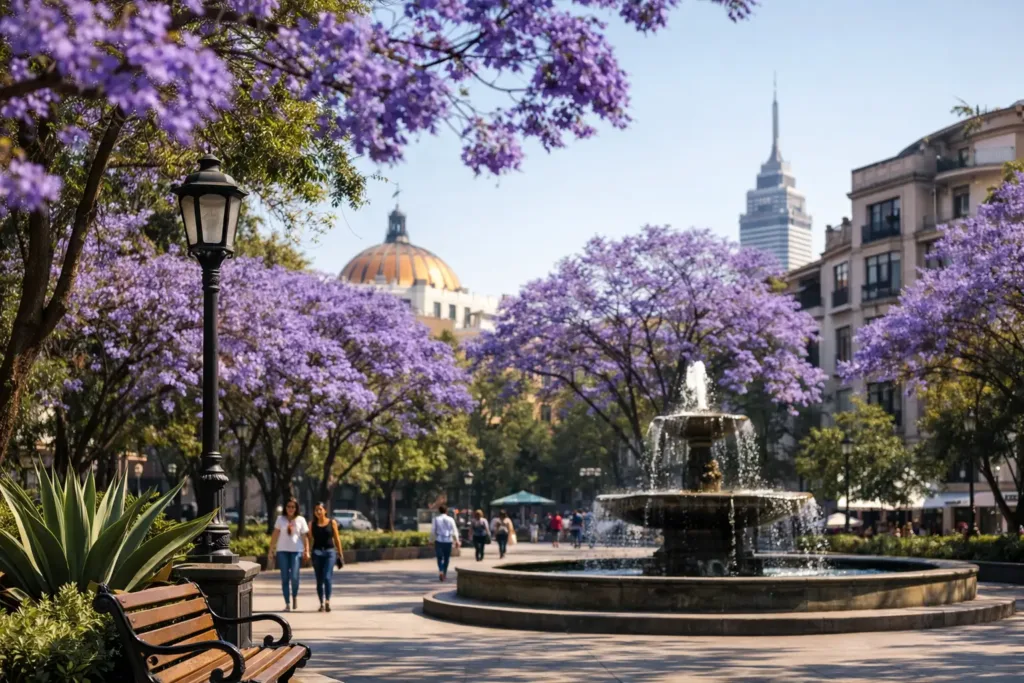
The first jacaranda blooms change the mood of Mexico City almost overnight. A familiar avenue suddenly has a violet ceiling; purple petals gather along the curb after a warm afternoon. So, when do jacarandas bloom CDMX? The short answer is late February through early April, with March usually delivering the city’s most memorable purple display.
For travelers, this is a lovely time to experience the city at street level. The dry season is still in progress, mornings can be crisp, and long walks through Roma, Condesa, Juárez, and the historic center feel especially rewarding. But jacaranda season is not a fixed appointment. It follows the weather, and a visit planned for blooms should leave room for a little uncertainty.
When Do Jacarandas Bloom in CDMX?
In a typical year, Mexico City’s jacarandas begin flowering in late February. The canopy builds through the first half of March, and peak bloom often lands from mid-March into early April. By mid-to-late April, many trees are shedding their flowers, though a few streets may still hold onto their color.
The exact timing depends on temperature, rainfall patterns, altitude, and the rhythms of a particular neighborhood. A warm, dry stretch can bring an early show. Cooler conditions or unseasonal rain may delay it. That means someone visiting during the last week of February might catch only scattered blossoms, while another person arriving in early April could find a city still glowing purple.
If jacarandas are a priority, aim for mid-March. It is the most reliable window, though no local can promise that every tree will bloom at once. Part of the pleasure is noticing the city’s gradual transformation rather than chasing one perfectly timed photograph.
Why jacarandas bloom before the rainy season
Jacarandas are closely associated with spring in central Mexico because they flower toward the end of the dry season, before the heavier rains of summer arrive. Their blooms often appear while the branches are still relatively bare, making the violet color feel even more dramatic against Mexico City’s bright skies and pale stone facades.
The trees are not native to Mexico – jacarandas originated in South America – but they have become deeply woven into the city’s visual identity. Their arrival is as recognizable as the first mangoes at a market or a sunny lunch that runs long on a sidewalk terrace. In CDMX, they feel less like landscaping and more like a seasonal cue to spend more time outside.
Where to See Jacarandas in Mexico City
The best jacaranda experience is rarely one landmark. It is a wandering day: coffee in hand, a few loose plans, and a willingness to take the quieter side street when the light looks right.
Roma Norte and Condesa are especially enjoyable during bloom season because the trees frame everyday city life. Walk Avenida Álvaro Obregón in Roma Norte, then continue toward Plaza Río de Janeiro, where neighborhood architecture and leafy streets make a natural backdrop for the season. In Condesa, Avenida Veracruz and the streets around Parque México offer a softer, greener route, with blooming branches above art deco buildings, dog walkers, cyclists, and café tables.
For a grander scale, Paseo de la Reforma is worth seeing. Jacarandas there meet some of the city’s most recognizable civic architecture, creating a striking contrast between purple blooms and the avenue’s broad urban sweep. The area around Chapultepec can also be beautiful, particularly if you combine a park walk with a museum visit.
In the historic center, the blossoms can feel more unexpected. Look up on streets where colonial facades, traffic, street vendors, and daily errands carry on beneath a flash of violet. The season is a reminder that Mexico City’s beauty is not confined to designated scenic spots. It happens in motion.
How to Plan a Jacaranda Day Without Rushing It
Start early, but not necessarily at sunrise. Around 8:30 or 9:00 a.m., the light is gentle, cafés are opening, and the streets have not yet reached their busiest rhythm. Mornings also tend to be clearer before the city’s afternoon haze gathers.
A simple route works best: begin in Roma Norte, stroll through Condesa, pause in Parque México, then choose one cultural stop or a long lunch. Trying to cross the entire city for every famous tree can turn a seasonal pleasure into a checklist. The bloom is more meaningful when it becomes part of your day rather than the only reason for it.
Photographers may prefer the hour before sunset, when the flowers take on a richer blue-violet cast. Keep expectations realistic, though. The most evocative images often include the life around the trees: a newspaper stand, a passing microbus, a fruit vendor, friends waiting outside a taquería. Jacarandas are beautiful precisely because they belong to a living city.
Wear comfortable shoes and bring a light layer. March days can be warm in direct sun, while mornings and evenings still have a cool edge. Sunscreen and water are useful, especially if your route includes Reforma or Chapultepec, where walks can be longer and more exposed.
What Spring Weather Is Like in CDMX
Spring is one of Mexico City’s most appealing seasons for visitors, but it has a few practical trade-offs. Days are generally dry and sunny, and temperatures often feel mild compared with many U.S. cities emerging from winter. Yet the high altitude can make the sun stronger than expected, while cool nights can surprise travelers who packed only for warm weather.
Air quality can vary in spring, particularly on hot, still days. If you are sensitive to it, plan your longest outdoor walk for the morning and leave a flexible afternoon for a gallery, museum, or relaxed meal. This is not a reason to avoid the season – it is simply part of moving through a large, high-altitude capital with ease.
Semana Santa can also affect the feel of the city. Depending on the year, it may overlap with late March or early April. Some residents leave town, certain neighborhoods feel quieter, and popular cultural sites may attract more visitors. For those who like a calmer urban pace, it can be an unexpectedly pleasant moment to explore.
A Small Bit of Jacaranda History
The jacaranda’s place in Mexico City is often connected to Tatsugoro Matsumoto, a Japanese gardener who arrived in Mexico in the late 19th century and helped introduce and popularize the trees in the early 20th century. The story is sometimes told with variations, as city lore often is, but the enduring point is clear: a tree brought from elsewhere became one of CDMX’s most beloved seasonal symbols.
That history fits the city itself. Mexico City is layered with arrivals, adaptations, and traditions that become local through repetition. Jacarandas now belong to the emotional map of spring here, alongside neighborhood markets, open windows, and the first plans for an unhurried Sunday walk.
The Best Way to Experience the Bloom
Do not treat the jacarandas as a single attraction to tick off between appointments. Give yourself a morning with no hard edges. Choose a neighborhood, follow the shade, stop for a pastry, and let the purple canopy lead you toward a street you might otherwise have missed.
That is the real gift of jacaranda season in CDMX: it makes the city feel briefly more porous, more walkable, and more generous. Arrive around mid-March if you can, but wherever the blooms happen to be in their cycle, look up often. Mexico City has a way of rewarding the traveler who leaves room to notice it.