
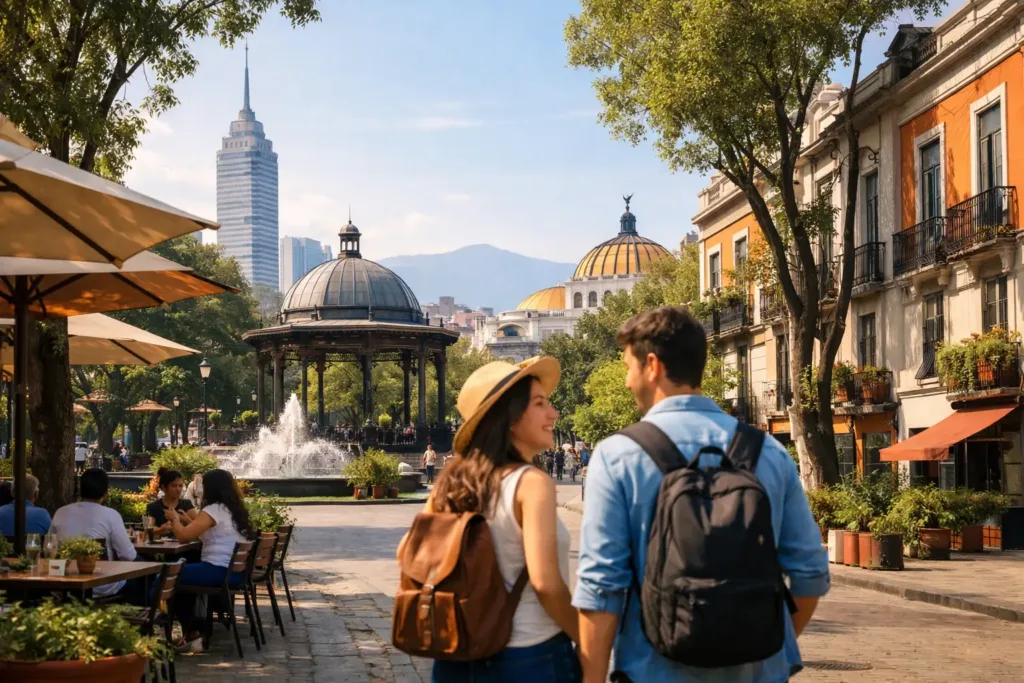
“Safe neighborhoods Mexico City” is one of the first searches travelers make, and for good reason. This is a vast, layered capital where a block can shift from leafy and relaxed to intensely busy in a few minutes. The most rewarding visit comes from choosing an area that feels comfortable for your own rhythm: morning coffee on foot, a museum or gallery nearby, dinner that does not require a complicated cross-city trip, and streets you are happy to return to after dark.
Safety in Mexico City is not a simple neighborhood ranking. It depends on the time of day, the street, how you move through the city, and the same city awareness you would use in New York, Los Angeles, or Chicago. The areas below are consistently popular with visitors because they combine an active public life with walkability, dining, culture, and an established local routine.
Safe Neighborhoods in Mexico City: What That Means
For most visitors, a neighborhood feels safer when there are people out walking, cafés and shops open throughout the day, reliable transportation nearby, and well-used streets after sunset. That does not mean leaving a phone on a café table or assuming every side street has the same energy at midnight. Mexico City rewards awareness, not anxiety.
The city’s most visitor-friendly areas tend to have a clear daily cadence. Dog walkers appear early. Sidewalk tables fill by late morning. Families, office workers, and friends gather for dinner in the evening. That lived-in rhythm matters more than a glossy reputation because it tells you how a place actually feels hour by hour.
Roma Norte and Roma Sur
Roma is often the right starting point for travelers who want to feel connected to the city quickly. Roma Norte is dense with bookstores, bakeries, galleries, wine bars, and beautiful early 20th-century architecture. It is easy to spend a day moving between Parque México, Avenida Álvaro Obregón, Plaza Río de Janeiro, and the smaller streets in between without needing a plan.
Its popularity brings trade-offs. Roma Norte can be busy, noisy, and more expensive than quieter parts of the city. It is also an area where distracted visitors stand out, especially around crowded sidewalks, busy restaurant corridors, and late-night venues. Keep your phone secure, use a crossbody bag or closed bag in crowds, and choose a well-lit route when walking back at night.
Roma Sur has a more residential pace. It is still close to the neighborhood’s best food and design culture, but the streets often feel calmer once you move south of Avenida Coahuila. For remote workers and longer-stay visitors, that balance can be especially appealing: lively when you want it, quieter when you need to focus.
Condesa and Hipódromo
Condesa is one of the most comfortable areas for first-time visitors, particularly those who value green space and a polished neighborhood atmosphere. Parque México and Parque España anchor daily life here. Early mornings bring runners, dogs, coffee in hand, and a steady stream of people using the parks as their local living room.
The streets are walkable, tree-lined, and filled with restaurants that range from a casual weekday breakfast to a memorable long dinner. Condesa is also well positioned for exploring Roma, Chapultepec, and the city center by car or public transportation.
Hipódromo, the curved section around Parque México, has a slightly more architectural feel, with Art Deco buildings and calmer residential pockets. It can feel less frenetic than central Roma while still offering plenty of places to eat and wander. As anywhere in the city, stay attentive late at night, especially when leaving bars or taking a quiet street rather than a main avenue.
Juárez
Juárez is for travelers who want an energetic, central base with a stronger urban edge. Along Reforma and around the Zona Rosa, you will find offices, museums, restaurants, embassies, and a constant flow of people. The neighborhood has changed quickly in recent years, with a creative food and design scene growing along streets such as Havre, Londres, and Milán.
Its advantage is proximity. From here, you can reach Chapultepec, the historic center, Roma, and Polanco without making every outing feel like a mission. Its trade-off is unevenness. Juárez changes block by block, and areas closer to major roads or nightlife can feel more hectic than the residential calm of Condesa. Visit during the day, notice which streets feel active in the evening, and use rideshare for late returns if the route feels unfamiliar.
Polanco
Polanco has wide sidewalks, a more formal atmosphere, and some of the city’s most established restaurants, galleries, and retail streets. It often feels straightforward for travelers who appreciate a quieter, more polished pace. Avenida Presidente Masaryk is busy and well-trafficked, while nearby streets offer leafy residential character.
Polanco also sits close to Chapultepec, one of the city’s great cultural landscapes. A morning can easily include the Anthropology Museum, a walk through the park, and lunch in the neighborhood. It is a strong choice for visitors who want easy access to major museums without the constant buzz of Roma Norte.
Still, Polanco is not a bubble. Watch your belongings in restaurants, keep bags close in busy areas, and do not assume that a wealthier-looking district removes the need for basic street sense. It also has less of the spontaneous, bohemian texture that many creative travelers come to Mexico City to find.
Coyoacán
Coyoacán offers a different kind of comfort. Its historic plazas, low-rise streets, markets, and family-oriented pace can feel almost village-like compared with the rest of the city. The center around Jardín Centenario and Plaza Hidalgo is ideal for a slow afternoon: churros, coffee, a market visit, and the pleasure of watching the neighborhood move at its own speed.
This is a wonderful choice for travelers drawn to history, crafts, and a quieter evening. The trade-off is distance. Coyoacán is farther from Roma, Condesa, and many central cultural venues, so spontaneous city-hopping takes more time. It is best for people who want to spend real time in the south of the city rather than treat it as a quick stop between central plans.
How to Choose the Right Block, Not Just the Right Area
Within any of these neighborhoods, a few details make a meaningful difference. Look for streets with open businesses, regular foot traffic, and nearby transit or major avenues. A beautiful but isolated street may feel peaceful at 2 p.m. and inconvenient after dinner. If you plan to work remotely, also pay attention to daytime noise, café density, and how far you are from the places you genuinely want to visit.
For an experience built around Roma and Condesa, being close to the parks or main avenues usually makes daily life easier. In Juárez, aim for the more active, well-connected pockets rather than choosing solely by price. In Coyoacán, being near the historic center gives you the most walkable version of the neighborhood.
Before committing to an area, pull up a map and imagine a real day: breakfast, a midday errand, dinner, and your route back at 10 p.m. That simple exercise is more useful than relying on a single safety label.
Everyday Street Smarts for Mexico City
Most safety decisions are small and practical. Use registered rideshare services for late-night trips or longer distances, and verify the car and driver details before getting in. On the Metro, especially during rush hour, wear bags in front and keep valuables out of easy reach. Avoid displaying expensive jewelry, cameras, or a phone while standing near the curb.
When paying, keep your card in sight when possible and carry a small amount of cash for markets, tips, and everyday purchases. If an ATM is needed, use one inside a bank or a busy commercial space. For evening plans, ask the restaurant staff which pickup point is best rather than waiting alone on a dark side street.
There is no need to treat every interaction with suspicion. Mexico City is generous, social, and full of people who will happily point you toward the right taquería or explain which side of the park has the better afternoon sun. Just be discerning with unsolicited help around transportation hubs and tourist-heavy areas.
The best neighborhood is the one that lets you relax into the city without rushing through it. Choose streets with life on them, give yourself permission to take a car when it is late, and leave room for the small rituals that make Mexico City feel local: the same coffee counter, the evening walk around the park, and the place where the server recognizes your order on the second visit.