
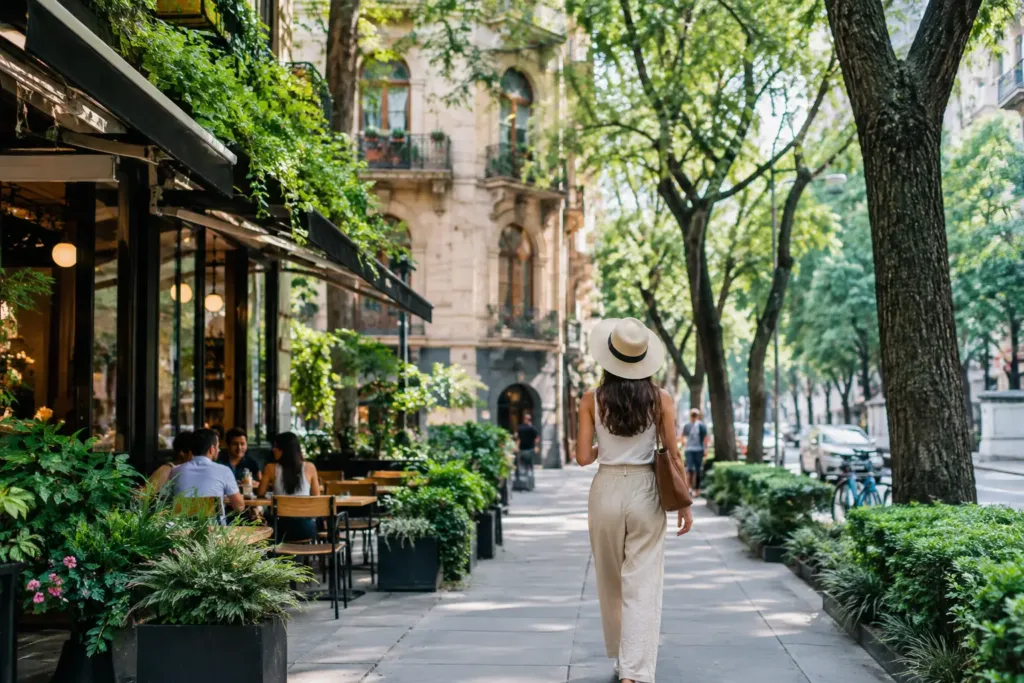
Roma Norte is not a neighborhood to rush through between museum reservations and dinner plans. Its best moments happen in the pauses: a morning coffee on a shaded corner, a long walk past tiled facades, a bookstore browse that turns into an afternoon, a table shared after dark. This is one of Mexico City’s most recognizable neighborhoods, but it still rewards people who pay attention.
For travelers drawn to food, design, culture, and a more everyday feeling of the city, Roma Norte offers an easy entry point without feeling like a staged version of local life. The streets are walkable, the energy is creative, and nearly every block offers a reason to slow down.
The character of Roma Norte
Roma Norte was shaped in the early 20th century, when Mexico City’s growing professional class built elegant homes along broad, tree-lined streets. That history remains visible in the neighborhood’s French-inspired facades, Art Nouveau details, wrought-iron balconies, and former mansions that now hold galleries, restaurants, studios, and cultural spaces.
It is also a neighborhood that has changed dramatically. The 1985 earthquake left a deep mark on Roma, and decades of renewal brought new businesses, residents, and visitors. Today, the area holds both its longtime routines and a highly visible creative scene. A classic family-run lunch counter may sit beside a natural-wine bar. A florist, a repair shop, and a destination restaurant can share the same block.
That mix is the point. Roma Norte can be polished, busy, and expensive in places, particularly around its best-known streets. But it is not one single experience. Walk two or three blocks away from the crowds and the pace shifts. You will find small groceries, neighborhood dogs asleep in doorways, people catching up outside bakeries, and the practical rhythm of a place where people actually live.
Start with the streets, not a checklist
Begin around Plaza Río de Janeiro, where the fountain, mature trees, and surrounding architecture make an excellent case for walking without an agenda. From there, wander along Orizaba, Colima, Córdoba, and Jalapa. Look up often. The neighborhood’s personality lives in details: stained glass, carved stonework, colorful doors, tiled entryways, and the occasional beautifully weathered building waiting for its next chapter.
Álvaro Obregón is one of Roma Norte’s main arteries, lined with cafés, bars, shops, and restaurants. It is lively and worth seeing, especially in the late afternoon, but the quieter side streets are where the neighborhood becomes more personal. Plaza Luis Cabrera is another good pause point, with benches, trees, and enough nearby activity to make it feel social without demanding your attention.
Eat with curiosity, not urgency
Roma Norte has a global reputation for dining, and for good reason. It is home to ambitious Mexican cooking, excellent seafood, Japanese counters, Italian-inspired kitchens, bakeries, wine bars, and coffee shops that take their craft seriously. The trade-off is that the most talked-about tables can require reservations and patience.
If there is one restaurant you have been hoping to try, plan ahead. For everything else, leave room for instinct. A neighborhood meal does not need to be a headline reservation. Some of the most satisfying moments are a warm pastry with coffee, tacos after a gallery visit, a simple comida corrida at lunchtime, or a seat at the bar when plans change.
Roma Norte is especially good for building a day around small tastes. Start with breakfast or coffee, stop for something sweet in the afternoon, and save dinner for later than you might at home. Mexico City eats on its own schedule, and an unhurried evening is part of the pleasure.
For a more market-driven experience, Mercado Medellín is a short walk south, near the Roma and Condesa border. Its produce, prepared foods, flowers, and Latin American ingredients offer a different texture from the neighborhood’s sleek dining rooms. Go with an appetite and a little flexibility. It is better for browsing and following your senses than executing a strict plan.
Culture lives between the big plans
Roma Norte does not ask you to spend the day moving from landmark to landmark. Its cultural life is dispersed, often tucked behind handsome facades or folded into places you might otherwise pass by. Casa Lamm, set in a restored mansion, is a natural place to begin. Even when you are not attending a talk or exhibition, the building itself reflects the neighborhood’s layered relationship with art, education, and architecture.
Independent galleries rotate regularly, which makes them ideal for a spontaneous visit. The scale is often approachable: you can step in, spend twenty minutes with a show, and continue your walk. Bookstores and design shops offer a similar kind of cultural pause, particularly for visitors who want to bring home something more meaningful than a standard souvenir.
The neighborhood also works well as a base for a wider cultural day. Chapultepec’s museums and green spaces are within easy reach, while La Juárez, Condesa, and the historic center each offer a distinct next chapter. Still, resist the temptation to overpack the itinerary. Roma Norte is at its best when you give it time to reveal itself between plans.
A good remote-work rhythm
For remote workers, Roma Norte is appealing because daily life is close at hand. Coffee shops, casual lunch spots, pharmacies, parks, and practical services are woven into the same few walkable blocks. The neighborhood supports a workday that does not have to feel isolated.
That said, not every café is designed for hours of calls and concentrated work. Busy spots can be loud, tables may turn quickly, and reliable Wi-Fi is never a substitute for a backup plan. Choose a quieter morning for focused tasks, then step outside for lunch or a walk when the streets are most alive. A change of scene is one of the neighborhood’s real advantages.
If you need a reset, head toward Parque México in neighboring Condesa or simply find a bench in one of Roma’s smaller plazas. Mexico City can feel intense, especially at first. A short walk under the trees can bring the day back into balance.
How to experience Roma Norte well
Roma Norte is generally made for walking, but Mexico City’s usual urban awareness still applies. Keep valuables close, use established transportation options late at night, and pay attention at intersections, where traffic can be unpredictable. The sidewalks vary in condition, so comfortable shoes are not optional if you plan to wander properly.
The neighborhood is busiest on weekends, when visitors arrive for brunch, shopping, and late-night plans. That energy can be fun, particularly if you want to see Roma Norte at its most social. If you prefer a quieter experience, walk early on a weekday, have lunch after the rush, and leave the most popular streets for a casual evening stroll.
It also helps to be a considerate guest. Roma has seen rapid change, and the pressure of tourism is real for longtime residents and small businesses. Support places beyond the most photographed addresses. Order something when using a café table. Keep noise low on residential streets. Learn a few words of Spanish, even if your accent is imperfect. Small gestures shape the kind of visitor you become.
Roma Norte does not need to perform for you. Let it be a neighborhood first: one with a strong point of view, an evolving food scene, and everyday beauty hiding in plain sight. Choose one good meal, one cultural stop, and enough open time to follow whatever catches your eye. That is usually when the city starts to feel less like a trip and more like a place you know.