
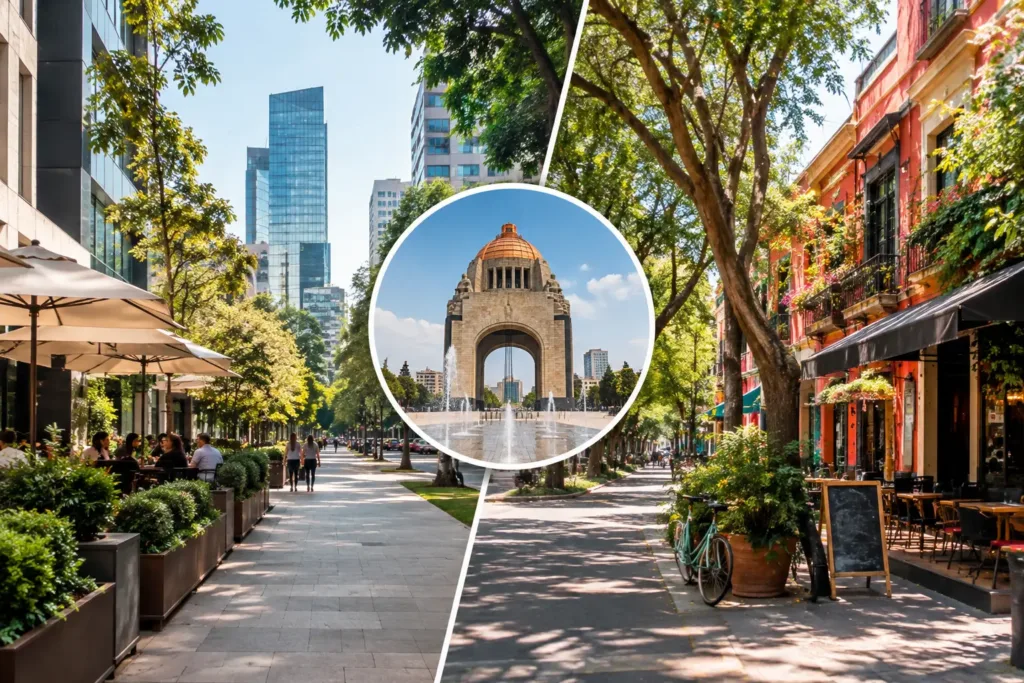
Mexico City rarely asks visitors to choose just one version of the city, but Polanco vs Roma Norte is a useful place to start. These neighborhoods sit only a short ride apart, yet they create entirely different days: one polished and museum-rich, the other leafy, creative, and full of happy detours. The better fit depends less on a checklist and more on how you like to move through a city.
Polanco vs Roma Norte at a Glance
Polanco is composed, cosmopolitan, and easy to read. Its broad streets, mature trees, galleries, luxury boutiques, and destination restaurants give it a distinctly international rhythm. It is a neighborhood for lingering lunches, thoughtful design, and an afternoon that moves from a major museum to a café without much improvisation.
Roma Norte feels more porous. You may leave in search of coffee and find a small exhibition, a produce stand, a handsome old doorway, or a bar worth returning to later. Its streets are filled with restored early-20th-century buildings, neighborhood bakeries, creative studios, and restaurants that range from quietly ambitious to wonderfully casual.
Neither is more “real” than the other. They simply reveal different sides of CDMX. Polanco puts the city’s cultural institutions and refined dining scene within reach. Roma Norte places you closer to the everyday energy that makes a long walk feel like an activity in itself.
Choose Polanco for Culture With a Polished Pace
Polanco is a natural choice for travelers who appreciate a well-paced itinerary. The neighborhood sits beside Bosque de Chapultepec, one of the city’s great green lungs, and close to museums that can easily anchor an afternoon. Museo Nacional de Antropología is the obvious landmark, but the pleasure is in giving yourself enough time afterward to wander rather than rushing to the next reservation.
A day here can be elegantly simple: breakfast near Parque Lincoln, a museum visit, a walk beneath the shade of Chapultepec, then a late meal with excellent people-watching. Avenida Presidente Masaryk has global labels and polished storefronts, but Polanco rewards a more curious approach too. Look beyond the avenue for small pastry counters, neighborhood markets, independent galleries, and restaurants with serious regional cooking.
The trade-off is that Polanco can feel more formal and more expensive. It is less likely to give you the accidental, slightly scruffy pleasures of a late-night taquería discovered around the corner. Traffic can also shape the experience, especially during weekday rush hour, so plan museum visits and meals by area instead of zigzagging across the city.
For remote workers, Polanco can be appealing when you want calm surroundings and a more structured workday. Cafés tend to feel orderly, though the neighborhood is not always the place to open a laptop for hours without ordering generously. Think of it as a setting for focused mornings followed by a rewarding cultural afternoon.
Choose Roma Norte for Street-Level Discovery
Roma Norte is built for travelers who like their plans to remain flexible. The neighborhood’s appeal is not a single headline attraction but the accumulation of small moments: a beautiful tiled façade, a bookstore with a strong design section, a table on a sidewalk, a neighborhood dog napping in the sun outside a florist.
Its food scene is one of the city’s most varied. You can begin with pan dulce and coffee, have a relaxed lunch centered on Mexican ingredients, and end the night with natural wine, cocktails, or a simple bowl of something comforting. Reservations help at sought-after restaurants, particularly on weekends, but Roma is also excellent for following your appetite without a rigid schedule.
The neighborhood is especially good for creative travelers. Architecture, vintage shopping, independent fashion, record stores, galleries, and thoughtful interior design are all part of the streetscape. Roma Norte blends easily into Condesa, Juárez, and Cuauhtémoc, which makes it ideal for long walks that cross several distinct moods without requiring much transportation.
That openness brings friction. Roma Norte is busier, noisier, and more uneven than Polanco. Sidewalks can be broken or crowded, and a street that feels peaceful at breakfast may be lively well past midnight. If quiet evenings and predictable pacing matter most, choose your streets carefully and do not assume the entire neighborhood has the same rhythm.
Food: Destination Dining or a Day of Grazing?
Both neighborhoods eat extremely well, but their pleasures are different. In Polanco, dining often feels like the centerpiece of the plan. The neighborhood has acclaimed kitchens, beautiful dining rooms, and a concentration of restaurants suited to celebratory lunches or a carefully chosen dinner. Service tends to be polished, and the experience can feel deliberately composed from the first drink to dessert.
Roma Norte is more about range and repetition. It is the kind of neighborhood where you can return to the same coffee shop two mornings in a row, then eat somewhere completely different every night. There are destination tables here too, but the deeper pleasure is the mix: market snacks, small bakeries, chef-led counters, casual Mexican cooking, and late-night cravings all within a walkable radius.
If food is your main reason for visiting, do not treat this as an either-or decision. Give Polanco an afternoon or evening for a museum-and-meal pairing, then let Roma Norte handle the meals that happen between plans. That combination captures the city better than choosing one neighborhood and staying there exclusively.
Design, Architecture, and the Feel of the Streets
Polanco’s design language is contemporary, refined, and spacious. There are graceful residential streets, modern storefronts, sculptural public spaces, and a certain confidence in the way the neighborhood presents itself. It is easy to dress for dinner, make a reservation, and spend the day moving through places that feel considered.
Roma Norte has more visual texture. Its early-20th-century mansions, Art Nouveau and Art Deco details, courtyards, and adaptive reuse projects give the neighborhood a layered character. Some buildings are beautifully restored; others show age, repairs, graffiti, and daily use. That mix is part of the point. Roma does not feel staged, even when it is stylish.
For photography, Polanco offers clean lines, greenery, and polished architectural moments. Roma Norte offers color, weathered surfaces, street life, and the kind of frames that appear when you slow down. Bring comfortable shoes for either, but especially for Roma, where the best discoveries are rarely on the most direct route.
Who Each Neighborhood Suits Best
Choose Polanco if you value museums, green space, exceptional dining, and a more composed urban experience. It works beautifully for first-time visitors who want a confident introduction to Mexico City, as well as returning travelers who prefer to build a day around culture and long meals.
Choose Roma Norte if you want to work from cafés, browse local shops, follow restaurant recommendations, and spend hours walking without needing an agenda. It suits travelers who are energized by a neighborhood’s daily movement and do not mind a little noise or unpredictability.
Couples and friends often enjoy Roma Norte’s spontaneous energy, while solo travelers may appreciate Polanco’s straightforward layout and daytime cultural options. But personality matters more than travel category. A design-minded solo traveler may love Roma. A food-focused group may spend its happiest evening in Polanco.
The Best Way to Experience Both
The distance between Polanco and Roma Norte is small, but the emotional distance is larger. Treat them as complementary chapters rather than rivals. Start a Polanco morning with culture and park time, then return to Roma Norte when you want a slower, more conversational evening. On another day, reverse it: begin with coffee and a neighborhood walk in Roma, then head toward Chapultepec as the afternoon opens up.
Casa Aimée’s corner of Colonia Roma makes this kind of city rhythm especially easy: stay curious, plan one meaningful stop, and leave enough room for the street to offer the rest. Mexico City is at its best when your itinerary has structure, but your afternoon still has somewhere to wander.