
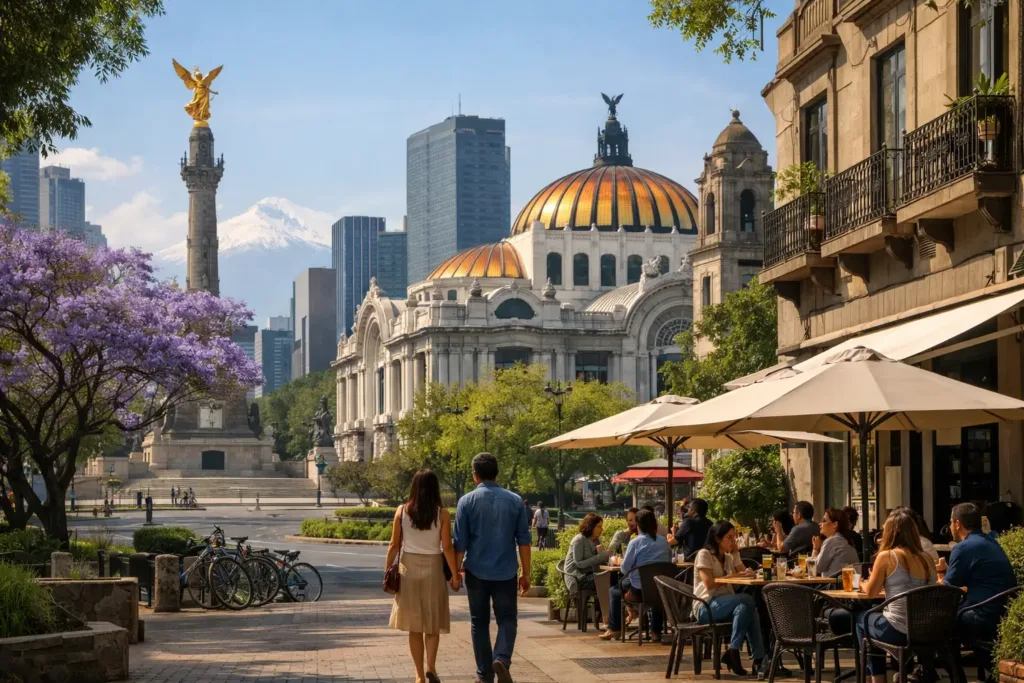
Some cities ask for a checklist. Mexico City asks for a rhythm. A good mexico city neighborhood guide is less about ranking the “best” areas and more about helping you choose the places that fit how you want to spend your days – long coffee mornings, gallery afternoons, late dinners, leafy walks, old architecture, or a bit of all of it.
The real pleasure of CDMX is that neighborhoods can feel completely different from one another, even when they are a short ride apart. That means your trip gets better when you stop thinking in terms of landmarks and start thinking in terms of atmosphere. If you know what kind of traveler you are, the city gets easier to read.
A Mexico City neighborhood guide by vibe, not hype
There is no single “right” neighborhood in Mexico City. Some areas are best for wandering, some reward a planned afternoon, and some shine after dark. A neighborhood that feels perfect for a remote work week might not be the one you want for museum-heavy days. That trade-off matters here.
Roma and Condesa tend to get the most attention, and for good reason. They are beautiful, walkable, full of cafés, design shops, restaurants, and everyday street life. But they are not the whole story. Centro Histórico gives you scale and drama. Coyoacán slows the pace. Juárez feels layered and current. Polanco is polished and dense with cultural stops.
Roma: creative, classic, and easy to settle into
Roma is often where people begin to feel at home in the city. The streets are lined with early 20th-century buildings, jacaranda trees in season, and a mix of old-school businesses and contemporary spots that actually work together. It feels social without always being loud.
This is a strong neighborhood for travelers who like to build a day as they go. You can start with coffee, pass a bakery you did not plan on, step into a small gallery, browse a bookstore, and end up at dinner somewhere that feels both relaxed and sharply curated. Roma rewards curiosity.
There are subtle differences within it. Roma Norte is busier, more restaurant-driven, and generally where the creative energy feels most concentrated. Roma Sur is quieter and more residential. If you want access to the city with a little more breathing room, that distinction matters.
For many visitors, Roma hits the sweet spot between convenience and character. It is especially good for first-time travelers, remote workers, and anyone who wants a neighborhood that still feels lived in.
Condesa: green, social, and made for long walks
Condesa shares a border and some sensibility with Roma, but the mood is different. It feels softer around the edges, greener, and a bit more leisurely. The parks shape daily life here. You notice people walking dogs, meeting for breakfast, jogging in the morning, and lingering on terraces into the evening.
If your ideal city day includes a newspaper, a shaded bench, and a late lunch that turns into drinks, Condesa makes that easy. It is one of the best areas for travelers who value walkability and a calmer daytime rhythm. It can still be lively at night, especially on weekends, but the atmosphere is usually more relaxed than hectic.
Condesa can also feel more polished and less surprising than other parts of the city. For some travelers, that is exactly the appeal. For others, it may feel a little too comfortable. It depends on whether you want your trip to lean toward ease or toward contrast.
Juárez: layered, stylish, and still slightly under the radar
Juárez has changed quickly, but it still carries a sense of edge that keeps it interesting. Historic buildings sit beside newer creative spaces, cocktail bars, restaurants, and independent businesses. Compared with Roma and Condesa, it feels less settled into a single identity.
That is what many people like about it. Juárez can feel more urban and less curated. You get beautiful pockets, busy avenues, and a stronger sense of the city shifting in real time. It works well for travelers who do not need everything to be picturesque all the time.
It is also practical. You are close to Paseo de la Reforma, with relatively easy movement toward Centro, Chapultepec, and other key zones. If you like being in the middle of things without staying in the most obvious neighborhood, Juárez makes a strong case for itself.
Centro Histórico: grand, intense, and worth doing with intention
Centro is not subtle. It is monumental, noisy, historic, crowded, and completely essential. This is where Mexico City puts its scale on full display – plazas, palaces, churches, markets, museums, tiled facades, rooftop views, and blocks that can shift from stately to chaotic in minutes.
A lot of travelers make the mistake of treating Centro like a quick stop for a few major sights. It deserves more than that. Give it time and structure your visit around energy levels. Mornings are often the most pleasant for walking, and a loose plan helps because there is so much visual and cultural density.
Centro may not be the neighborhood you want for every hour of your trip, but it is one of the places that explains the city best. If Roma and Condesa show you contemporary CDMX at street level, Centro shows you the historical weight behind it.
Coyoacán: slower pace, deeper history
Coyoacán asks you to slow down. The streets are lower and older, the plazas invite lingering, and the rhythm feels more residential than performative. There is culture here, of course, but also a sense of everyday neighborhood life that survives the attention it gets.
It is a strong choice for travelers who want a quieter day with substance – museums, markets, a long meal, a walk through tree-lined streets, maybe an afternoon coffee that stretches out longer than expected. It can feel farther from the central neighborhoods many visitors focus on, so it is usually better as a dedicated day rather than something you tack on casually.
That little bit of effort is part of the reward. Coyoacán gives you another version of Mexico City, one that feels intimate and historical without becoming static.
Polanco: refined, cultural, and detail-oriented
Polanco is often reduced to shopping and expense, which misses the point. Yes, it is one of the citys more polished neighborhoods, but it also offers some of the strongest museum access, broad avenues, and a very particular kind of urban elegance.
If you care about design, architecture, and cultural institutions, Polanco can be deeply satisfying. It is less bohemian than Roma and less park-centered than Condesa, but it has its own appeal: precision, ambition, and a sense that details matter.
Some travelers love that. Others find it too formal. Again, it depends on what you want your days to feel like. If you are after spontaneity and small-scale neighborhood texture, Polanco may be better in doses. If you enjoy a more refined city experience, it can be a highlight.
How to use this Mexico City neighborhood guide in real life
The best approach is to choose one neighborhood as your anchor, then let the rest of the city unfold around it. You do not need to “cover” everything. Mexico City is too large for that mindset, and the trip gets richer when you give each area room to breathe.
If you want café culture, walkability, and easy creative energy, start with Roma. If green space and a gentler social pace sound better, lean toward Condesa. If you like neighborhoods in transition, choose Juárez. If history is the point, make real time for Centro. If you want a slower cultural day, go south to Coyoacán. If museums and refinement appeal to you, add Polanco.
It also helps to plan by time of day. Roma and Condesa are easy in the morning and evening. Centro often works best earlier. Coyoacán deserves a full afternoon. Juárez can shift nicely from daytime wandering to dinner and drinks. Polanco is especially good when you want to pair museums with a more composed meal or aperitif.
A local guide like Casa Aimée often encourages travelers to think this way for a reason. The city opens up when you stop chasing highlights and start reading neighborhoods as living places.
Mexico City is generous with anyone willing to pay attention. Pick the areas that match your pace, leave room for detours, and let one good street lead to the next.