
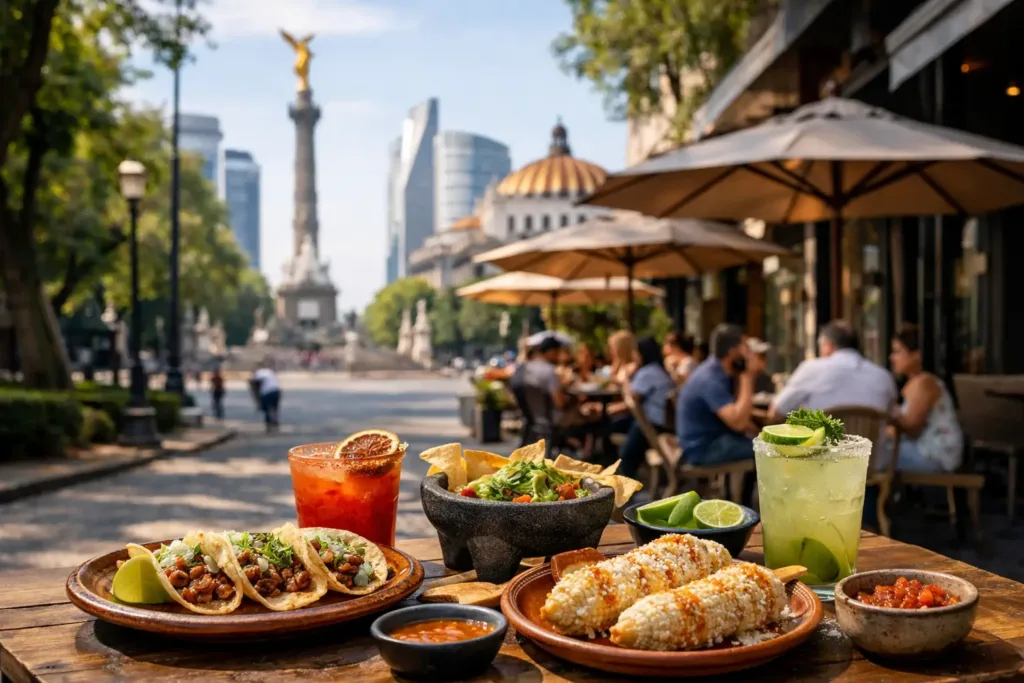
At 11 a.m. in Mexico City, one person is standing at a market counter over a bowl of pancita, another is settling into a long lunch in Roma, and someone else is already planning where to find the city’s best late-night tacos. That rhythm is what makes mexico city food experiences so memorable. Eating here is not a side activity between museums and walks through leafy streets. It is one of the clearest ways to understand how the city lives.
The best approach is not trying to book the trendiest table for every meal. It is learning how the city eats, neighborhood by neighborhood, hour by hour. Some meals are worth dressing up for. Others are best taken standing on a sidewalk with salsa on your hand and no real plan for what comes next.
What makes Mexico City food experiences different
Mexico City rewards curiosity more than checklist travel. You can have an exceptional meal in a polished dining room, then turn a corner and find a family-run antojitos stand with a line of locals that tells you everything you need to know.
What sets the city apart is range. The food culture is shaped by migration from every Mexican region, by deep Indigenous traditions, by everyday street cooking, and by a restaurant scene that is confident without feeling detached from local life. The result is not one signature dish or one correct way to eat. It is a city where breakfast can be as compelling as dinner, and where neighborhood context matters as much as the plate itself.
That also means your best meal may depend on what kind of traveler you are. If you love design-forward spaces and thoughtful tasting menus, the city has them. If you travel through markets, fondas, and corner stalls, it has that in abundance too. Most visitors should do both.
Start with neighborhoods, not just restaurants
If you want richer mexico city food experiences, stop thinking only in terms of reservations. Think in terms of neighborhoods with their own tempo, architecture, and food habits.
Roma and Condesa are often where visitors begin, and for good reason. They are walkable, full of cafes, natural wine bars, bakeries, and restaurants that feel current without trying too hard. These areas are ideal for long breakfasts, midweek lunches, and dinners that turn into drinks. They are especially good if you enjoy a slower, editorial kind of travel where aesthetics and atmosphere matter along with the menu.
Centro Histórico offers a different rhythm. Here, eating can feel layered with history. You might step into a century-old cantina, have coffee in a grand old building, or find a casual counter serving dishes with roots far deeper than the trend cycle. It is less curated and more intense, which is exactly why it matters.
Coyoacán leans toward a more traditional pace, with markets, sweets, and classic dishes that suit an afternoon of wandering. In Juárez, you can move from elegant cocktails to inventive cooking in a few blocks. In neighborhoods farther from the standard visitor loop, the city gets even more revealing, though that usually takes time, local guidance, or a stronger sense of direction.
The meals that define the city
Breakfast deserves more attention than many travelers give it. In Mexico City, morning food is not an afterthought. Chilaquiles can be comforting or fiery depending on the salsa. Tamales and atole still make perfect sense on a cool morning. Pan dulce with coffee can become a ritual if you let it. And if you have never had fresh tortillas with beans, eggs, and salsa in a modest neighborhood spot, that is one of the simplest ways to understand why the city’s food culture feels so grounded.
Lunch is often the real center of the day. A comida corrida at a well-loved local spot can be one of the best-value, most satisfying meals you have in the city. It may not be flashy, but that is the point. Soup, rice, a main dish, agua fresca, maybe a small dessert – it can tell you more about everyday life than a highly produced dinner ever will.
Then there are tacos, which are essential but easy to oversimplify. Yes, you should eat tacos al pastor cut straight from the trompo. Yes, you should pay attention to suadero, carnitas, barbacoa, and regional styles that appear across the city. But the real trick is understanding that taco culture changes by time and place. Some are breakfast tacos. Some are lunch staples. Some only make sense after dark. Some are worth crossing the city for, while others are best because they happen to be right there when you are hungry.
Markets, street stands, and restaurants all matter
One mistake visitors make is treating market food as casual and restaurant food as serious. In Mexico City, that line is far less useful.
Markets are where the city’s appetite becomes visible. You see ingredients, pace, repetition, habit. You smell fresh masa, frying oil, cut fruit, herbs, broth, and charcoal in the same walk. A market breakfast or lunch can feel immediate in a way that no polished space can replicate. It also asks more of you. You may need to trust your instincts, observe what locals are ordering, and accept a bit of chaos.
Street food offers some of the city’s most direct pleasure, but it is not about being reckless. Choose busy stands with clear turnover, watch how the food is handled, and pay attention to what the stand seems to specialize in. A place doing one or two things well is often a better bet than a long menu trying to do everything.
Restaurants, meanwhile, show another side of the city’s confidence. Some reinterpret regional Mexican cooking with precision. Others focus on seasonal ingredients, old techniques, or contemporary formats that still feel rooted in place. The best ones do not flatten Mexican food into a concept. They sharpen your understanding of it.
How to eat well without overplanning
The city rewards a little structure and a little spontaneity. Reserve a few places you really care about, especially for dinner or weekend brunch, then leave space for what the day offers you.
This matters because appetite changes here. Maybe you planned a formal lunch but just had an unforgettable tlacoyo at a market and now want something lighter later. Maybe a bakery stop turns into a leisurely coffee break and shifts the rest of the day. Maybe your favorite meal ends up being the caldo, tostada, or taco you found while walking between neighborhoods.
There are trade-offs. A fully booked itinerary can help if you have limited time and strong restaurant priorities. But it can also make the city feel rigid, and Mexico City is not a place best experienced in a rush from reservation to reservation. A looser plan gives you room to follow a recommendation from a barista, a shop owner, or a local friend.
If you are staying in Roma, this balance is especially easy to get right. You can begin with coffee and pastry, walk to lunch, pause for something sweet in the afternoon, and still end the night somewhere lively without turning food into a production. That local rhythm is part of the experience Casa Aimée encourages travelers to lean into.
A few flavors and formats worth seeking out
Not every visitor needs a list of must-eat dishes, but a few categories are worth watching for because they reveal the city beyond the obvious. Tlacoyos and sopes show what masa can do when it is treated as the center rather than the base. Pozole, mole, and barbacoa connect you to traditions that vary by region and occasion. Seafood can be surprisingly strong here too, especially in contemporary spots that bring coastal styles into the capital.
Dessert is another place where Mexico City quietly excels. Churros get the attention, but conchas, flan, pan de elote, and excellent ice cream or sorbet can be just as memorable. The same goes for drinks. Fresh juices, aguas frescas, mezcal, Mexican wine, and coffee all deserve more than a passing mention.
Still, it depends on your style. Some travelers want the city’s classics first and innovation second. Others are more excited by chefs pushing the conversation forward. Mexico City supports both instincts. You do not need to choose one camp.
The best food experiences are tied to time and place
A great meal in Mexico City is rarely just about flavor. It is the street noise outside a taco stand, the tiled room of an old dining hall, the slow arrival of plates at lunch, the feeling of walking through tree-lined blocks before dinner, the conversation that stretches longer because no one is trying to turn the table.
That is why the city stays with people. Its food culture is generous, layered, and deeply social. You can arrive with a list, but leave with memories attached to neighborhoods, light, sound, and timing.
So give yourself permission to eat with intention, but not too much control. Follow the line at the market. Book the meal you are excited about. Sit down for lunch when the city does. Stay out for tacos if the night asks for it. The right Mexico City meal often appears when you are paying close attention.