
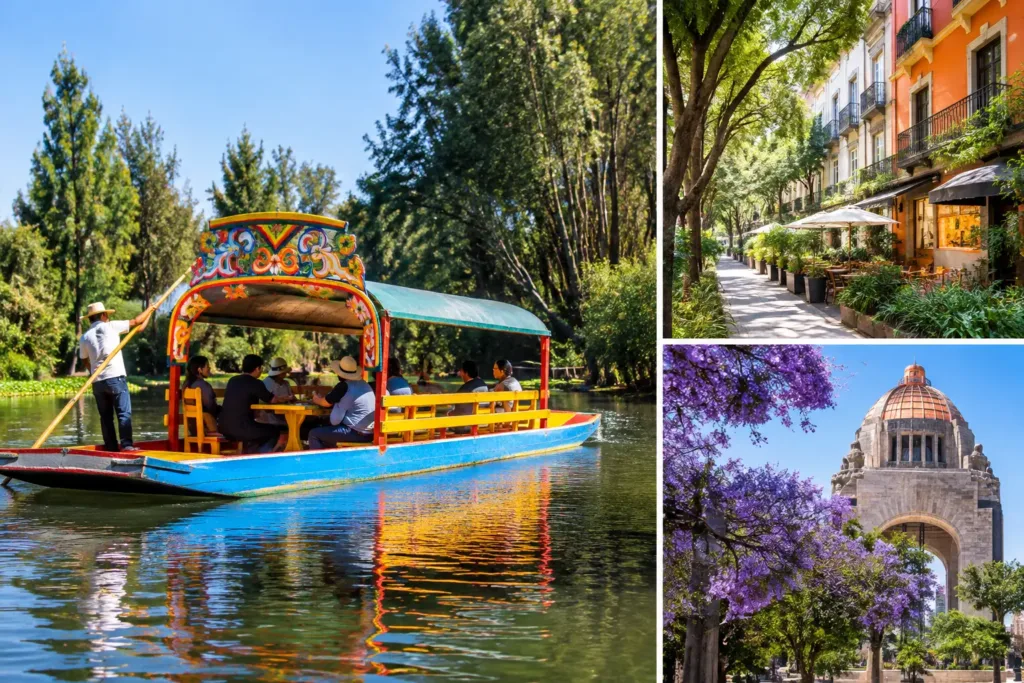
The first thing you notice in Xochimilco is not the color of the trajineras. It is the pace. The city loosens its grip as you move through narrow canals lined with ahuejotes, gardens, family plots, and weekend life. Knowing how to visit Xochimilco responsibly means protecting that feeling rather than treating the canals as a floating bar scene.
Xochimilco is joyful, social, and absolutely worth celebrating. It is also a living wetland, an agricultural landscape, and a home for communities whose relationship with water reaches back long before Mexico City existed. A good visit leaves room for music and antojitos, but it also asks for curiosity, care, and a little restraint.
Start by understanding what Xochimilco is
Xochimilco is often reduced to its most photogenic image: painted boats drifting past mariachi bands and vendors. That experience is real, but it is only one layer. The canals are remnants of the lake system that once defined the Valley of Mexico. The chinampas – fertile, human-made agricultural plots sometimes called “floating gardens” – remain an ingenious form of cultivation and an essential part of the area’s cultural identity.
This landscape faces serious pressure from urban growth, water extraction, invasive species, pollution, and the ongoing challenge of keeping canals healthy. It is also habitat for the axolotl, the remarkable salamander that has become an emblem of Mexico City’s fragile aquatic ecosystem.
You do not need to arrive as an expert. Just arrive knowing that the canal is not a theme-park ride. It is a shared environment with a long memory.
Choose your embarcadero with intention
The main departure points, or embarcaderos, offer different moods. Nativitas is the most popular and the easiest choice for a first visit. It can be lively, crowded, and full of food and music boats, especially on weekends and holidays. That is ideal if you want a classic celebratory afternoon and are comfortable with a little bustle.
For a quieter experience, consider asking locally about routes that pass through less congested canals or connect to chinampa areas. Some boat operators offer more nature-focused outings, including visits where you can learn about farming, conservation, or the axolotl’s habitat. These trips may cost more than a standard circuit, and that can be money well spent when it supports people caring for the landscape.
If you are visiting with a group, decide what kind of day you want before you board. A birthday-style boat ride, a family lunch, and a contemplative morning among the gardens are all valid plans. The responsible choice is matching your route, volume, and expectations to the place rather than insisting every visit look the same.
Ask clear questions before boarding
Agree on the price, duration, route, and what is included before the boat leaves the dock. Trajinera rates are typically quoted by boat and by hour, not per person, so a full group can make the experience more accessible. Confirm whether the price is for the whole boat, whether there is a minimum rental time, and how additional time will be charged.
It is also fair to ask if your driver can take a calmer route or make a stop at a chinampa. A direct, respectful conversation prevents confusion later and treats the person guiding your ride as a local professional, not a prop in your vacation photos.
Let the canals set the volume
Xochimilco has always been a place of gathering. Music belongs here. So do laughter, mariachi songs, and the occasional spontaneous dance. Responsibility is not about making the day silent. It is about noticing when celebration becomes disruption.
Keep your own speaker at a level that lets you hear nearby boats. Avoid competing with every passing mariachi or turning the canal into a wall of sound for hours. If you hire musicians, listen closely, tip fairly, and give them your attention. Their work is part of the atmosphere people come for; it should not become background noise under a louder playlist.
The same goes for drinking. A few beers or micheladas can be part of a relaxed afternoon, but heavy drinking changes the experience for everyone around you, including the boat operator responsible for getting you back safely. Bring water, eat a proper meal, and save the biggest night out for back in the city.
Eat from the water, thoughtfully
One of Xochimilco’s pleasures is watching a floating kitchen pull alongside your boat. You may find elotes, quesadillas, tacos, tamales, esquites, fruit, sweets, and more. Buying from vendors is a direct way to participate in the local economy, and a hot quesadilla on the canal is hard to improve upon.
Choose food that is freshly prepared and use your usual travel judgment about heat, handling, and your own dietary needs. Carry hand sanitizer, especially before eating. If you have allergies or follow a vegetarian diet, ask directly and simply; ingredients vary by vendor and by day.
Bring a reusable water bottle if you can, and avoid over-ordering disposable cups, plates, and plastic decorations. Vendors work within the realities of a busy tourist area, so this is not about judging them. It is about reducing what your group adds to a waterway already carrying too much waste.
Most importantly, keep every wrapper, bottle cap, straw, and napkin on the boat until you reach a trash bin on land. “It is only one cup” is how public places become someone else’s cleanup job.
Respect the chinampas as working land
A chinampa can look idyllic from a trajinera, but it is not empty scenery. Many are active farms, private property, or conservation spaces. Do not step onto one unless you have been invited or are visiting through an organized stop. Do not pick flowers, touch crops, or take shortcuts through planted areas for a photo.
If your route includes a farm visit, buy something when it feels appropriate: seasonal produce, a prepared meal, or a small local product. Ask what is growing and how the chinampa is maintained. These conversations often become the part of the day people remember most, because they turn a beautiful view into a relationship with the place.
Wildlife deserves the same distance. You are unlikely to spot an axolotl in the canals, and you should be wary of anyone promising an easy encounter. The best way to support this animal is to respect habitat, avoid litter, and seek out community-led education or conservation experiences rather than chasing a photo opportunity.
Plan your timing and transportation
Weekends are festive, but they are also crowded. If your schedule allows, go on a weekday morning or early afternoon for a gentler rhythm, clearer light, and more space on the canals. Rainy season can make everything deeply green, though weather may change quickly. Bring sun protection year-round and a light layer if you plan to stay into the evening.
From central neighborhoods such as Roma or Condesa, Xochimilco is a real cross-city outing. Give it the better part of a day rather than squeezing it between brunch and dinner. A rideshare or taxi can be the most straightforward option for a group, while public transit can work well for travelers who are comfortable navigating Mexico City and want a more local route. Whichever you choose, confirm your return plan before the day gets late.
Cash is useful for boat rentals, food, musicians, and tips. Bring small bills, but do not wave cash around or pressure vendors into haggling over a modest purchase. Negotiate the boat rate clearly at the start, then pay people fairly for their work.
How to visit Xochimilco responsibly with your camera
Xochimilco is visually generous, and photographs are part of the fun. Take them. Just remember that residents, vendors, musicians, and boat operators are people at work or at leisure, not a backdrop. Ask before taking a close portrait, particularly of children or someone selling food. If someone says no, move on without making it awkward.
Avoid staging photos that require climbing, blocking a narrow canal, reaching into gardens, or dangling trash over the water. A more meaningful picture is often the unplanned one: a hand passing a warm cup of esquites, the reflection of a trajinera’s painted name, or a quiet stretch of reeds beyond the busiest route.
Xochimilco asks visitors to do something increasingly rare in a large city: slow down without consuming every inch of the experience. Stay curious, tip with generosity, keep the water clean, and let the canal be more than a colorful stop on your itinerary. The best day here should leave you lighter, and leave Xochimilco no heavier for having welcomed you.