
You do not need to memorize all of Mexico City to move through it well. If you are wondering how to use Metrobus CDMX, the good news is that it is one of the easiest public transit systems in the city to figure out once you understand the rhythm. It is fast, affordable, and especially useful for travelers spending time in neighborhoods like Roma, Condesa, Centro, Juarez, Del Valle, and beyond.
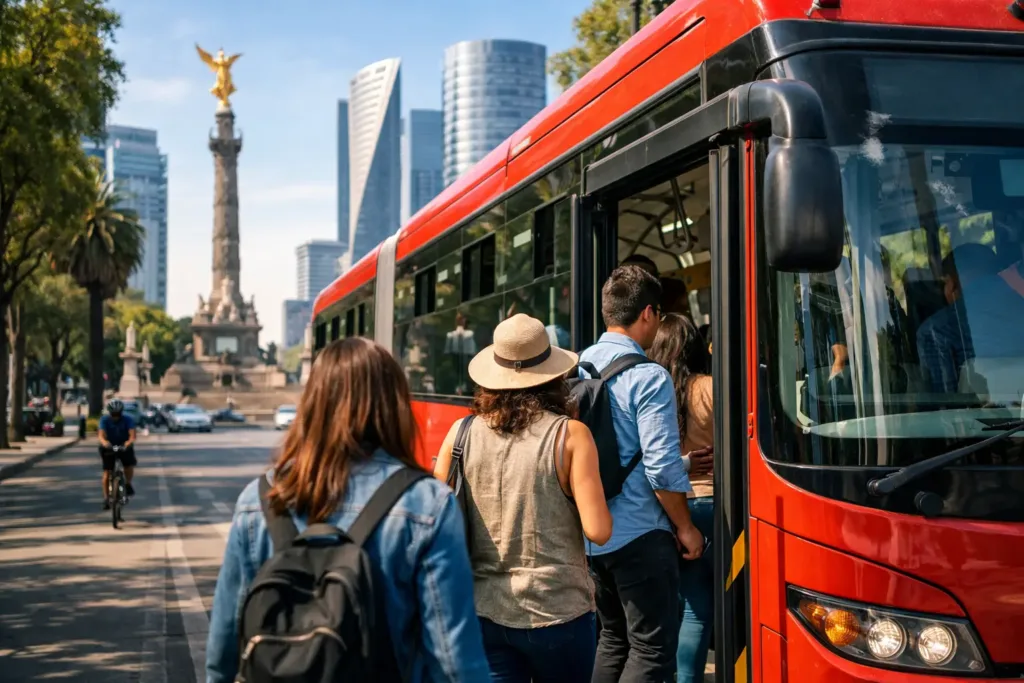
The first thing to know is that Metrobus is not the same as the Metro. The Metro is the subway system. Metrobus runs on major avenues in dedicated lanes, with large red buses stopping at enclosed stations in the middle or side of the street. That dedicated lane matters. In a city where traffic can turn a short trip into a long one, Metrobus often saves time because it keeps moving while cars sit still.
Why Metrobus works so well in CDMX
For visitors, Metrobus hits a sweet spot. It is more straightforward than the Metro for many daytime trips, and it covers several parts of the city that travelers actually spend time in. You can use it to cross long distances on Reforma, Insurgentes, or Eje 4 Sur without negotiating parking, rideshare surge pricing, or the slow pace of surface traffic.
It also feels more visible. Because you can see the city as you ride, Metrobus helps you build a mental map of CDMX. That is useful when you are getting your bearings in the first few days and deciding how neighborhoods connect.
How to use Metrobus CDMX step by step
The system gets much easier once you know the sequence. You buy or load a transit card, enter the station by tapping at the turnstile, wait on the platform, and board the correct bus when it arrives. That is really the core of it.
Most riders use a rechargeable mobility card. You tap it at the station entrance, not on the bus. This catches some first-time visitors off guard because many cities handle payment onboard. In CDMX Metrobus, the station is where your trip starts.
Inside the station, check the signs above the platform or on the walls. You are looking for direction, route number, and sometimes whether the bus is regular service or an express pattern. Some buses stop at every station, while others skip selected stops. If you board without checking, you may end up passing the station you wanted.
When the bus arrives, let people exit first. Then board quickly. During busy hours, the pace is brisk and people know exactly what they are doing. You do not need to match that energy perfectly, but it helps to step aside, read the signage, and move with intention.
Getting the card and paying your fare
To use Metrobus, you will usually need a Mexico City mobility card, often called the Integrated Mobility Card. It works across multiple forms of public transit, which is useful if you end up mixing Metrobus with Metro, trolleybus, or other systems.
You can typically buy and reload it at machines in many stations. Some stations are better equipped than others, so if a machine is out of service or there is a line, try a larger station. Keep a little patience in reserve. Public transit in a huge city is efficient, but not every machine behaves beautifully every time.
The fare is low by US city standards, which is one reason locals rely on it daily. Because prices can change, it is best to check the posted fare at the station when you arrive rather than depending on something you read months ago. Load more than one ride if you plan to use the system throughout the day. It saves time and keeps you from scrambling when you are ready to head to lunch or a museum.
Understanding lines, directions, and stops
Metrobus has multiple lines, and each one serves a different corridor. Line 1 is especially useful for many visitors because it runs along Insurgentes, one of the city’s main north-south arteries. Other lines cross major destinations and transit hubs, including routes that pass through Reforma and the historic center.
The key is not memorizing the whole network. It is understanding your line, your direction, and your stop. Direction matters because platforms are separated by travel direction, and crossing to the other side is not always as intuitive as it looks from street level.
Before entering a station, check the station name and the direction of travel. If you are heading south on Insurgentes, for example, make sure you are not entering the northbound platform out of habit. That sounds obvious until you are standing on a median with traffic moving fast on both sides and trying to orient yourself in real time.
Express services also matter. On some lines, certain buses stop only at major stations. They are helpful when you are going a long distance, but less helpful when you need a local stop in between. If you are unsure, ask someone on the platform or wait for a bus clearly marked with your station pattern.
Best times to ride and when to think twice
Metrobus is very manageable in the middle of the day. Morning and evening rush hour can be intensely crowded, especially on the most central lines. If you are carrying shopping bags, a laptop, or simply do not enjoy packed commutes, try to avoid roughly 7:00 to 9:30 am and 6:00 to 8:00 pm on weekdays.
That does not mean you should never ride then. It just changes the experience. During peak hours, expect full platforms, quick boarding, and very little personal space. Mid-morning to late afternoon is usually calmer and better for travelers who want a little breathing room.
Weather can also shape your decision. During heavy rain, stations and platforms may feel more crowded as people shift from walking or biking to transit. On the other hand, rainy days are exactly when the dedicated lanes make Metrobus feel especially valuable.
Safety, etiquette, and common sense
Metrobus is widely used and generally practical for visitors, but like any big-city transit system, it works best when you stay aware. Keep your phone and wallet secure, especially in crowded cars and stations. A crossbody bag worn in front of you is more comfortable and smarter than a backpack hanging open behind you.
If you need to check directions, step to the side rather than stopping in the middle of the flow. Platforms can get crowded, and people move with purpose. Small acts of awareness go a long way.
There are also designated spaces and norms around priority seating. If you see areas reserved for women and children or seats set aside for older adults and riders with disabilities, respect them. You do not need a long lesson in local etiquette – just observe, make room, and follow the signs.
Using Metrobus for the neighborhoods travelers love most
If your days revolve around coffee in Roma, galleries in Juarez, lunch on Reforma, or errands along Insurgentes, Metrobus can be part of a very local rhythm. It is not always the perfect choice for every short hop, especially if you are only going a few blocks, but for long avenues it often beats a car.
This is where the system becomes more than transportation. Riding Metrobus lets you move with the city instead of around it. You see office workers, students, artists, families, and regular weekday life passing through the same corridors you came to explore. For travelers who want a polished but grounded experience of CDMX, that matters.
If you are staying near Roma or Condesa, you may find yourself combining transit with walking. That is often the best formula. Walk the leafy inner streets, then use Metrobus for the longer cross-city stretch that would otherwise eat up time in traffic.
A few mistakes first-time riders make
The most common mistake is confusing Metro with Metrobus and heading to the wrong entrance. The second is entering the right station but the wrong direction. The third is assuming every bus on the line stops at every station.
Another easy mistake is waiting until you are in a rush to buy a card. If you already know you will use transit more than once, get the card early and load enough credit for a few rides. It makes the whole day smoother.
And finally, do not underestimate how large some avenues and intersections are. Give yourself a few extra minutes to find the correct station access point. In CDMX, what looks close on a map can involve a longer walk to the actual entrance.
If Metrobus feels slightly confusing on day one, that is normal. By day two, it usually clicks. Once it does, the city opens up in a way that feels less scripted and far more lived-in – exactly how Mexico City is best experienced.