
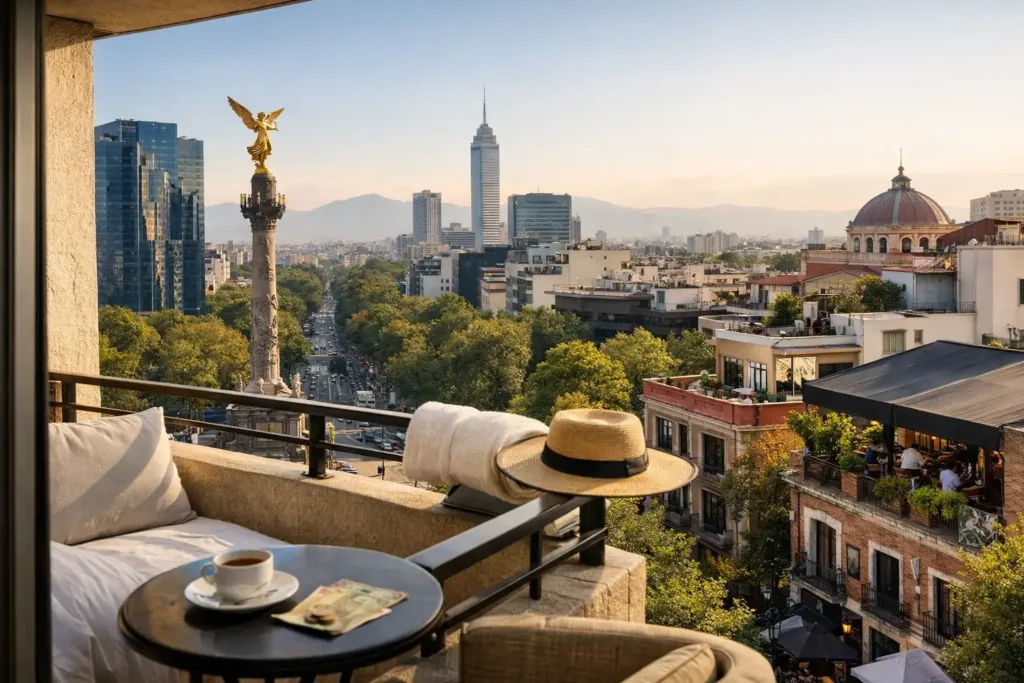
Mexico City can surprise you in both directions. You can pay less than expected for a simple stay in a lively, walkable neighborhood, or spend far more once location, timing, and comfort level start shaping the price. If you’re asking how much is a hotel in Mexico City, the honest answer is that rates vary widely, and the difference usually comes down to when you visit, where you stay, and how you want the city to feel outside your door.
That last part matters more than many travelers expect. In CDMX, the price of where you sleep is often tied to the rhythm of the neighborhood itself – tree-lined streets, coffee culture, late dinners, easy transit, quieter nights, or a more local, less polished atmosphere. If you’re planning a trip around food, design, museums, and everyday city life, it helps to think beyond the nightly rate.
How much is a hotel in Mexico City by budget?
For most travelers, a basic nightly range looks something like this: budget stays often fall around $35 to $80 USD per night, mid-range options tend to land between $80 and $180, and more design-forward or high-service stays can start around $180 and climb well past $300. Those numbers are broad on purpose. A small room in a central area during a quiet week can cost less than a larger room in the same area during a busy event period.
Taxes, breakfast, parking, and flexible cancellation policies can also shift the real total. A rate that looks attractive at first glance may end up less compelling once fees are added. On the other hand, a higher nightly price in a well-located area can save you time and transportation costs if you plan to spend most of your days on foot.
For urban travelers and remote workers, value is rarely just about price. Good Wi-Fi, a comfortable desk, walkability, noise level, and access to cafes can matter just as much as the room itself. In a city as layered as Mexico City, convenience has a price, but so does atmosphere.
What changes the price most?
The biggest factor is usually location. Central neighborhoods with strong food scenes, attractive streets, and easy access to galleries, parks, and restaurants tend to cost more. Areas that feel more residential or farther from the neighborhoods most visitors explore may offer lower rates, though that can mean more time in traffic and less spontaneity in your day.
Seasonality also plays a major role. Prices often rise during holidays, long weekends, major festivals, and peak travel months. If your dates overlap with Day of the Dead events, Formula 1 weekend, large concerts, or business conferences, rates can move quickly. Even within the same month, weekday and weekend pricing may differ depending on whether an area caters more to business travelers or leisure visitors.
Room type matters too. A compact interior room and a spacious corner room in the same property can feel like completely different stays. Add a balcony, a better view, or included breakfast, and the nightly cost can shift faster than expected.
Then there is timing. Travelers who plan early usually see better availability and a wider spread of prices. Last-minute rates can occasionally drop, but in Mexico City, especially in the most sought-after neighborhoods, waiting too long often means paying more for fewer appealing options.
Neighborhoods shape the experience and the price
If your trip is centered on cafes, independent shops, good walking streets, and a strong restaurant culture, neighborhoods like Roma and Condesa tend to sit on the higher end of the city’s average range. That premium is not just about aesthetics. It’s about ease. You step outside and the day starts naturally – coffee, parks, bookstores, bakeries, galleries, dinner, drinks, all without much planning.
Polanco also tends to command higher prices, often because of its polished feel, business presence, and proximity to upscale dining and retail. It can work well if your priorities lean toward refinement, museums, and quieter evenings in certain sections, though it often feels different from the more casually lived-in energy many travelers seek.
Centro can offer more range. In some parts, you may find lower prices than in Roma or Condesa, especially if the focus is practicality rather than atmosphere. But Centro is not one single mood. Some streets are grand and historic, others busy and loud, and the experience can shift block by block.
In more residential areas, prices may soften, and that can be a smart choice for longer stays or travelers who already know the city. The trade-off is simple: lower nightly rates may come with less walkable access to the places you want to spend time.
When lower prices are worth it, and when they are not
A cheaper room can be a great decision if your itinerary is built around being out all day. If you plan to explore markets, museums, taquerias, and neighborhoods from morning to night, you may not need much beyond a clean, comfortable base.
But lower prices are not always the better value. If the room is noisy, the Wi-Fi is unreliable, or every outing requires a car ride, the city can start to feel less generous. Mexico City is best when it unfolds easily. Being able to walk to breakfast, work from a nearby cafe, or head out for a late dinner without overthinking logistics changes the trip.
This is especially true for remote workers and longer stays. Saving $20 or $30 a night may not feel like a win if the setup makes it harder to work, rest, or enjoy the neighborhood. In many cases, paying a little more for the right area creates a much smoother rhythm.
How much is a hotel in Mexico City during high season?
During busy periods, average rates can rise noticeably. A room that might cost $90 to $140 in a quieter stretch could jump to $140 to $220 or more, especially in central neighborhoods where demand stays strong. Higher-end stays can climb even faster, particularly when international events or holiday travel compress availability.
This does not mean every trip needs to be expensive. Flexibility helps. Traveling midweek, avoiding major event weekends, or visiting in shoulder season can make a meaningful difference. You may still get the weather and energy you want, just without the same pressure on prices.
If your dates are fixed, it helps to set expectations early. Mexico City remains good value compared with many major US cities, but the most appealing parts of the city are no secret. Prices reflect that.
A smarter way to think about cost in CDMX
Rather than asking only what a room costs per night, ask what kind of trip that price supports. Does the area match your pace? Can you walk to dinner? Will mornings feel calm or hectic? Are you close to the parts of the city you actually want to return to after dark?
That mindset usually leads to better decisions than chasing the lowest number. In a city with this much culture, scale, and personality, your base shapes the texture of every day. The right location can make a short trip feel expansive and a longer stay feel grounded.
For travelers drawn to neighborhood living, places with strong local character often justify the extra cost. Not because they are trendier, but because they let you experience the city more naturally. You notice the corner bakery, the jacaranda-lined street, the small gallery you were not planning to visit, the second coffee of the day that turns into lunch nearby. That ease is part of the value.
Casa Aimée speaks to that kind of stay – one shaped as much by neighborhood feeling as by the room itself.
So, what should you budget?
For a short trip, many travelers find that budgeting around $100 to $180 per night gives them a comfortable middle ground in well-loved parts of the city. If your standards are simpler and your dates are flexible, you may spend less. If design, space, and prime location are central to the trip, it is wise to budget more.
A practical target for most experience-led travelers is not the absolute lowest rate, but the price point where comfort, location, and daily ease meet. In Mexico City, that balance often defines the trip more than any single amenity.
If you give yourself room in the budget for the neighborhood you really want, the city tends to give something back. Your mornings get better, your afternoons get easier, and your evenings stretch a little longer in all the right ways.