
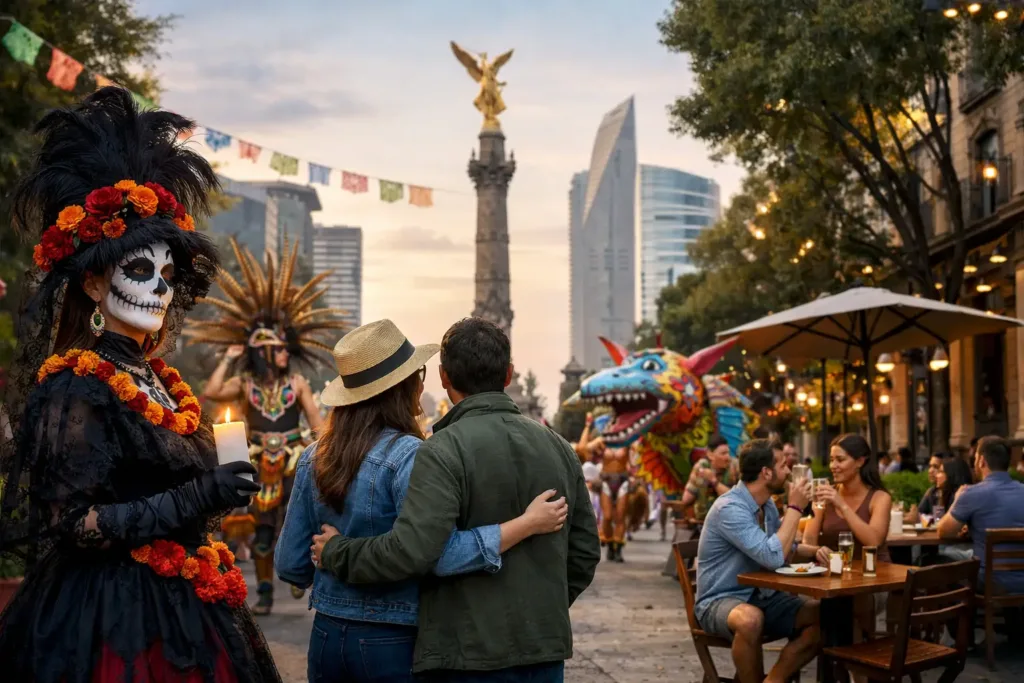
Mexico City does not save its energy for one festival season. CDMX festivals arrive in waves: a downtown square filled with film lovers, a night of electronic music inside an unexpected venue, marigolds spilling across market stalls, or a neighborhood street temporarily claimed by dancers, cooks, and families. The best approach is not to chase every headline event. It is to choose a moment that matches the city you want to experience.
For travelers drawn to food, design, music, and the small daily rituals that make a neighborhood feel alive, festivals can be a beautiful entry point. They also change the rhythm of the city. A weekend that looks easy on a calendar may bring street closures, sold-out restaurants, and long rides home. A little local awareness goes a long way.
The CDMX festival calendar, by feeling
Mexico City hosts major cultural events throughout the year, but each season has a different personality. Spring is social and high-energy, with concerts, art fairs, and outdoor programming pulling people into parks, plazas, and central neighborhoods. Summer brings rain, slower afternoons, and a welcome excuse to build an evening around cinema, dance, or a museum event. Fall is visually spectacular, while December shifts toward posadas, markets, and family-centered traditions.
There is no single “best” time. It depends on whether you want a packed cultural schedule or room to wander. Large events are exciting, but they can make popular areas feel busier and more expensive. Smaller neighborhood celebrations often offer the more intimate memory: a brass band passing through a side street, a temporary altar in a local business, or a food stand making one dish exceptionally well.
Spring: music, art, and big-city momentum
Spring is when the city seems especially willing to stay out late. Vive Latino is one of the best-known music weekends, bringing a broad mix of rock, Latin alternative, pop, and emerging acts. It is a major production, so expect crowds, transport planning, and a full-day commitment. If live music is your priority, it can be worth organizing a trip around. If you prefer a quieter cultural visit, choose another weekend and enjoy the smaller venues that make CDMX’s music scene so deep.
Art-minded visitors often look toward the city’s major art fair season, including Zona MACO and the satellite exhibitions, open studios, talks, and independent presentations that gather around it. The fair itself can be polished and busy. The real pleasure is often what happens around the edges: gallery hopping in Roma, San Miguel Chapultepec, Juárez, or San Rafael; lingering over lunch; and noticing how design conversations spill into bookstores and cafés.
Festival del Centro Histórico also gives spring a distinctly civic feeling. Its programming can span classical music, theater, dance, visual art, and performances in historic buildings that are worth seeing even without a formal agenda. Arrive early, take time between events, and let the Centro’s architecture be part of the experience rather than a route between venues.
Summer: screen culture and after-dark events
Rainy season changes the city’s pace, but it does not flatten the cultural calendar. Ambulante, the traveling documentary film festival, is a strong choice for visitors who want a more thoughtful view of Mexico and the wider world. Screenings and conversations often create a feeling of participation rather than passive entertainment. Even if your Spanish is limited, look for films with subtitles or use the festival as a reason to explore a cinema you might otherwise miss.
MUTEK México brings a more experimental current to the city, centering electronic music, audiovisual performance, and digital art. Its venues can be as compelling as the lineup, from industrial spaces to museums and performance halls. This is a good festival for creative professionals and curious night owls, though schedules may run late. Plan the following morning accordingly, especially if you have calls or a remote-work day ahead.
Summer also rewards spontaneous plans. Watch for neighborhood cultural programs in public spaces, often announced close to the date. A free concert or outdoor screening may not have the global profile of a headline festival, but it can offer a more relaxed evening among residents.
Fall: Día de Muertos, without the rush
Día de Muertos is among the most meaningful times to be in Mexico City, and also one of the easiest to misunderstand. It is not one citywide party. It is a season of remembrance, family altars, cemetery visits, flowers, food, and public art, with different expressions across households and neighborhoods.
The large public displays in central areas are visually striking, and the grand parade attracts visitors in huge numbers. See it if spectacle is what you came for, but do not let it become your only plan. Spend time in a market where cempasúchil, candles, sugar skulls, and pan de muerto are part of everyday commerce. Order pan de muerto with hot chocolate or coffee. Notice the ofrendas in museums, cultural centers, and small businesses. These quieter encounters tend to stay with you longer.
For a more grounded experience, avoid treating private or sacred spaces as sets for photos. Ask before photographing people, altars, or vendors. Dress comfortably, carry rain protection, and give yourself extra time. Late October and early November are exceptionally busy, particularly around Roma, Condesa, Centro, and major museums.
Winter: posadas, markets, and local rituals
December’s posadas offer a different kind of festival atmosphere. Rooted in a nine-night tradition leading up to Christmas, posadas can include songs, candles, piñatas, ponche, and shared food. Some are private family gatherings, while others take place through workplaces, schools, or communities. The invitation matters. If you are welcomed into one, follow the lead of your hosts and enjoy the warmth of the ritual rather than trying to turn it into a checklist.
This is also a fine time for seasonal markets and a slower, food-led itinerary. Ponche, tamales, buñuelos, and warm late-night streets make December especially enjoyable for visitors who like the city at a human scale.
How to enjoy CDMX festivals like a local guest
The practical side shapes the experience. For ticketed events, buy only through official festival channels and confirm the venue, entry rules, and set times shortly before you go. Programs can shift, and the best-laid plan may change with weather, traffic, or a last-minute lineup adjustment.
For large gatherings, use the Metro or Metrobús when it makes sense, but check operating hours before committing to a late exit. Rideshare pickup zones can be chaotic after concerts. Walking a few blocks away from a venue before requesting a car is often easier, provided the route is well-lit and you are comfortable with the area. Keep your phone charged, bring a small portable battery, and carry only what you need.
Food planning deserves equal attention. Festival vendors can be wonderful, but a long line is not always a sign of the best meal. Eat a proper lunch before an all-day music event, stay hydrated, and save room for a late dinner near your neighborhood afterward. In Roma and Condesa, reservations can disappear quickly during major weekends, so choose one meal you truly care about and plan ahead. Let the rest stay flexible.
Build space around the main event
A festival works best as an anchor, not your entire Mexico City itinerary. Pair a night of MUTEK with a slow morning in Chapultepec. Follow an art fair afternoon with dinner in Roma Norte and a walk through Colonia Juárez. If you are in town for Día de Muertos, leave time for a market visit and an unhurried museum afternoon rather than rushing from one photo spot to another.
Casa Aimée’s neighborhood is well placed for this kind of travel rhythm: close enough to major cultural areas to join the city’s momentum, then easy to return to for a calmer meal, a coffee, or an evening walk. The point is not to see everything. It is to feel the shift in the streets when the city is celebrating.
Check dates before booking your flights, but leave a few hours unplanned once you arrive. The festival you remember most may be the one you did not schedule: music drifting from a plaza, a temporary altar behind a market counter, or the simple pleasure of joining the evening crowd on its way somewhere interesting.