
Some Mexico City trips are built around museums. Others are built around tacos, park walks, late dinners, and the pleasure of staying in one area long enough to feel its rhythm. If you’re deciding among the best neighborhoods in Mexico City for tourists, the real question is not just what is popular. It is where you want your days to begin and end.
Mexico City is not a place to reduce to one “best” area. Each neighborhood offers a different version of the city – leafy and residential, grand and polished, historic and intense, quietly creative, or full of movement at nearly every hour. For travelers who want comfort, character, and a stronger sense of place, choosing the right neighborhood shapes everything.
Best neighborhoods in Mexico City for tourists, by travel style
If you want a first answer, start with Roma or Condesa. They are walkable, design-forward, restaurant-rich, and easy for a first or second visit. But that does not mean they are right for everyone. Some visitors want history at the doorstep. Others want big museums, a greener pace, or a more local, less polished atmosphere.
The best neighborhoods in Mexico City for tourists depend on how you travel. Here is where each area stands out, and where the trade-offs are worth knowing before you go.
Roma
Roma has a way of feeling both relaxed and plugged in. The streets are lined with early 20th-century buildings, galleries, bakeries, wine bars, small parks, and some of the city’s most consistently interesting restaurants. It is the kind of neighborhood where a morning coffee can turn into a bookstore stop, a long lunch, and an unplanned evening mezcal.
For many travelers, this is the sweet spot. Roma Norte is especially appealing if you like walking between meals, shops, and cultural stops without planning every movement. Avenida Alvaro Obregon, Plaza Rio de Janeiro, and the surrounding streets give you a strong sense of local life, but with enough infrastructure to feel easy.
There are specific places that define the mood. Rosetta is known for elegant Italian-Mexican cooking in a beautiful house. Panaderia Rosetta is a favorite for pastries, especially in the morning. Mercado Roma brings together casual food options in a modern market setting. Cafe Nin offers a polished, all-day energy that suits slow breakfasts and afternoon resets.
The trade-off is popularity. Roma can feel busy, especially on weekends, and some blocks are quieter and more residential than others. Still, for travelers who want a refined but lived-in version of the city, Roma remains one of the strongest choices.
Condesa
Condesa feels greener, more residential, and a little more leisurely than Roma. The architecture leans Art Deco. The sidewalks encourage long walks. Parque Mexico and Parque Espana create a rhythm that makes the neighborhood especially appealing for morning runs, coffee breaks, and afternoons that do not need a strict plan.
This is a smart pick for visitors who want style without too much pressure. Condesa has plenty of restaurants and bars, but its identity is not only about nightlife. It also works well for remote professionals and longer-stay travelers who value a neighborhood they can settle into quickly.
Lardo is a reliable stop for breakfast or lunch with a bright, contemporary feel. El Pescadito is casual and beloved for Baja-style seafood tacos. Azul Condesa offers a more rooted Mexican menu in a polished setting. For a classic walk, start near Parque Mexico and move outward through the side streets toward Amsterdam Avenue’s oval path.
Condesa’s downside is similar to Roma’s. It is no secret anymore. Some visitors also find it a bit too comfortable if they are looking for sharper contrast or a more historic atmosphere. But if your version of Mexico City includes park shade, good coffee, and easy movement on foot or by bike, Condesa delivers.
Coyoacan
Coyoacan offers a different register entirely. This is one of the city’s older areas, with plazas, jacaranda-lined streets in season, artisan markets, and a slower pace that feels almost self-contained. If central neighborhoods can feel fast-moving, Coyoacan feels rooted.
It is best for travelers who like history, local texture, and a more traditional neighborhood atmosphere. The Frida Kahlo Museum draws major attention, but Coyoacan is not just a museum stop. Plaza Hidalgo, Jardin Centenario, the market, churches, and side streets all reward unhurried wandering.
Food here leans classic and comforting. Los Danzantes is a polished option for Mexican cuisine and mezcal in the center. Tostadas Coyoacan inside the market is popular for exactly the kind of lively, standing-room snack that makes the area memorable. Cafe Avellaneda, small and well respected, is a strong stop for coffee lovers.
The main trade-off is distance. Coyoacan is not as central for moving quickly between major districts, so it suits travelers who are happy to devote real time to the south side of the city. If your trip is short and tightly packed, you may prefer to visit rather than center yourself here.
Polanco
Polanco is broad boulevards, luxury retail, major museums, and a more polished urban profile. It appeals to travelers who like order, access to high-end dining, and proximity to Chapultepec’s cultural institutions. If your itinerary includes the National Museum of Anthropology, Soumaya, or long museum afternoons followed by refined dinners, Polanco makes sense.
Pujol remains one of the city’s best-known dining destinations. Quintonil is another major name for contemporary Mexican cuisine. For something more relaxed, El Turix is a local favorite for Yucatecan cochinita pibil tacos. Avenida Presidente Masaryk and the surrounding streets offer a very different version of Mexico City from Roma or Coyoacan – more global luxury capital, less bohemian neighborhood.
That difference matters. Some travelers love Polanco’s elegance. Others find it less intimate or less expressive of the city’s layered everyday life. It depends on whether you want your trip to lean museum-rich and polished, or more local and street-level.
Juarez
Juarez has changed quickly in recent years, and for many visitors that is exactly its appeal. It sits between the grandeur of Paseo de la Reforma and the neighborhood energy of Roma, with a mix of old mansions, new restaurants, cocktail bars, and independent businesses. It feels central, social, and increasingly stylish.
For travelers who want to be close to nightlife and still have access to major avenues, Juarez is a strong choice. The pocket around Zona Rosa can be lively and uneven depending on the block, but farther west and south, the neighborhood often feels more curated and design-aware.
Havre 77 is a refined restaurant in a townhouse setting. Niddo offers breakfast and brunch with a local following. For drinks, Handshake Speakeasy has become one of the city’s most talked-about cocktail destinations. Juarez works especially well if your ideal evening involves dinner, a walk, and one more stop before heading back.
Its trade-off is consistency. Some streets feel beautiful and residential. Others feel busier or more transitional. For some travelers, that mix is energizing. For others, Roma or Condesa feels easier.
Centro Historico
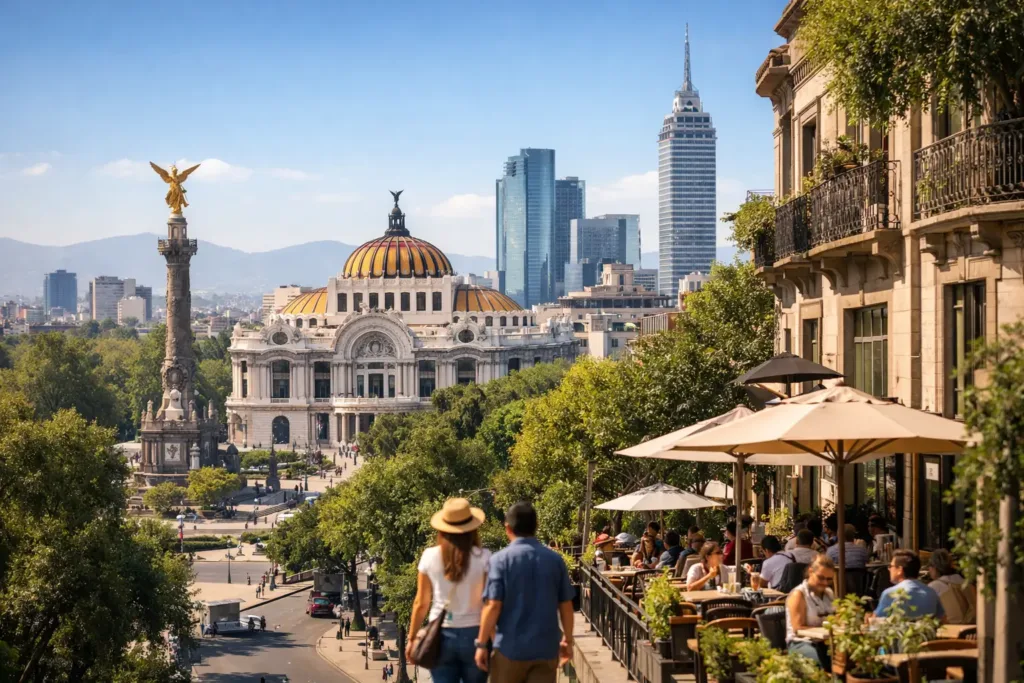
If you want to wake up inside the monumental core of the city, Centro Historico offers scale and drama that no other neighborhood can match. The Zocalo, the Metropolitan Cathedral, the Templo Mayor, the Palacio de Bellas Artes, and block after block of historic buildings create a sense of place that is immediate and unforgettable.
This area is best for travelers who want architecture, history, and movement all around them. It is less about retreat and more about immersion. You can spend full days here without running out of things to see, from museums and rooftop views to old cantinas and classic dining rooms.
Cafe de Tacuba is one of the historic favorites for a traditional meal in a storied setting. El Cardenal is widely loved for breakfast and Mexican classics. Azul Historico, set in a striking courtyard, offers a more polished meal in the center.
The trade-off is intensity. Centro is busy, noisy, and not always the easiest place for a calm neighborhood stroll late in the day. If you want quiet mornings and leafy streets, choose elsewhere and visit Centro often.
San Miguel Chapultepec
For travelers who like understated neighborhoods, San Miguel Chapultepec is worth knowing. It sits near Chapultepec Park and feels calmer than Roma, Condesa, or Juarez, with a residential atmosphere and good access to some of the city’s most important green and cultural spaces.
This area suits visitors who do not need every meal and drink option outside the door. Instead, they want a more discreet base with room to breathe. The Museo Tamayo and Museo de Arte Moderno are nearby, and the park itself opens up running routes, bike rides, and long afternoons under the trees.
A stop at El Bosque within Chapultepec can turn into a full half-day if you move slowly through the park. Nearby cafes and smaller local spots give the area an easy, everyday feeling rather than a scene-driven one.
The only real compromise is that San Miguel Chapultepec is less dense with restaurants and nightlife. For some travelers, that is the point.
How to choose the right neighborhood in Mexico City
If this is your first trip and you want the easiest balance of culture, food, walkability, and style, choose Roma or Condesa. If you care most about museums and a polished city atmosphere, choose Polanco. If historic architecture is the center of your trip, choose Centro. If you want a slower and more traditional experience, choose Coyoacan.
If you are staying near Roma, one of the best ways to understand the city is at street level. A bike changes the scale of your day – parks feel closer, side streets become part of the experience, and neighborhoods connect more naturally. In that sense, Mexico City rewards curiosity more than checklists.
The best neighborhood is the one that matches your rhythm. Some travelers want leafy mornings and long brunches. Others want grand boulevards, museum hours, and late dinners. Welcome everyone. Pick the area that feels closest to how you want to live in the city, even for a few days.