
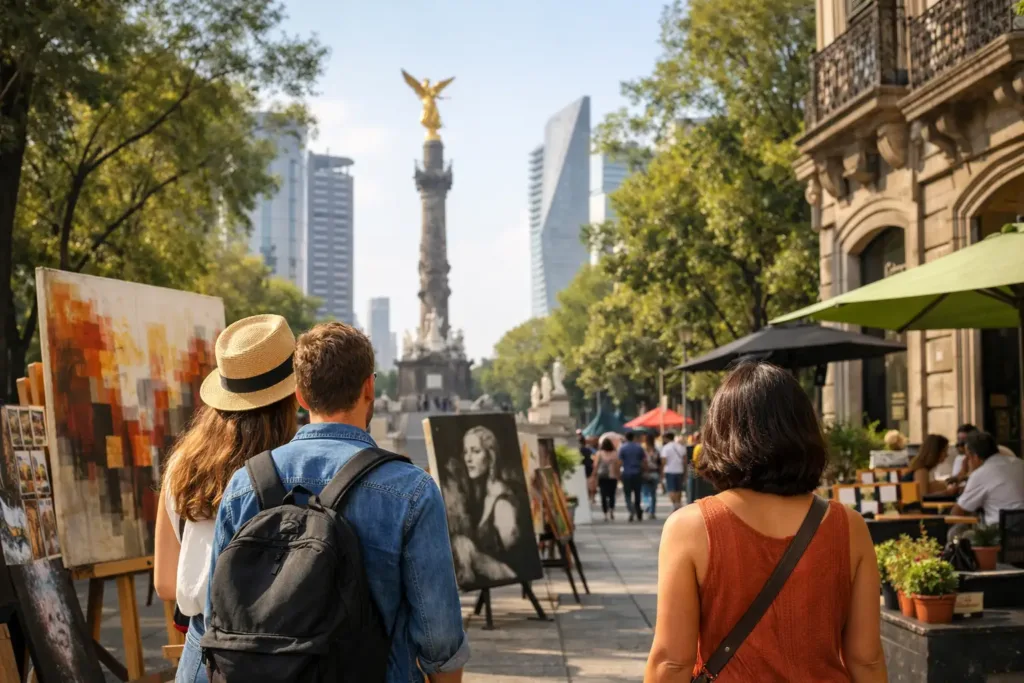
A good art walk in Mexico City rarely starts at a major museum entrance. It starts on a tree-lined block in Roma, in a storefront gallery you almost miss, or beside a mural in Centro that changes the way you see the street around it. If you are looking for the best art walks Mexico City has to offer, the right route is less about checking off famous names and more about moving through neighborhoods with your eyes open.
That is what makes this city so rewarding for art lovers. Art here does not sit in one polished district. It spills into sidewalks, old mansions, apartment buildings, design shops, public plazas, and weekend fairs. You can spend a morning with contemporary painting, drift into photography after lunch, and end the day in front of a twentieth-century mural without ever feeling like you followed a rigid cultural itinerary.
What makes the best art walks in Mexico City
The strongest art walks in CDMX have range. You want a route with visual contrast, a neighborhood worth lingering in, and enough places to pause for coffee or lunch without breaking the rhythm. Some areas are better for gallery-hopping, while others reward a slower pace focused on architecture, murals, and public space.
It also depends on what kind of art experience you want. If you prefer white-wall contemporary galleries, Roma and San Miguel Chapultepec are especially strong. If public art, history, and civic scale matter more, Centro Histórico is hard to beat. And if you like your cultural afternoons mixed with bookstores, small design shops, and parks, Juárez and Condesa make a graceful pairing.
The trade-off is timing. Many galleries open later than travelers expect, and some close between exhibitions. Art walks here work best when you leave room for a little improvisation.
1. Roma Norte for contemporary galleries and creative energy
If you only have time for one neighborhood-based route, start in Roma Norte. This is one of the best art walks Mexico City visitors can do on foot because the area offers contemporary galleries, architecture, independent retail, and a street life that keeps the experience from feeling too precious.
The walk works well around the avenues and quieter side streets where galleries sit inside renovated houses and minimalist storefronts. You may see emerging Mexican artists in one space, then step into another focused on conceptual work, photography, or design-driven exhibitions. The atmosphere is approachable but still serious enough for people who actually follow contemporary art.
What makes Roma especially appealing is the in-between time. You are not walking from one isolated institution to another. You are moving through a neighborhood that feels lived-in, with bakeries, leafy medians, and cafes that invite a pause without pulling you out of the mood. For creative travelers and remote workers, it is the kind of afternoon that feels both productive and leisurely.
Aim for a Thursday through Saturday visit, ideally after late morning. Earlier can be too quiet, and Mondays are often unreliable.
2. San Miguel Chapultepec for a quieter gallery circuit
San Miguel Chapultepec does not get the same casual attention as Roma, which is part of its charm. This area is ideal if you want a more focused gallery walk without as much restaurant and nightlife energy competing for attention.
The neighborhood sits near major cultural landmarks, but its own rhythm is calmer. Streets are more residential, and the gallery scene tends to feel intentional rather than incidental. You can spend a few hours here seeing contemporary work in a quieter setting, often with more space to actually absorb what is on the wall.
This route is best for travelers who enjoy art as the main event, not just a stop between brunch and shopping. Pair it with time in the nearby park or one larger museum visit if you want a full cultural day, but even on its own, San Miguel Chapultepec has a refined, low-noise appeal.
3. Centro Histórico for murals, public art, and layered history
For a walk with scale and historical weight, Centro Histórico offers something the gallery districts cannot. Here, art is embedded in the city itself. Murals, civic buildings, public squares, and historic facades create an experience that feels less curated and more collective.
This is where you go if you want to understand how art in Mexico City has long been tied to politics, identity, education, and public life. Even when you step inside a formal building to view a mural, you are still reading the broader urban landscape at the same time. The route asks you to look up, slow down, and notice context.
Centro can be overwhelming if you are expecting a neat sequence of quiet stops. It is busy, noisy, and visually dense. But that energy is part of the point. The art walk here is not detached from daily life. Street vendors, office workers, demonstrations, traffic, and tourists all share the same frame. If you want beauty with friction, this is the walk.
Go in the morning for softer light, fewer crowds, and a bit more breathing room.
4. Juárez for art, design, and architecture in one afternoon
Juárez is a smart choice for travelers who like contemporary culture beyond gallery walls. The art walk here tends to blend smaller exhibition spaces with design stores, bookstores, and architecture worth noticing block by block.
Compared with Roma, Juárez can feel a little more polished and a little less bohemian, but it rewards curiosity. One of the pleasures of walking here is the mix of old and new. You can pass a historic building, then find a modern gallery or design concept tucked inside a sharply updated interior. It feels editorial in the best way.
This route suits people who are interested in how art intersects with fashion, interiors, publishing, and urban change. If your ideal afternoon includes not just viewing work but seeing how creative life circulates through a neighborhood, Juárez gives you that wider lens.
5. Condesa for sculpture, parks, and slower visual pleasure
Condesa is not the strongest gallery district in the city, and that is exactly why it belongs on this list with the right expectations. The art walk here is less about moving from exhibition to exhibition and more about the visual quality of the neighborhood itself.
Think sculpture in parks, elegant apartment buildings, leafy avenues, and the kind of street-level details that make walking feel like an aesthetic experience. Condesa works best when you want a cultural route that stays light and social. You might begin with a museum or gallery nearby, then let the neighborhood carry the rest of the afternoon.
For travelers who are balancing work and exploration, this is a very easy walk to fit into a day. It does not demand intense planning, and it pairs naturally with coffee, a long lunch, or a stop in a bookstore. Not every art walk needs to feel academically rigorous. Some are simply about training your eye in a beautiful part of the city.
6. Coyoacán for artisan culture and a more traditional pace
Coyoacán offers a different kind of art walk, one rooted in craft traditions, smaller cultural spaces, and a neighborhood atmosphere that feels slower and more intimate. If your interest in art includes handmade objects, local markets, and the domestic side of Mexican cultural history, this route can be deeply satisfying.
This is not the place to expect a dense cluster of cutting-edge contemporary galleries. Instead, the pleasure comes from layering. You might encounter artisan work, folk art references, local painting, and spaces that connect artistic life with the area’s long intellectual history.
Because Coyoacán draws many visitors, timing matters. Weekday mornings are far more pleasant than weekend afternoons. Go when you can still hear your own footsteps in the side streets.
7. Santa María la Ribera for an underrated local feel
If you like finding neighborhoods before they turn into obvious recommendations, Santa María la Ribera is worth your attention. It is not the city’s most famous art walk, but it can be one of the most rewarding for travelers who want a local, less over-scripted experience.
The cultural appeal here often comes through community spaces, smaller exhibitions, architecture, and the feeling of a neighborhood with its own identity rather than a district built around visitors. You may not get the same concentration of blue-chip galleries as Roma, but you get something more relaxed and, in some moments, more personal.
This is a good route for a second or third day in the city, once you have already seen the headline neighborhoods and want a different register.
How to plan your own best art walks in Mexico City
The easiest mistake is trying to cover too much ground. Pick one neighborhood, maybe two if they connect naturally, and give yourself time to wander between stops. A packed art itinerary can flatten the experience, especially in a city where traffic and distance change the shape of a day.
Wear comfortable shoes, check gallery hours the same day, and keep lunch flexible. In Mexico City, some of the best moments happen between the planned stops – a courtyard you did not expect, a striking facade, a small show you walk into on impulse.
It also helps to know your own pace. If you want a serious gallery afternoon, choose Roma or San Miguel Chapultepec. If you are after murals and historical context, choose Centro. If you want a lifestyle-oriented route that still feels cultural, Juárez and Condesa are strong. And if you are staying in Roma, Casa Aimée puts you close to one of the city’s most walkable creative circuits.
The best art walk is usually the one that leaves room for surprise. In Mexico City, art is not only something you visit. It is something you notice, follow, and sometimes stumble into when the day is going exactly right.