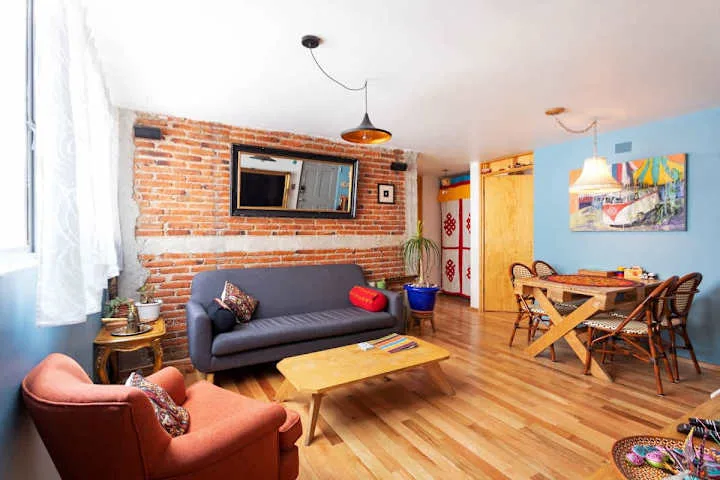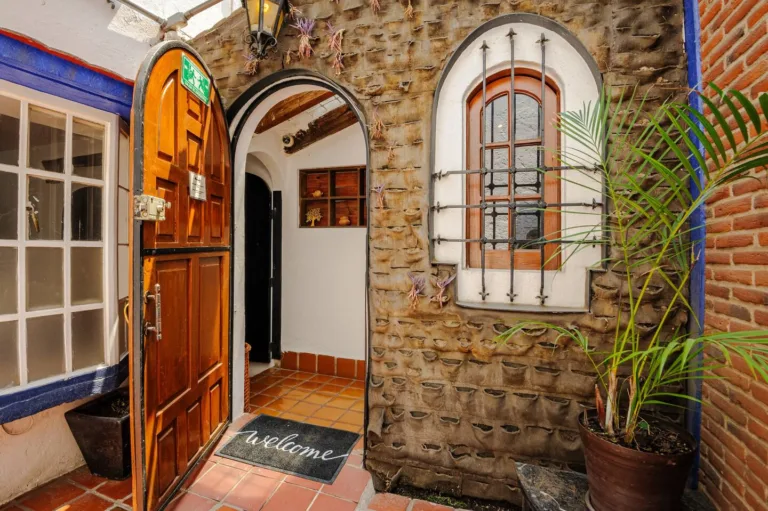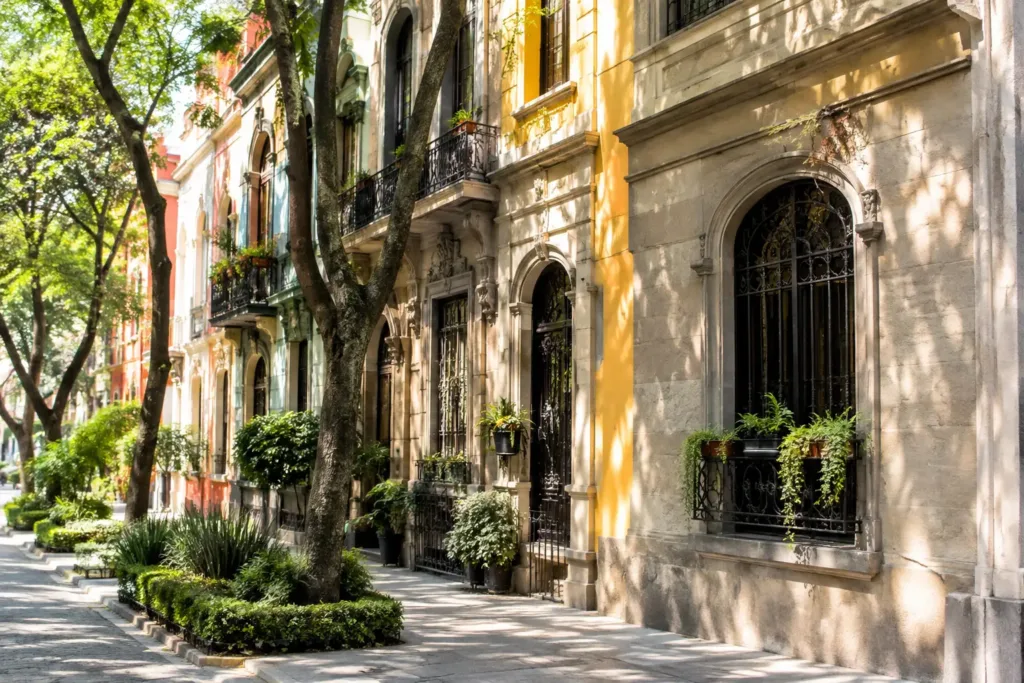
Mexico City historic houses are not just preserved facades behind museum ropes. They are part of the city’s everyday texture: a tiled doorway on a morning walk, a quiet courtyard behind a busy avenue, a modernist wall that changes color in the afternoon light. Seeking them out is one of the best ways to understand how CDMX grew, reinvented itself, and continues to make room for creative life.
The most rewarding visits are rarely rushed. Plan one or two houses around a neighborhood walk, leave time for coffee or lunch nearby, and notice what surrounds them. A Porfirian mansion in Roma tells a different story when you arrive on foot from Avenida Álvaro Obregón than it does from a guidebook photo.
Why historic houses reveal a more personal CDMX
Mexico City’s major museums hold extraordinary collections, but historic homes offer a more intimate point of entry. You see scale differently in a dining room, a studio, a stairwell, or a garden. Objects are arranged as part of a life rather than simply displayed as artifacts.
These houses also make the city’s architectural shifts easier to read. The grand European-influenced residences of the early 20th century speak to the ambitions of the Porfirian era. Midcentury homes reveal a new confidence in Mexican modernism, shaped by light, native materials, and bold color. Older homes in Coyoacán and San Ángel hold onto a slower, more domestic rhythm despite the metropolis moving around them.
Not every house is open every day, and some require advance reservations. That is part of the trade-off. The quieter and more carefully protected the experience, the less spontaneous it can be. Check current visitor policies before building an entire day around a single address.
Casa Lamm and the layered streets of Roma
Casa Lamm is a natural starting point for travelers spending time in Roma. Built in the early 20th century, the handsome French-inspired mansion has lived several lives, including a period as the home of cultural patron Antonieta Rivas Mercado. Today, its courtyards, galleries, and cultural programming make it feel less like a frozen historic home and more like an active part of the neighborhood.
Come for the architecture, but stay alert to the details: ironwork, stained glass, tiled surfaces, and the way the central patio softens the city outside. Roma is full of visual stimulation, and Casa Lamm offers a brief pause without leaving the neighborhood’s energy behind.
Pair a visit with a slow walk along Colima, Orizaba, and Álvaro Obregón. This is where looking up matters. Roma’s tree-lined streets still carry an impressive collection of early 20th-century homes, many adapted into galleries, restaurants, studios, and cultural spaces. Their new uses are not always perfectly preserved, but they reflect a living neighborhood rather than a sealed historic district.
Casa Rivas Mercado: a closer look at a creative life
Also in Roma, Casa Rivas Mercado gives visitors a more focused glimpse into a family and the cultural world around it. The house belonged to architect Antonio Rivas Mercado, known for designing the Angel of Independence monument, and later became closely tied to his daughter Antonieta, a writer, patron, and central figure in Mexico’s early modern cultural scene.
Its restoration brings out the intimacy of a home shaped by artistic conversation. This is a particularly good choice for travelers interested in literature, theater, design, and the complicated social history behind Mexico City’s elegant early 1900s streets. Visits are often guided, which adds valuable context but may require planning ahead.
Casa Azul in Coyoacán: beyond the icon
Frida Kahlo’s Casa Azul is one of the city’s best-known homes, and its popularity is understandable. The cobalt-blue walls, lush garden, personal objects, and studios make the house instantly recognizable. Yet the strongest reason to visit is not simply to see a famous artist’s home. It is to understand the creative and political life that moved through it.
Kahlo was born in the house, returned to it at different moments, and ultimately made it the center of a life shared with Diego Rivera, friends, collectors, activists, and visiting artists. The rooms reveal both self-fashioning and vulnerability. There are carefully composed visual moments, but there are also traces of work, pain, and daily rituals.
Because the museum can be crowded, timing matters. An early entry is often more peaceful, especially if you want to spend time in the garden and look closely at the details rather than move with the flow of a large group. Afterward, let Coyoacán do the rest of the work. Walk its plazas, browse a market, and settle in for a long meal. The neighborhood’s village-like atmosphere can feel theatrical at peak hours, but its side streets still reward unhurried wandering.
Barragán’s houses: color, shadow, and restraint
Luis Barragán’s residential work changed the language of Mexican architecture. His houses are not historic in the colonial or Porfirian sense, but they are essential to understanding 20th-century Mexico City. Here, color is structural. A pink plane, a mustard wall, a dark corridor, or a reflected pool can guide how you move and what you notice.
Casa Estudio Luis Barragán in Tacubaya is the most important visit for design-minded travelers. From the street, it is deliberately understated. Inside, its sequence of rooms, light, textures, and garden views reveals a deeply considered private world. It is a house that rewards silence and attention more than quick photography.
Casa Gilardi, in the San Miguel Chapultepec area, offers another side of Barragán’s work. Created late in his career, it is still a private residence and visits are generally arranged in advance. Its famous pool and vivid yellow hallway are visually striking, but the real lesson is subtler: the house makes ordinary transitions between rooms feel ceremonial.
These visits are best for travelers who enjoy architecture as an experience, not just an image. The reservation process can be more involved than visiting a large museum, and access may be limited. In return, you get a rare chance to move through spaces designed with exceptional control and feeling.
San Ángel and Coyoacán’s older domestic character
For a different architectural mood, head south to San Ángel. Its cobblestone streets, volcanic-stone walls, and generous gardens preserve traces of a city that once felt much farther from the center. The Museo Casa del Risco, housed in an 18th-century residence, offers a sense of this earlier domestic scale. Its courtyard and richly detailed interiors are reason enough to go, while the surrounding neighborhood makes a full afternoon easy.
Nearby, Diego Rivera and Frida Kahlo’s Studio House offers a sharp contrast. Designed by Juan O’Gorman in the early 1930s, the connected structures are a landmark of functionalist architecture. The exposed stairways, industrial forms, and rooftop bridges feel radically different from the enclosed calm of San Ángel’s older homes. Seeing both on the same day makes Mexico City’s architectural range feel immediate rather than academic.
This is also where patience pays off. San Ángel is lovely on weekends, but it can be busy, especially around the art market. A weekday visit gives the streets more room to breathe and makes it easier to notice the gardens, doorways, and stonework that give the neighborhood its character.
How to visit with care
Historic houses are often fragile places, even when they function as museums or cultural centers. Treat them less like attractions to collect and more like someone’s carefully preserved world. Photography rules vary, so ask before taking pictures. Keep bags close, speak quietly in smaller rooms, and resist the urge to touch surfaces that look inviting.
A little planning will also make the experience more enjoyable. Group houses by neighborhood rather than trying to cross the city repeatedly. Roma works well for Casa Lamm and Casa Rivas Mercado; Coyoacán deserves its own slower day; San Ángel and the Studio House make a satisfying pairing. Traffic can reshape even the best itinerary, so leave space between reservations.
The most memorable Mexico City historic houses do not ask you to memorize dates or architectural labels. They invite you to pay attention: to the echo of a tiled patio, the shade of a courtyard tree, the way a building holds a private life within one of the world’s largest cities. Let that attention guide the rest of your day, and the neighborhood around each house will begin to feel more familiar, too.