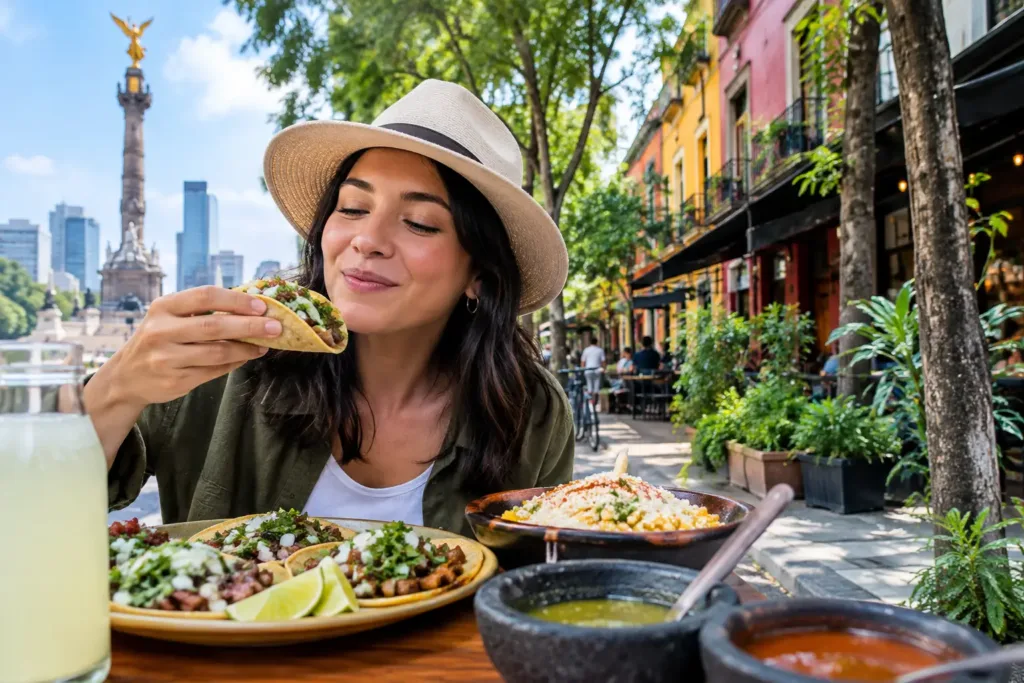
At 10 p.m., the best dinner in Mexico City may be happening under a vinyl awning, beside a row of plastic stools, with a taquero shaving caramelized pork straight from a spinning trompo. This Mexico City street food review is for travelers who want that moment – not as a stunt, but as a real entry point into the city’s daily rhythm.
Street food here is not one category or one level of spice, price, or polish. It is breakfast taken standing up before work, a market lunch with a cold agua fresca, and a late-night ritual after a gallery opening or long conversation. The joy is in following your appetite, while knowing enough to order with confidence.
Mexico City Street Food Review: What Makes It Special
Mexico City is a place of serious food memory. A taco stand may specialize in one cut of meat for decades. A market cook may prepare the same masa-based antojitos every morning, adjusting the salsa by instinct rather than recipe. The best experiences rarely arrive with a dramatic reveal. They are often found in the scent of a busy comal, the line of regulars, and the speed with which someone hands over a plate.
What makes street food exceptional is range. You can eat something deeply traditional, such as a blue-corn tlacoyo filled with beans, then find a taquería nearby working with a very particular style of suadero. The city rewards repeat eating. Your first taco al pastor is delicious; your third, from a different neighborhood at a different hour, starts to tell you more about the place.
There is also a useful distinction between food that is literally sold on the sidewalk and food served in markets, tiny counters, and casual neighborhood kitchens. For a visitor, all belong to the same generous ecosystem: quick, affordable, highly regional eating with very little distance between cook and guest.
Start With the Dishes That Define a Good Day
Tacos al pastor, suadero, and the late-night table
Tacos al pastor are the headline act for good reason. Pork is marinated with dried chiles and spices, stacked vertically, roasted, and sliced into a small corn tortilla. A skilled taquero catches a sliver of pineapple with a fast, theatrical cut. The balance is the point: savory meat, sweet fruit, onion, cilantro, lime, and salsa in two or three bites.
Suadero is a different pleasure. This tender, rich cut is often cooked slowly in fat until it becomes soft at the edges and intensely beefy. If you cannot choose, order a campechano, a mixed taco that commonly combines suadero with another meat, such as longaniza. It is less tidy and more satisfying than it sounds.
The trade-off is timing. Late-night taco stands have energy, turnover, and food at its freshest, but they can be loud and crowded. Go early if you want a calmer meal, or embrace the crush and order two tacos to start. One is rarely enough, but six can feel ambitious when the salsas are working at full strength.
Quesadillas and the cheese question
In Mexico City, ordering a quesadilla does not automatically mean it comes with cheese. This is a local point of language and a small rite of passage. Choose your filling – flor de calabaza, mushrooms, huitlacoche, chicken, chicharrón prensado, or something else – and say con queso if you want cheese added.
A quesadilla fried on a comal or in oil is deeply comforting, especially on a cool evening. The fried version has a shattering crust; the comal version lets the corn and filling take center stage. Neither is universally better. Choose the first when you want indulgence and the second when you plan to keep eating afterward.
Tlacoyos, huaraches, and food built on masa
For a more distinct taste of central Mexican corn cookery, look for tlacoyos. These oval masa cakes are typically stuffed with beans, fava beans, or requesón, then topped with cactus, cheese, salsa, and sometimes more. They are substantial without feeling heavy, particularly when the masa is freshly pressed and cooked over a hot comal.
Huaraches are larger and open-faced, named for their sandal-like shape. They can carry beans, meat, cheese, and a bright scatter of onion and cilantro. Both dishes are excellent choices around lunchtime, when market stalls are fully in motion and the cooks have already found their pace.
The small things worth stopping for
Do not overlook esquites, the warm cup of corn kernels dressed with lime, chile, mayonnaise, cheese, and sometimes a savory broth. Elotes offer the same ingredients on the cob. Tamales make an ideal early breakfast, especially with atole, while a crisp torta can rescue an afternoon when you have walked farther than planned.
Fruit cups, jícama with lime and chile, and fresh juices deserve attention too. They are not merely a pause between larger meals. They are part of how the city eats outside – casually, generously, and according to the hour.
Where the Best Bites Fit Into Your Day
In Roma and Condesa, street food is often woven into an evening of bookstores, studios, bars, and tree-lined walks. You might begin with coffee, make a late lunch of tlacoyos or tacos, then return for pastor after dark. These neighborhoods are easy to navigate, but the best stand is not always the one with the most polished sign. Watch where people order quickly and eat without hesitation.
Centro Histórico offers a denser, more kinetic version of the experience. Markets, street vendors, and small counters sit close to museums, old churches, and busy pedestrian routes. It is a strong place to try traditional snacks, but plan around the heat, crowds, and the fact that eating while standing may be part of the deal.
Neighborhood markets are especially useful for daytime eating. They offer more seating, a wider view of ingredients, and the chance to pair a prepared dish with a juice or agua fresca. A market meal can feel less spontaneous than a curbside taco, but it is often the better choice when you want variety, shade, and a slower lunch.
How to Order Like a Considerate Regular
Street food is approachable, and a little Spanish goes a long way. Pointing is perfectly acceptable when the counter is busy, but start with a greeting and keep your order simple. Say how many tacos you want, name the filling, then ask for salsa after you see what is available.
Take salsa seriously. A green salsa can be gentle or volcanic, and a red salsa can be smoky, sweet, or far hotter than its color suggests. Ask cuál pica más if you want to know which is spicier, then use a small amount first. The goal is flavor, not proving endurance.
Cash remains useful, especially at smaller stands. Bring small bills and be patient when a cook is working through several orders at once. The apparent chaos has its own order. Someone is warming tortillas, someone is chopping onion, someone is assembling plates, and the line will move.
A Practical Note on Comfort and Food Safety
Choose places with steady turnover, food cooked to order, and a clean-looking work area. A busy stand is not a guarantee, but it is generally a better signal than food sitting out with no customers nearby. If you have a sensitive stomach, begin with cooked foods and go easy on raw garnishes, creamy sauces, and ice during your first day or two.
It also depends on your own travel habits. Some visitors happily eat every salsa and sliced fruit cup they see; others feel better sticking to hot, freshly prepared dishes. There is no prize for taking unnecessary risks. Mexico City’s street food is broad enough that you can eat brilliantly while staying within your comfort zone.
The Review Is Never Finished
The best Mexico City street food experiences do not need to be chased as a checklist. Let a good smell interrupt your route. Return to the taco stand that got one detail exactly right. Ask for one more salsa, one more tortilla, one more recommendation from the person beside you.
Eat with curiosity, tip with appreciation when service is involved, and leave room for the meal you did not plan. In this city, that unplanned stop is often the one you remember most.