The distance between Roma Norte and Juárez can be short enough to walk, but the feeling of each neighborhood is distinctly its own. If you are deciding between Roma Norte or Juárez, think less about a checklist of attractions and more about how you want your Mexico City days to unfold: a slow coffee before opening your laptop, a late dinner that turns into drinks, a gallery stop between meetings, or a morning walk beneath old trees.
Both neighborhoods reward curiosity. They sit near major cultural landmarks, offer exceptional food, and make it easy to move through central Mexico City. The real difference is in their rhythm. Roma Norte is residential, leafy, and creatively lived-in. Juárez is more polished, more central, and often a little more electric after dark.
Roma Norte or Juárez: Start With the Rhythm
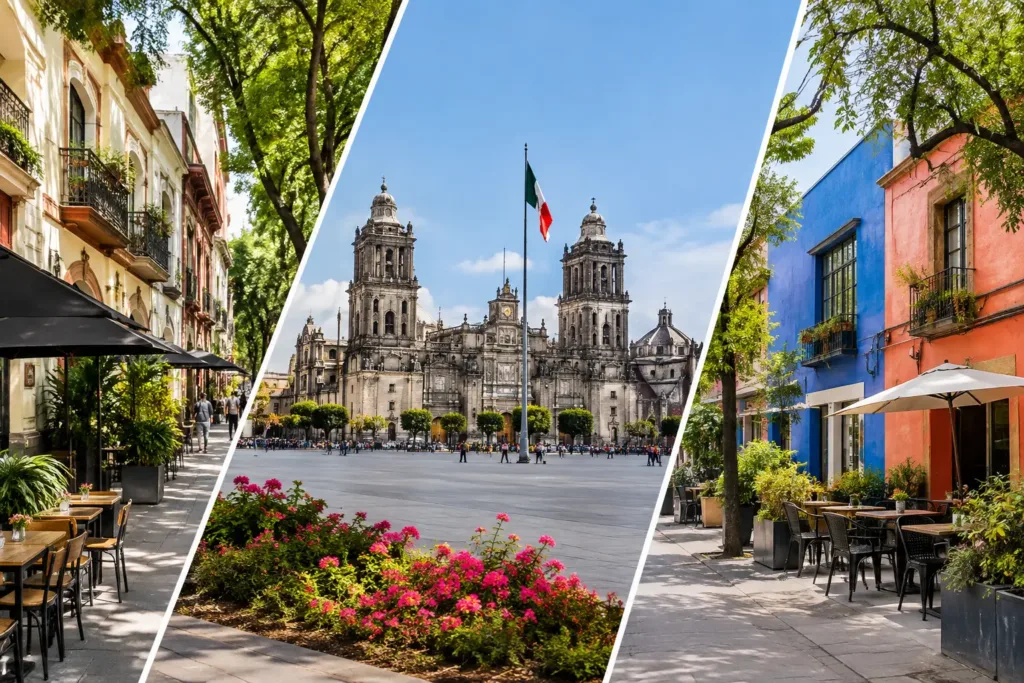
Roma Norte invites you to linger. Its broad sidewalks, Art Nouveau and Porfirian-era facades, pocket parks, and independent storefronts make even an unplanned afternoon feel full. You might begin with a pastry and coffee on Colima, wander through bookstores and small galleries, then realize it is already time for a long lunch. The neighborhood has energy, but it is softened by its residential character.
Juárez moves at a quicker pace. It sits between Reforma, Zona Rosa, and the city center, so it often feels like a meeting point for people coming from different corners of CDMX. There are grand old homes alongside ambitious restaurants, contemporary bars, creative offices, and longstanding businesses. Juárez can feel glamorous one block and deeply familiar the next, especially around its local markets and Korean restaurants.
Neither is inherently better. Roma Norte works beautifully for travelers who want a neighborhood routine and plenty of opportunities to wander without an agenda. Juárez suits those who like being close to the action, with Reforma, Chapultepec, and Centro within easy reach.
Choose Roma Norte for Everyday Discovery
Roma Norte is often the easier neighborhood to settle into. Its streets are full of small rituals: dog walkers gathering near Plaza Río de Janeiro, friends meeting for breakfast, people reading outside cafés, and produce shopping at neighborhood markets. It is a place where you can return to the same coffee counter for three mornings and begin to recognize the cadence of the block.
For remote workers and creative travelers, that familiarity matters. Roma Norte has plenty of daytime cafés and casual places to work, but its appeal is not only practical. The design sensibility is everywhere, from restored homes to flower shops, record stores, ceramics studios, and restaurants that make a meal feel like an occasion without becoming formal.
Food is one of Roma Norte’s great strengths, though the best approach is to mix destination dining with small discoveries. Make time for a thoughtful breakfast, but also follow the scent of tortillas at a corner stand or stop for a midday agua fresca when the streets get warm. The neighborhood’s restaurant scene is wide-ranging, and reservations can be useful for popular dinners, particularly from Thursday through Saturday.
Roma Norte is not a quiet village. Certain streets can become busy, and the weekend dining scene brings real bustle. If you want a low-key evening, take a few blocks away from the busiest restaurant corridors and you will find a calmer, more local pace. That contrast is part of its charm.
What a day in Roma Norte feels like
A satisfying day here rarely needs much planning. Start near Plaza Luis Cabrera, browse an independent shop or gallery, have lunch somewhere that takes its salsa as seriously as its wine list, and let the afternoon lead you toward neighboring Condesa or the Parque México area. Roma Norte is especially good for travelers who like leaving room for detours.
Choose Juárez for Culture, Contrast, and City Energy
Juárez has long been shaped by change. Its elegant architecture reflects an earlier era of Mexico City, while its streets now hold a lively mix of restaurants, bars, galleries, offices, and homes. The result feels less uniformly residential than Roma Norte and more layered. One corner may be all French-inspired facades and polished dining rooms; another may lead toward the everyday movement of Zona Rosa.
For visitors who want Mexico City’s larger cultural map close at hand, that location is a major advantage. Paseo de la Reforma is nearby for a morning walk or a Sunday bike ride when the avenue closes to cars. Chapultepec’s museums, green space, and wide paths are accessible without making a day of the journey. Heading east toward Centro Histórico is also straightforward when you are ready for murals, historic buildings, and the city at its most monumental.
Juárez is particularly rewarding after sunset. The neighborhood has excellent restaurants, but it also has a confident cocktail and wine-bar culture. A well-planned dinner can easily continue into a late conversation over drinks, often without the sense that you are in a single entertainment district. The atmosphere shifts block by block.
The neighborhood’s Korean influence is another reason to explore with an appetite. Around the edges of Zona Rosa, you will find Korean barbecue, casual cafés, bakeries, and markets that offer a different dimension of the city’s food culture. Go hungry, bring friends if you can, and be ready to order more than you first intended.
What a day in Juárez feels like
Juárez is ideal for a day with momentum. You might begin with coffee near Reforma, spend the late morning at a museum in Chapultepec, return for a relaxed lunch, and head out again for an exhibition or dinner. It is a strong choice for travelers who enjoy the feeling that the city is constantly within reach.
The Practical Differences That Matter
On a map, Roma Norte and Juárez appear closely connected. In practice, their daily logistics are different enough to shape your experience. Roma Norte is easier for casual walks through café-lined streets and residential pockets. Juárez offers faster access to Reforma and the major avenues that connect central neighborhoods.
For getting around, both reward walking during the day, but Mexico City is large and traffic can reshape even simple plans. Use ride-hailing services at night when it feels appropriate, particularly if you are moving between bars or returning after a late dinner. As in any major city, stay aware of your surroundings, keep valuables discreet, and choose well-lit routes rather than relying on a phone map alone.
Noise is another consideration. In Roma Norte, the liveliest areas are concentrated around popular restaurant streets and weekend gathering spots. In Juárez, the rhythm can be influenced by Reforma, nightlife, and its proximity to busier commercial zones. If restful mornings matter most, pay attention to the specific street, not just the neighborhood name.
Budget depends more on your choices than on the neighborhood itself. Both can be generous to a thoughtful traveler: a simple fonda lunch, a market snack, and a neighborhood bakery can balance out a special dinner. Juárez may make it easier to stumble into polished evenings, while Roma Norte makes it easy to graze all day. Either way, the best meals are not always the ones with the longest reservation wait.
A Simple Way to Decide
Choose Roma Norte if you want the feeling of a creative neighborhood that reveals itself slowly. It is for long breakfasts, side streets, design details, leafy walks, and the pleasure of having nowhere urgent to be.
Choose Juárez if you want a more central launch point for culture, dining, and nights that can stretch later than planned. It is for travelers who like contrast: historic homes and modern menus, quiet morning corners and animated city evenings.
Of course, you do not have to treat the choice as permanent. Walk from Roma Norte into Juárez one afternoon and you will feel the transition happen in real time. Order a coffee in one, dinner in the other, and let your own pace decide. Mexico City is at its best when you give yourself enough time to follow the neighborhood that feels right that day.