
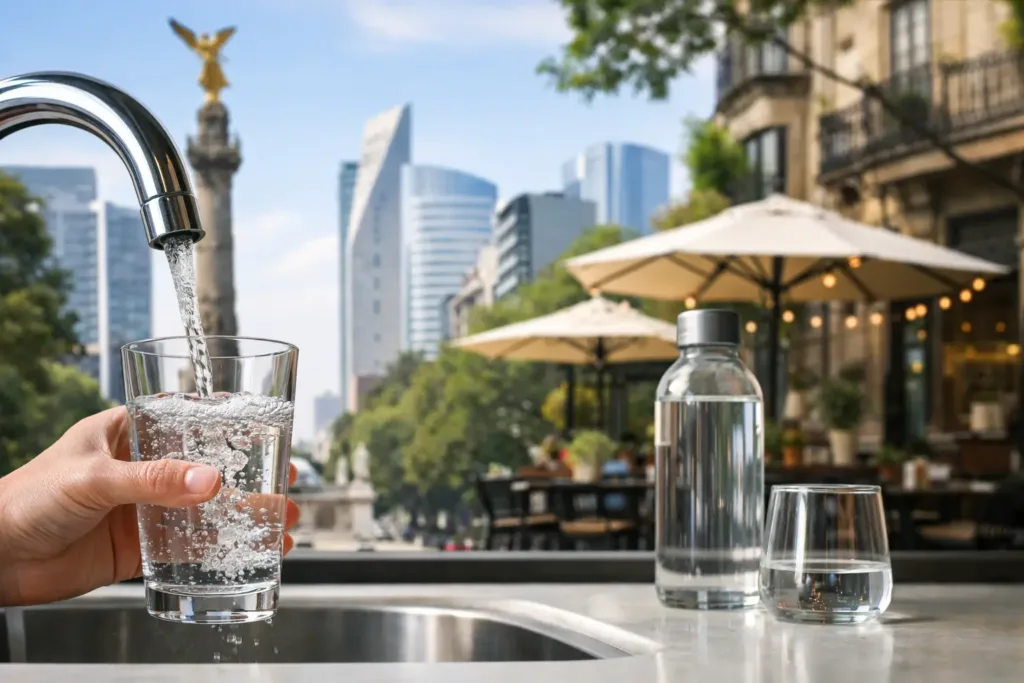
Mexico City rewards curiosity: a late breakfast in Roma, a long museum afternoon, tacos at a crowded sidewalk table. But one practical question tends to follow travelers from the airport onward: is CDMX tap water safe? The short answer is that visitors should not drink tap water straight from the faucet. Use filtered, purified, or sealed bottled water instead, and you can enjoy the city’s food and drink culture with far more ease.
That advice is not meant to make Mexico City feel intimidating. It is simply part of the local rhythm. Residents make thoughtful choices about the water they drink, and so should travelers. Once you know what to look for, staying hydrated here becomes as routine as choosing where to have your morning coffee.
Is CDMX Tap Water Safe to Drink?
For most visitors, no: tap water is not a reliable choice for drinking. Mexico City’s municipal water system is extensive, and water quality can vary from one part of the city to another. Even where water is treated before it enters the network, the journey to a building can involve aging pipes, storage tanks called tinacos, cisterns, and building-specific plumbing.
That last stretch matters. A beautifully maintained apartment building in Roma Norte may have a different water-storage routine than an older building a few blocks away. The issue is not always the city’s source water alone. It is also consistency, maintenance, and what happens after water reaches the property.
For people who have lived in Mexico City for years, habits differ. Some use home filtration systems; others rely on purified-water delivery, known as garrafones. A traveler without a clear understanding of a property’s water system is better off taking the simple, conservative route: drink purified water.
This is particularly wise if you are adjusting to the altitude, walking all day, or working remotely and need to feel well for a packed week. A stomach issue can turn a planned Sunday in Chapultepec or an evening in Juárez into a day indoors.
What Water Should You Use Instead?
Look for water labeled agua purificada or agua potable. Sealed bottled water is widely available in convenience stores, grocery stores, cafés, restaurants, and neighborhood markets. Many furnished stays also provide a large purified-water dispenser or jug for guests. If you are staying for more than a few days, this is usually the most practical option for filling a reusable bottle.
Purified water is also what you want for coffee, tea, and cooking unless you know that filtered water is being used. At well-run cafés and restaurants, it is common for drinks and food preparation to rely on filtered or purified water. Still, there is no harm in asking a direct, friendly question: “Is the water filtered?” or “Is the ice made with purified water?”
In Spanish, you can ask, “¿El agua es purificada?” or “¿El hielo está hecho con agua purificada?” Staff in many visitor-facing restaurants will understand English, especially in Roma, Condesa, Juárez, Polanco, and the historic center, but these phrases are useful anywhere.
If you prefer to limit single-use plastic, bring a reusable bottle and refill it from a trusted purified-water dispenser. The goal is not to avoid water while exploring. Mexico City sits at high elevation, and dehydration can make jet lag, headaches, and fatigue feel sharper than expected.
Can You Have Ice, Coffee, and Street Food?
Yes, with sensible judgment. Mexico City’s dining scene is one of its great pleasures, and avoiding every drink or food item that involves water would mean missing the point of being here. The better approach is to choose places that handle food carefully and are busy enough to have a steady turnover.
At established restaurants, polished cocktail bars, specialty coffee shops, and reputable street-food stands, ice is often made with purified water. Fresh juices, aguas frescas, coffee, and cocktails are generally part of normal city life. If a place looks clean, active, and well run, that is a positive sign. When in doubt, ask about the water or choose a bottled drink.
Street food deserves the same balanced approach. The concern is not automatically the agua fresca beside the grill. Pay attention to the whole setup: Is food cooked hot and served quickly? Are ingredients covered and handled with care? Is there a line of locals? Does the vendor appear focused and organized? A busy stand making tacos to order can be a better bet than a quiet restaurant with lukewarm food sitting out.
Raw items are where a little extra caution helps. Choose fruit you can peel yourself, and be thoughtful with uncooked salads at places where you are unsure about washing practices. This is not a reason to skip the city’s markets or produce-driven restaurants. It is a reason to favor places you trust and order according to your own comfort level.
Brushing Your Teeth and Showering
Most travelers brush their teeth with purified or bottled water, especially during a short visit. It is an easy habit that removes uncertainty. Using tap water briefly to rinse and then spitting it out is unlikely to cause a problem for many people, but swallowing none is the safer approach, particularly if you have a sensitive stomach.
Showering is generally fine. You do not need to worry about washing your hair or getting water on your skin. Just avoid intentionally drinking the water, and keep an eye on young children who may swallow it in the bath.
For contact-lens wearers, standard hygiene applies: do not rinse lenses or lens cases with tap water. Use sterile solution. The same goes for nasal-rinsing devices, which require appropriately treated water rather than water straight from the tap.
A Note on Filters, Boiling, and Building Water
Not every filter solves the same problem. A basic pitcher filter may improve taste, but it does not automatically make unknown tap water appropriate for drinking. If a property says its water is filtered, ask what kind of system it uses and whether drinking water comes from a dedicated purifier. A maintained, high-quality purification system is very different from a simple carbon filter attached to a faucet.
Boiling water can address many microorganisms, but it is not a universal fix for every water-quality concern, and it is inconvenient for daily hydration. It also will not remove everything that may be present in water. For most visitors, purified water is clearer, easier, and more dependable.
This is why local water delivery is so common. The large returnable jugs found in homes and studios are not an alarm bell. They are an everyday solution, like keeping good coffee in the kitchen or carrying an umbrella during the rainy season.
A Comfortable Water Routine for Your Stay
A little planning goes a long way. Pick up a large bottle or confirm where the purified-water dispenser is when you arrive. Fill your reusable bottle before heading out for a day in Coyoacán, the museums, or a walk through Roma’s leafy side streets. Keep extra water nearby if you are working from a café or spending a warm afternoon outside.
At restaurants, order bottled still or sparkling water if you prefer certainty. Mexican sparkling mineral water is widely available and makes an excellent lunch companion. For coffee, cocktails, and ice, enjoy the places that inspire confidence and ask when you need to. That is not being difficult. It is traveling with awareness.
There is no need to let water anxiety shrink your Mexico City plans. Trust the city’s excellent food culture, follow the purified-water habit locals use every day, and leave room for the meals, markets, and unplanned neighborhood stops that make a visit memorable.