
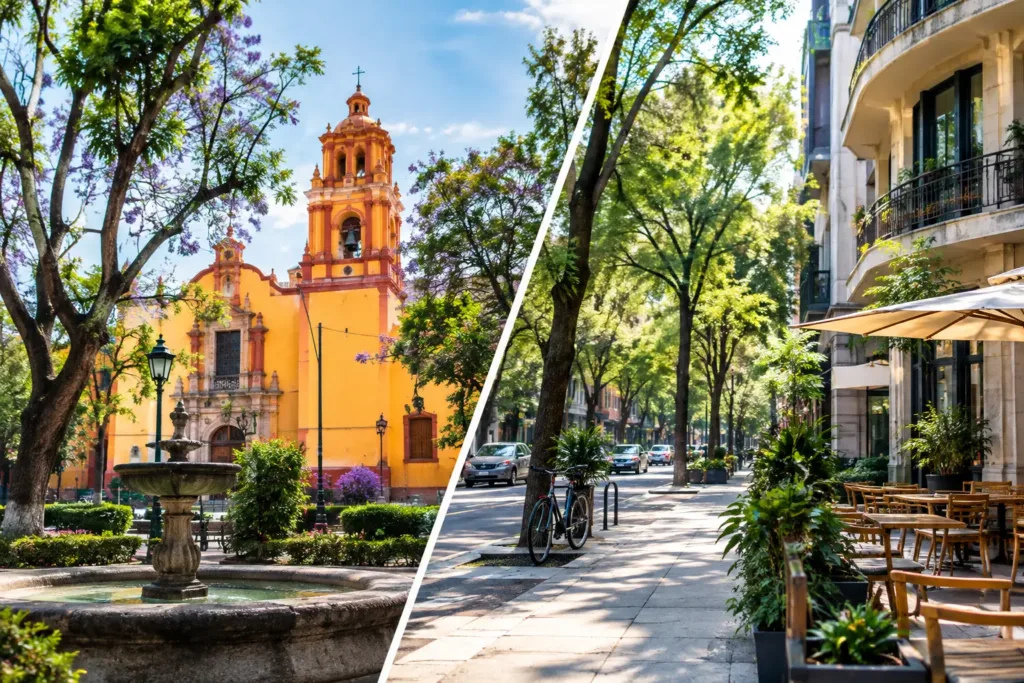
Mexico City rarely asks visitors to choose just one version of itself, but Coyoacan vs Roma Norte is a useful question because these neighborhoods move at completely different speeds. One is leafy, historic, and rooted in a long local rhythm. The other is energetic, design-minded, and made for wandering between coffee, galleries, dinner, and one more drink.
Neither is more “real” than the other. The better fit depends on what you want your days in CDMX to feel like: quiet plazas and long lunches, or city streets where something is always about to happen.
Coyoacan vs Roma Norte at a Glance
Coyoacán sits south of the city center and feels almost like a small town folded into the capital. Its cobblestone lanes, colonial-era homes, public squares, markets, and tree-lined streets reward travelers who enjoy moving slowly. It is a neighborhood for morning walks, museum afternoons, and lingering over churros or coffee while families, students, and longtime residents pass by.
Roma Norte is central, walkable, and constantly evolving. Its early 20th-century architecture shares the streets with independent bookstores, chef-led restaurants, natural-wine bars, contemporary galleries, and cafés full of people working on laptops. It has more momentum, more options within a few blocks, and a distinctly urban energy.
Think of Coyoacán as a place to settle into the city’s memory. Think of Roma Norte as a place to plug into its present tense.
Choose Coyoacán for History, Color, and a Slower Day
Coyoacán is one of the best places to feel the layers of Mexico City without rushing through them. The neighborhood’s center, around Jardín Hidalgo and Jardín Centenario, is lively without feeling frantic. On weekends especially, you will find street performers, families out for a stroll, vendors selling snacks, and a gentle crowd moving between the plazas.
The Frida Kahlo Museum draws many visitors, and for good reason, but Coyoacán is more satisfying when you give it time beyond one famous stop. Walk a few blocks away from the busiest streets. Look for quiet courtyards, small chapels, independent craft shops, and old façades painted in deep reds, blues, and ochres. The neighborhood’s appeal lives in these in-between moments.
Food here is comforting and traditional in a way that suits an unhurried afternoon. Mercado de Coyoacán is a classic stop for tostadas, fresh juice, and the cheerful sensory overload of a local market. Elsewhere, you can find classic Mexican sweets, casual fondas, and neighborhood cafés where the pace feels more conversational than curated.
Coyoacán also works beautifully for travelers interested in art and intellectual history. The area has long attracted artists, writers, and students, and that creative legacy is still present, though less polished for the camera than Roma Norte. Nearby San Ángel and the university district add more cultural depth if you are happy to use a ride share or public transit between stops.
The trade-off is convenience. Coyoacán is not the place to rely on walking to every major part of your Mexico City itinerary. If your list includes Chapultepec, the Historic Center, Condesa, Polanco, and multiple dinner plans across town, travel time can add up. The streets around the main plazas can also get crowded on weekends, especially when day-trippers arrive.
A Coyoacán day that feels well spent
Start early, before the central gardens fill up. Have breakfast or coffee near the plaza, then visit a museum with a timed plan rather than trying to squeeze in every attraction. Follow the afternoon with a market lunch and leave room for an aimless walk. Coyoacán is at its best when you resist turning it into a checklist.
By late afternoon, the light softens on the old streets and the neighborhood becomes especially inviting. This is the moment for an ice cream, a bench in the garden, or an early dinner before heading back toward the center of the city.
Choose Roma Norte for Food, Design, and City Energy
Roma Norte is for travelers who want to step outside and immediately have choices. Its appeal is not one landmark but a dense collection of small pleasures: an excellent espresso, a bookstore browse, a gallery opening, a bakery line worth joining, a shaded park, and dinner that can turn into a long evening without much planning.
The neighborhood is especially strong for people who like to build days around food. You can find classic Mexican dishes, inventive tasting menus, regional cooking, Japanese-Mexican counters, sourdough bakeries, and casual street-side meals within an easy walk. The experience is less about seeking out one iconic market and more about following your appetite from morning through midnight.
Roma Norte also has a social ease that works well for solo travelers, remote workers, and creative visitors. Cafés offer a place to settle in for a few hours, while parks and public-facing restaurants make it easy to take in the city without needing an agenda. You may hear more English here than in Coyoacán, particularly around the most popular cafés, but the neighborhood remains deeply connected to local daily life. It is not a theme park for visitors. It is a busy residential district with a global-facing creative scene.
Architecture is another reason to wander. Look up as you walk: Art Nouveau details, French-influenced façades, tiled entryways, and restored houses sit beside newer projects. Roma Norte has endured change, including the impact of the 1985 earthquake and decades of reinvention. Its beauty is not pristine. It is lived-in, layered, and occasionally rough around the edges.
The trade-off is that Roma Norte can feel busy. Popular spots fill quickly, traffic is part of the soundtrack, and weekend nights bring more noise. If your ideal Mexico City memory is a quiet square with church bells and children chasing pigeons, Coyoacán may feel more restorative. Roma Norte rewards curiosity and spontaneity, but it rarely feels still.
A Roma Norte day that feels well spent
Begin with coffee and a pastry, then walk without trying to cover every block. Let a gallery, shop window, or menu pull you off course. Spend an afternoon in Parque México or nearby Condesa, then return for dinner once the neighborhood shifts into its evening rhythm.
For remote work, Roma Norte is often the easier choice because you have more daytime cafés, places to meet friends, and simple access to other central neighborhoods. A workday here can end with a great meal without becoming a logistical project.
Food, Walkability, and the Practical Difference
For food, Roma Norte offers greater range and density. It is easier to eat exceptionally well across many styles, budgets, and moods without taking a car. Coyoacán offers a more traditional, market-centered experience, plus the pleasure of stopping somewhere because it looks like it has been there for decades. Choose Roma Norte for variety and Coyoacán for atmosphere.
For walkability, both neighborhoods are enjoyable on foot, but they serve different kinds of walks. Roma Norte connects naturally to Condesa, Juárez, and parts of the city center, giving you more options in one continuous urban stretch. Coyoacán is wonderfully walkable within itself, yet more separate from the city’s central circuit.
For culture, Coyoacán has the advantage if museums, colonial history, and a strong sense of place matter most. Roma Norte has the advantage if you are drawn to contemporary art, independent design, dining culture, and the creative current of modern CDMX.
Budget can vary widely in both areas. Roma Norte’s most talked-about restaurants and cocktail bars can be expensive, though there are plenty of casual options. Coyoacán’s central tourist zone has its share of inflated prices, but its markets and traditional eateries can offer better value. In either neighborhood, step a few blocks off the obvious route and you will usually eat better and spend more thoughtfully.
The Best Answer May Be Both
If your trip allows it, do not treat Coyoacán and Roma Norte as rivals. Give each one the kind of time it asks for. Roma Norte is ideal when you want the city close at hand, from a working morning to a late dinner. Coyoacán is ideal when you want to slow down and remember that Mexico City contains entire worlds beyond its central buzz.
A thoughtful itinerary might pair a few Roma Norte days with one dedicated Coyoacán day. That balance gives you the city’s contemporary pulse and one of its most enduring neighborhoods, without forcing either experience to do the other’s job.
Let your energy make the final call. Go to Roma Norte when you want to follow the next good idea. Go to Coyoacán when you want to let the day unfold more gently.