
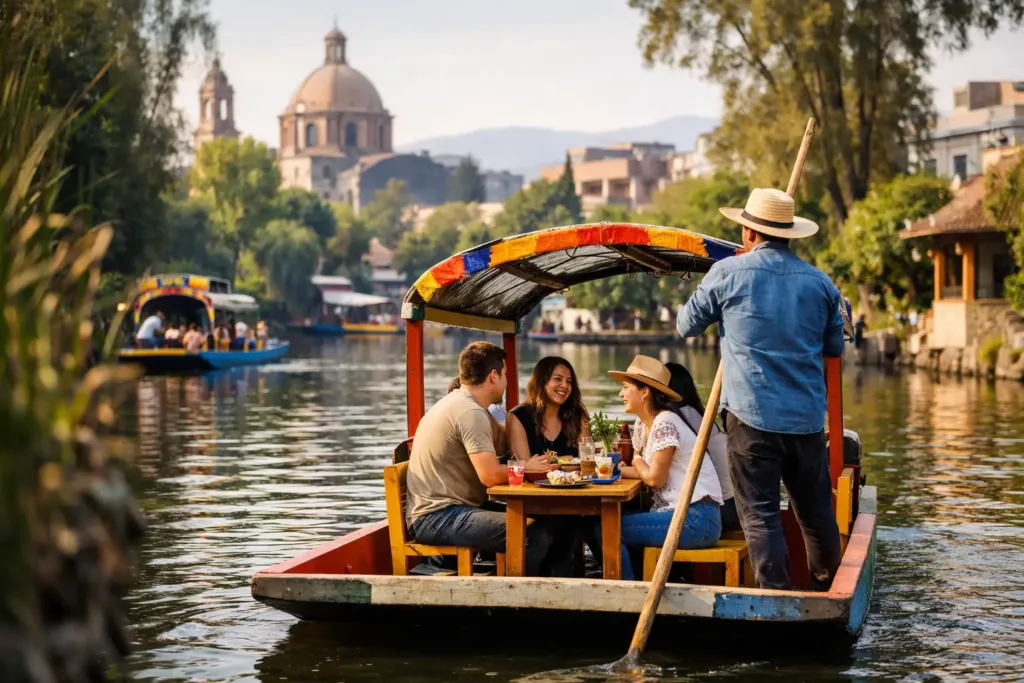
The first thing you notice on a Xochimilco boat tour is not the color of the trajineras, though there is plenty of that. It is the shift in pace. Mexico City’s traffic, concrete, and packed sidewalks give way to narrow canals, willow trees, and the steady sound of a wooden pole meeting water. For a few hours, the city feels less like a capital of 20 million people and more like a living landscape with its own rituals.
Xochimilco can be boisterous, especially on weekends. It can also be quiet, deeply local, and unexpectedly moving. The difference comes down to when you go, where you board, and whether you treat the canals as a party backdrop or a place worth paying attention to.
Why Xochimilco Still Matters
Xochimilco is one of the last visible traces of the lake system that once shaped the Valley of Mexico. Long before the city spread across the basin, canals connected agricultural plots known as chinampas, often described as floating gardens. They are not actually floating, but they remain an ingenious system of fertile, human-made islands built into shallow water.
That history is not decorative. Farmers still cultivate parts of the area, and the canals support birds, plants, and the endangered axolotl, the small salamander that has become an unlikely Mexico City icon. A boat ride is fun, certainly, but it also puts you inside a fragile landscape facing pressure from pollution, development, and water loss.
This is why a good visit holds two ideas at once: enjoy the music, food, and bright-painted boats, but remember that Xochimilco is more than an attraction. It is a working cultural landscape and a UNESCO World Heritage site with real stakes.
Choosing the Right Xochimilco Boat Tour
Most visitors hire a trajinera, a flat-bottomed wooden boat with a painted arch and a name across the top. The experience is usually private to your group, not a ticketed group excursion. You rent the boat and its boatman by the hour, then decide how relaxed or festive the ride should be.
For a first visit, Embarcadero Nuevo Nativitas is a practical choice. It is one of the better-known launch points, with plenty of boats and vendors nearby. That convenience also means more crowds, especially on Saturday and Sunday afternoons. If you are traveling with friends and want the full social energy of Xochimilco, this can be exactly right.
If you prefer a quieter route, ask about departing from Cuemanco or taking a less trafficked canal route. Conditions and access can vary, so it is worth confirming details when you arrive. The important thing is to be clear about the mood you want. A couple celebrating an anniversary, a family with young kids, and a group of friends meeting for drinks may all want very different versions of the same outing.
Before stepping aboard, agree on the duration and total price for the boat. Rates can change with the season, departure point, day of the week, and demand. Ask whether the quote is for the whole trajinera or per person, how many hours it covers, and whether there are any additional fees. Keep the conversation friendly but specific. In Xochimilco, clarity at the dock makes the rest of the afternoon much easier.
How long should you go?
Two hours is enough for a quick introduction, particularly if you have other plans that day. Three hours is the sweet spot for most travelers: time to settle in, eat, listen to music if you choose, and move beyond the busiest stretch of canals. Four hours or more works well for groups who want a leisurely lunch on the water.
More time is not always better. On a hot afternoon, with loud music and a full cooler, a long ride can become tiring. If your ideal day involves conversation, photographs, and a little calm, book enough time to drift rather than overcommit.
What to Eat and Drink on the Water
Part of the pleasure is that the canals come to you. Vendors glide alongside selling elote, quesadillas, tacos, snacks, beer, micheladas, and sweets. You may also see boats offering mariachi, marimba, or norteño music. A floating market is a fitting image for a place built around waterways.
Buying from passing vendors is easy and fun, but quality and prices vary. Bring cash in small bills, ask the price before ordering, and choose food that feels freshly prepared. A hot quesadilla made on the boat beside yours can be one of those simple, only-in-Mexico-City lunches. If you would rather control the menu, bring a picnic from your neighborhood: fruit, pastries, sandwiches, sparkling water, and a few shareable snacks travel well.
Alcohol is common on trajineras, but it does not need to define the experience. Daytime rides with mineral water, tamarind candy, and a well-packed picnic can feel just as festive. If you do bring drinks, carry out every bottle, can, and wrapper. The canals have enough to contend with without becoming a bin for a long afternoon.
The Best Time to Go
Weekday mornings are the closest thing to a secret, though locals know them well. The light is softer, boat traffic is lower, and you have a better chance of hearing birds and water between passing songs. This is the version of Xochimilco that suits photographers, remote workers taking a true day off, and travelers who want space to absorb the setting.
Weekends are louder and more communal. Sundays in particular bring families, birthday celebrations, and large groups. There is an infectious energy to it, and it can be wonderful if you arrive expecting it. Go early if you want a bit more room, or embrace the afternoon if you are after the classic, music-filled scene.
Rainy season brings dramatic skies and greener edges along the canals, but afternoon showers are common. A light rain jacket is smarter than assuming the painted canopy will keep everyone dry. In cooler months, bring an extra layer. Being on the water changes the temperature more than many visitors expect.
A Few Local Etiquette Notes
A trajinera ride is shared space even when your boat is private. Boats pass close together, musicians work for tips, and vendors are earning a living. A polite no is enough when you do not want to buy something or hire a band. If you do request music, confirm the price and song count first, then tip according to the experience.
Avoid treating the canals as a stunt venue. Standing on the edges, jumping between boats, and leaving trash behind create problems for everyone. The most memorable Xochimilco days tend to be the ones with less performance and more presence: a good meal, a favorite song drifting from another boat, a glimpse of cultivated shoreline, and a stretch of water that goes quiet.
Pair it with a slower Mexico City day
Xochimilco sits far south of Roma and Condesa, so plan for the transit time. Rather than squeezing it between museum reservations, make it the center of the day. Start early, have breakfast before heading out, and leave the evening open for a simple dinner back in the city.
At Casa Aimée, we often think the best Mexico City plans leave room for this kind of contrast. One day can move from café tables and galleries to canals that preserve an older geography of the city. You do not have to rush through every landmark to understand where you are.
Bring curiosity, cash, sunscreen, and a willingness to let the route unfold slowly. When the boat turns onto a quieter canal and the noise drops away, Xochimilco offers something rarer than a checklist moment: a chance to see Mexico City breathing at water level.