
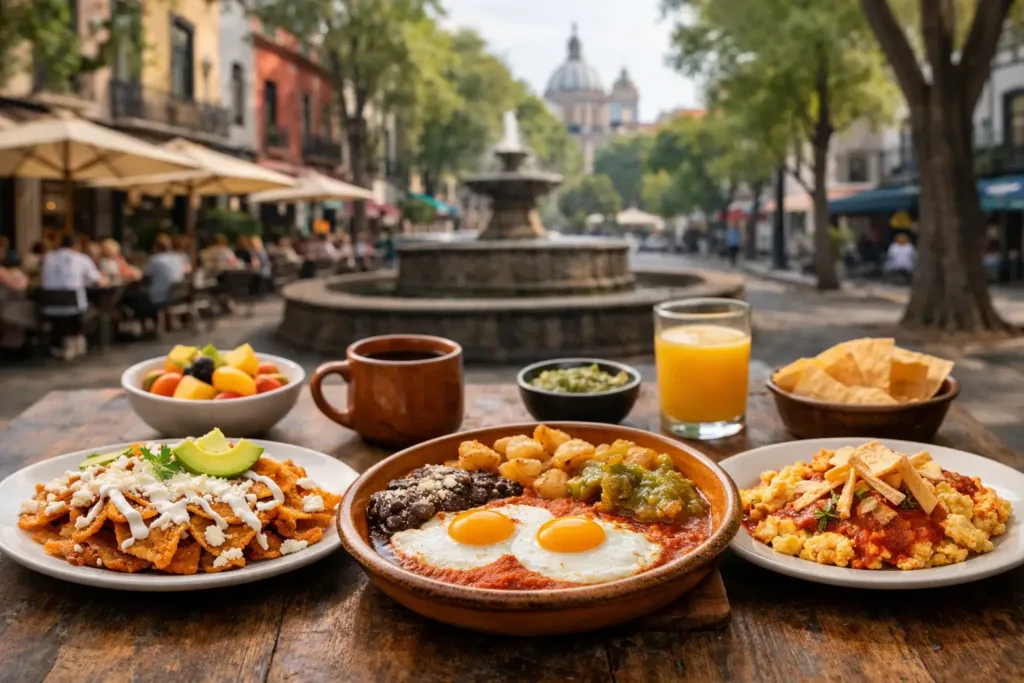
Mexico City does not do a rushed, interchangeable breakfast. Traditional Mexican breakfast dishes are built around texture, heat, corn, chile, and the small decisions that make a morning feel personal: green or red salsa, eggs or shredded chicken, café de olla or fresh juice. A good breakfast here can be a ten-minute stop at a market counter, a long Sunday table with family, or the first delicious pause before a day of galleries, parks, and neighborhood wandering.
For visitors, the pleasure is not only in checking off famous dishes. It is in noticing how breakfast changes by time, neighborhood, and mood. The chilaquiles you order after a late night in Roma may be saucier and more elaborate than the crisp, simple plate served at a busy fonda near a morning market. Both belong to the city.
The essential traditional Mexican breakfast dishes
Chilaquiles
Chilaquiles are often the first breakfast travelers seek out, and for good reason. Fried corn tortilla pieces are simmered in red or green salsa, then finished with crema, crumbled cheese, onion, and often a fried egg, beans, chicken, or steak. The best version is a matter of preference, not a universal rule.
If you love a little crunch, ask for them less soaked in salsa. If comfort is the goal, let the tortillas soften into the sauce. Green salsa tends to be bright and tangy, often made with tomatillos; red salsa can be deeper, smokier, or hotter depending on the chiles. In Mexico City, chilaquiles are also a beloved late-morning cure after a long evening, which explains why portions can be generous.
Huevos rancheros and huevos a la mexicana
Huevos rancheros arrive with fried eggs over lightly fried tortillas and salsa, usually with beans on the side. The dish is straightforward, colorful, and satisfying, especially when the yolk runs into the salsa and tortillas. It is a classic worth ordering when you want a full breakfast without too much ceremony.
Huevos a la mexicana are scrambled eggs cooked with tomato, onion, and green chile. Their red, white, and green colors echo the Mexican flag, hence the name. They are less showy than chilaquiles, but deeply familiar and easygoing. With warm tortillas, beans, and a spoonful of salsa, they offer a clear taste of the everyday Mexican home kitchen.
Enchiladas, enfrijoladas, and entomatadas
Breakfast menus in Mexico City often blur the line between morning and afternoon food, which is excellent news for anyone who prefers a savory start. Enchiladas are tortillas rolled around a filling, covered in chile sauce, and topped with cheese, crema, and onion. They might be filled with chicken, cheese, potatoes, or simply served folded in a generous layer of salsa.
For a gentler option, choose enfrijoladas. Tortillas are coated in a silky bean sauce, making them earthy, comforting, and less spicy than many enchiladas. Entomatadas use a tomato-based sauce instead. These dishes are cousins, not copies, and each kitchen gives them a different balance of sauce, filling, and garnish. Ask what is made that morning and follow the house specialty.
Tamales and atole
A tamal is one of the city’s great early-day pleasures: masa dough steamed in a corn husk or banana leaf, usually filled with salsa and meat, vegetables, or cheese. Sweet tamales are also common, sometimes tinted pink or flavored with pineapple, cinnamon, or raisins. You will see tamales sold from street carts and market stalls in the morning, often alongside a steaming cup of atole.
Atole is a warm, thick drink made from masa, water or milk, and sugar, with flavors such as vanilla, chocolate, strawberry, or guava. It is filling enough to count as breakfast when paired with a tamal. The combination has deep roots in Mexico’s corn-based food traditions and remains wonderfully practical on a cool or rainy Mexico City morning.
The famous phrase “tamales oaxaqueños” may appear on signs, but tamales vary enormously across Mexico. In the capital, you can find styles from many states, reflecting the city’s role as a gathering place for regional cooking. That range is part of the experience. A banana-leaf tamal with mole has a very different personality from a small corn-husk tamal with salsa verde.
Molletes
Molletes are humble, generous, and ideal for a leisurely breakfast. A bolillo roll is split open, spread with refried beans, topped with melted cheese, and usually served with pico de gallo. They are not complicated, but the contrast of crisp bread, creamy beans, salty cheese, and fresh tomato is hard to improve upon.
Some cafés add chorizo, avocado, or eggs, though the classic version needs very little. Molletes are especially useful when sharing breakfast with friends who have different appetites. They also offer a mild entry point for anyone still building confidence with Mexican salsas.
Quesadillas for breakfast
In Mexico City, a quesadilla can be a breakfast, snack, or late dinner, depending on where and when you find it. At a market or street stand, a cook may press fresh masa into a tortilla, fill it with ingredients such as flor de calabaza, huitlacoche, mushrooms, potatoes, or chicharrón prensado, then fold and cook it on a comal or fry it until crisp.
One local detail regularly surprises visitors: in the capital, asking for a quesadilla does not always guarantee cheese. Say “con queso” if cheese is what you want. It is a small linguistic lesson and a useful one. Add salsa carefully at first, because heat levels are unpredictable and a beautiful-looking green sauce can be far fiercer than expected.
Sweet starts: pan dulce, chocolate, and fruit
Not every Mexican breakfast begins with salsa. Pan dulce is the broad, joyful category of sweet breads found in bakeries across the city. Conchas, with their shell-patterned sugar topping, are the most recognizable, but a bakery case may hold dozens of shapes and flavors. A warm concha with coffee is a quiet luxury, particularly when eaten at a neighborhood table before the streets get busy.
Hot chocolate, often whisked until frothy, is another traditional companion to sweet bread. Mexican chocolate is typically made with cacao, sugar, and cinnamon, creating a grainier, more aromatic drink than many American versions. Fresh fruit plates and juices are also common, though they are best treated as part of breakfast rather than its whole story. The richer dishes of corn, beans, eggs, and sauce are where the morning meal shows its full character.
How to order breakfast like a local
Start by looking for a place that is busy in the morning with regulars, not merely a beautiful room. A market fonda may have a short menu written on a board and one specialty that changes daily. A classic café may offer a broader selection and more time to linger. Neither is inherently better. It depends on whether you want speed, regional cooking, a dependable favorite, or a long conversation over coffee.
Breakfast usually comes with choices. You may be asked which salsa you prefer, how you want your eggs cooked, and whether you would like beans, tortillas, or bread. A simple “¿pica?” asks whether a salsa is spicy. If you do not eat meat, say “sin carne,” but confirm the beans as well, since they may be prepared with lard. For vegan travelers, markets can be rewarding but require a little more questioning; squash blossom, mushrooms, potatoes, and beans can work beautifully when prepared without dairy or animal fat.
In Colonia Roma and nearby neighborhoods, it is easy to find polished brunch menus, but leave room for the unpolished classics too. The most memorable breakfast might be a plate of enfrijoladas at a family-run comedor, a tamal eaten standing at a cart, or a concha carried out of a bakery in a paper bag.
Give yourself an unhurried morning and order something you have not had before. Mexico City rewards curiosity, especially before noon, when the comals are hot, the coffee is fresh, and the day still feels full of possibility.