
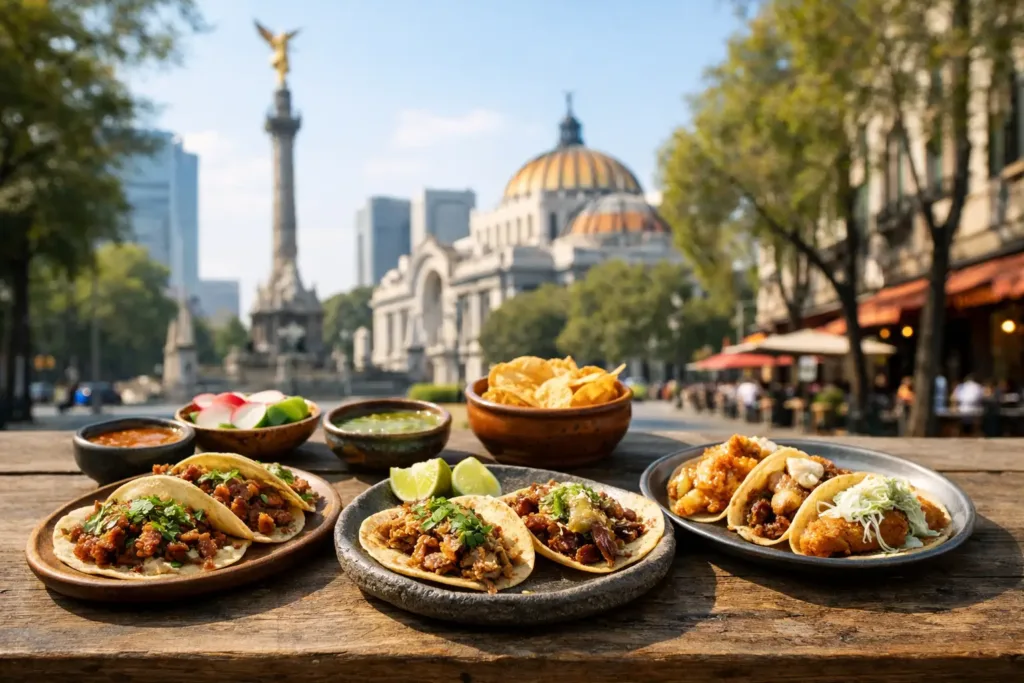
A Mexico City taco is rarely just a tortilla with something folded inside. It is a time of day, a cooking method, a particular salsa, and often a neighborhood ritual. Learning the key Mexico City taco styles gives you a much better way to eat here: not by hunting for one mythical “best taco,” but by noticing what the taquero does well, what the crowd is ordering, and why a certain taco belongs to midnight rather than noon.
The city’s taco culture is wonderfully broad. Some tacos come straight from a hot plancha, some are shaved from a spinning trompo, and others arrive from a steaming basket. The best approach is curious rather than rigid. Order one or two at a time, try the house salsas carefully, and let the rhythm of the stand guide you.
Mexico City taco styles start with the griddle
Tacos al pastor
Al pastor is the taco most visitors recognize, and for good reason. Pork is marinated with dried chiles, achiote, spices, and often a touch of pineapple, then stacked on a vertical spit called a trompo. The taquero shaves thin ribbons of caramelized meat directly onto a small corn tortilla, usually catching a sliver of pineapple in the same motion.
A great pastor taco balances sweet, smoky, tangy, and rich flavors without becoming heavy. Look for crisp, deeply browned edges and meat that remains juicy at the center. Onion, cilantro, and salsa are customary, but the first bite is worth trying with a light hand on the condiments.
Pastor is an excellent evening choice, especially after a walk through Roma, Condesa, or Centro. It is also the most forgiving style for first-time taco eaters. Still, no two trompos taste alike. Some lean bright and pineapple-forward; others are earthier, with more chile and char.
Suadero
Suadero is one of Mexico City’s defining tacos. It comes from a tender cut of beef found between the belly and leg, slowly cooked in fat until soft, then finished on the plancha for browned, crisp-edged bits. The texture is the point: lush and silky, with a gentle beef flavor rather than the chew of steak.
It can look modest on the plate, often dressed only with onion and cilantro, but suadero rewards attention. A sharp green salsa or a little lime cuts through its richness beautifully. If you see locals ordering several tacos with quiet confidence at a late-night stand, suadero is often part of the order.
Bistec, cecina, and the plancha family
Bistec is thinly sliced beef cooked fast on a flat griddle. It is more direct and savory than suadero, with browned edges and a firmer bite. It is frequently paired with nopales, grilled onions, or cheese, depending on the taquería’s style.
Cecina, a salted and sometimes lightly cured beef, is another plancha favorite. Its flavor is deeper and more concentrated, while its texture can be crisp at the edges. Both are good choices when you want something less rich than suadero but still unmistakably taco-stand satisfying.
Campechanos and longaniza
A campechano is a mixed taco, commonly combining bistec and chorizo or longaniza. It is for the indecisive eater and the maximalist alike: beef brings char and substance, while the sausage adds spice and fat. The exact combination varies by stand, which is part of the appeal.
Longaniza is a fresh Mexican sausage, often red from chiles and spices. It is crumblier and more boldly seasoned than many versions of chorizo. On its own, it can be intense, so it is especially good with a bright salsa, chopped onion, and plenty of cilantro.
The tacos that follow the city’s clock
Tacos de canasta
Tacos de canasta are made for mornings and long afternoons. Known as “basket tacos,” they are filled, stacked, wrapped, and kept warm in a cloth-lined basket. The tortillas become soft and lightly oily from steam and seasoning, creating a completely different experience from a crisp-off-the-griddle taco.
Classic fillings include potato, beans, chicharrón prensado, and adobo. They are usually small, affordable, and meant to be eaten in multiples. A vendor may spoon salsa over the whole order, but you can always ask for it on the side if you prefer to control the heat.
These tacos travel well and are often sold from bicycles, carts, and small street setups. They are not about theatrics. They are comforting, practical, and deeply woven into the everyday pace of the city.
Tacos de guisado
Tacos de guisado turn home-style stews into lunch. At a guisado counter, you will usually see trays of cooked dishes behind glass: chicken in mole, pork in green sauce, lentils, potatoes with chorizo, zucchini blossoms, rice, meatballs, or eggs in salsa. Your taco is assembled on the spot, sometimes with rice or beans underneath.
This is one of the best ways to taste the range of Mexican cooking beyond grilled meat. It also suits travelers who want a filling midday meal with more vegetables and variety. The trade-off is that texture matters less here than in a pastor or suadero taco. You are choosing for the stew, sauce, and sense of a well-made family lunch.
Barbacoa for the morning
Sunday mornings in Mexico City often call for barbacoa. Traditionally slow-cooked lamb or mutton, barbacoa is tender, savory, and fragrant, usually served in corn tortillas with onion, cilantro, lime, and a serious salsa. A bowl of consommé on the side is common and particularly welcome on a cool or slow morning.
Barbacoa is not limited to Sundays, but the timing carries meaning. This is a meal for lingering, recovering from a late night, or gathering with friends and family before the day begins. Ask whether the meat is maciza, a leaner cut, or whether the stand offers ribs, belly, or other richer options.
Birria, a newer all-day craving
Birria, originally associated most strongly with Jalisco, has become a major presence in Mexico City. The meat, often beef in the capital, is stewed with dried chiles and spices until tender, then tucked into tortillas. Some versions are fried on the griddle with melted cheese, creating the crisp, rich quesabirria style many travelers know.
It is delicious, but it is not the city’s oldest taco shorthand. Think of it as one compelling voice in a much larger taco conversation. For a lighter first meal, choose canasta or guisado tacos instead. For a late lunch with a little ceremony, birria and consommé make sense.
How to order with confidence
At a busy taquería, the line moves quickly because regulars know the language of the counter. Start by saying how many tacos you want and name the filling. “Con todo” usually means onion, cilantro, and the standard garnish, though each place has its own version. If you want only the meat and tortilla, say “solo carne.”
Salsa deserves respect. Red salsas can be smoky and moderate or fiercely hot; green salsas might be fresh and mild or packed with raw chile. Start with a small amount, especially at a stand you do not know. Radishes, grilled onions, cucumber, and lime are there to reset your palate between bites, not merely to decorate the plate.
Corn tortillas are the default for most classic tacos, and many stands will give you a second tortilla without being asked, especially for a juicy filling. Flour tortillas are less central to everyday Mexico City taco culture, though they have their place in northern Mexican cooking and certain specialty spots.
Let the neighborhood set the pace
The best taco meal may be a polished counter with excellent ingredients, a crowded street stand with a well-seasoned plancha, or a humble morning basket vendor. Price and polish do not tell the whole story. Fresh turnover, a clean workspace, tortillas moving constantly, and a crowd that includes local regulars are better signals.
In Roma and nearby neighborhoods, it is easy to find thoughtful takes on familiar classics alongside late-night institutions. But make room for the ordinary, too: the taco you eat standing up after a gallery visit, the lunch counter where the stew smells like someone’s kitchen, the barbacoa that resets a Sunday morning. That is where the city starts to feel less like an itinerary and more like a place you know how to inhabit.
When you find a taco that makes you pause, order another before you leave. In Mexico City, the most useful food memory is often not an address. It is the feeling of knowing exactly what to ask for next time.