
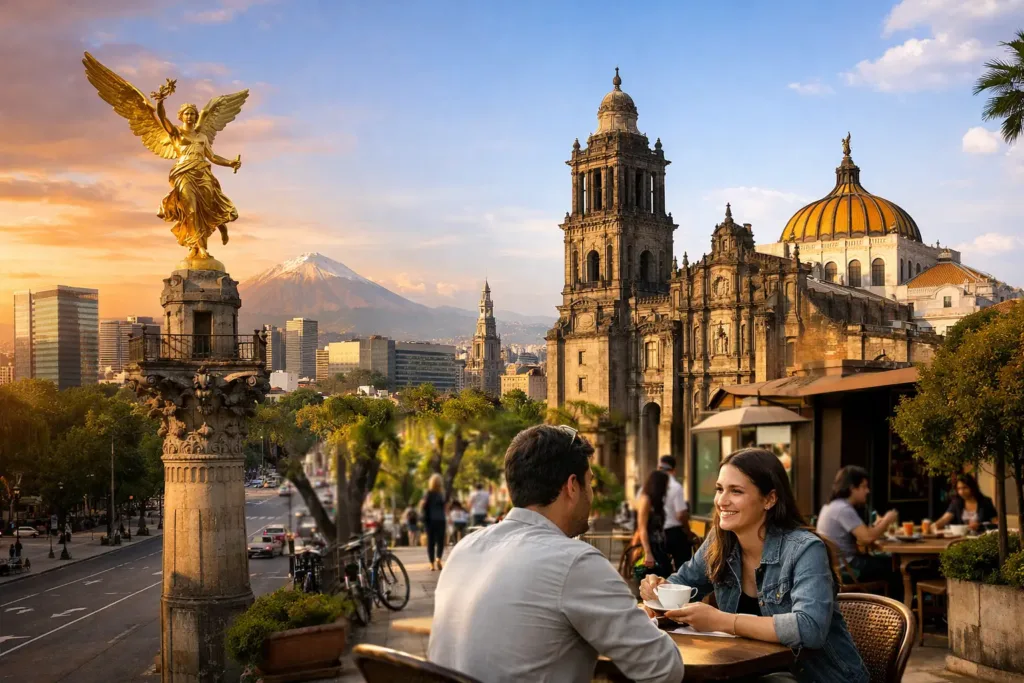
Mexico City changes its mood with the calendar. One month, purple jacaranda petals soften the sidewalks of Roma and Condesa; another, afternoon rain sends everyone toward a long lunch, a gallery, or a cozy coffee bar. Deciding when to visit Mexico City is less about finding a single perfect week and more about choosing the version of the city that fits your pace.
At 7,350 feet above sea level, CDMX has a temperate highland climate rather than the tropical heat many visitors expect. Days can be brilliantly sunny, evenings can call for a jacket, and rain often arrives on a schedule of its own. The cultural calendar matters just as much as the forecast, especially if you are drawn to food, art, design, and the pleasure of an unplanned neighborhood afternoon.
The Best Time to Visit Mexico City for Most Travelers
For many visitors, late February through April is the sweet spot. The dry season is still in full swing, skies are generally clear, and daytime temperatures are comfortable for walking between museums, markets, parks, and dinner reservations. It is the kind of weather that makes a slow morning in Parque México and a long evening in Juárez feel equally inviting.
March and early April are especially beautiful because jacaranda season transforms much of the city. Their violet blooms frame avenues and side streets, creating those rare urban scenes that feel both everyday and cinematic. This is a wonderful time for photographers, first-time visitors, and anyone who wants to spend more of the day outside.
The trade-off is demand. Spring brings visitors during school breaks and around Easter, known locally as Semana Santa. Popular cultural sites, restaurants, and weekend neighborhoods can feel busier. If you value a quieter rhythm, aim for late February, early March, or late April rather than holiday weeks.
When to Visit Mexico City by Season
Winter: December through February
Winter is dry, sunny, and one of the easiest seasons for exploring on foot. Daytime temperatures often sit in the pleasant 60s and low 70s Fahrenheit, though mornings and nights can feel surprisingly cool. Pack layers, especially if your plans include early coffee runs, rooftop drinks, or an evening in Coyoacán.
December has a festive, family-centered energy. Neighborhood streets glow with lights, bakeries fill with seasonal sweets, and the city feels celebratory without losing its everyday character. The period around Christmas and New Year can be quieter in business districts while dining rooms and cultural spaces remain lively. It is a good choice for travelers who prefer crisp weather over heat.
January and February are excellent for remote workers and longer stays. The weather supports a dependable daily rhythm: walk in the morning, work from a café or shared workspace, then head out for dinner without worrying about rain. February also brings a lively cultural pulse, from contemporary art activity to celebrations around Día de la Candelaria.
Spring: March through May
Spring is arguably the city at its most photogenic. Jacarandas peak around March and April, and dry, bright days make it easy to build a full itinerary without overplanning. This is the season for wandering from Roma Norte to La Condesa, pausing at a gallery, then continuing toward Chapultepec with no particular urgency.
May is warmer and can feel more intense in the afternoon, particularly on sun-exposed streets. It is still a rewarding month, but it is wise to organize your day around the light: museums, markets, or a leisurely lunch during the hottest hours; parks and terraces later on. Rain may begin appearing toward the end of the month, offering a preview of the green season ahead.
Summer: June through August
Summer is the rainy season, but that should not automatically rule it out. Rain in Mexico City often arrives in the late afternoon or evening, rather than lasting all day. Mornings can be bright and clear, making this a smart season for travelers who enjoy a gentler, less crowded city and do not mind adjusting plans after 4 p.m.
The rain turns parks, tree-lined streets, and planted balconies vividly green. There is a particular pleasure to a wet afternoon in Roma: a warm meal, a good book, the sound of rain against the windows, then a return to the street once the clouds break. Bring a compact umbrella and shoes that can handle slick sidewalks.
Summer also rewards travelers with flexible schedules. Book major outdoor activities early, leave room for indoor cultural stops later, and avoid treating a brief storm as a setback. In a city this layered, rain can simply be an invitation to linger somewhere interesting.
Fall: September through November
Early fall remains rainy, with September often among the wettest months. It is also a meaningful time to witness Mexican civic and cultural life. Around Independence Day on September 16, the city fills with flags, food traditions, and public celebrations. The night of September 15 is particularly spirited in central areas.
By October, the weather begins to settle. Days remain mild, greenery is at its fullest, and the city starts shifting toward its most atmospheric cultural season. Late October and early November bring Día de Muertos, when altars, marigolds, pan de muerto, and public installations create a moving, distinctly local sense of occasion.
This period is deeply worthwhile, but it requires thoughtfulness. Día de Muertos is not simply a costume event or a photo opportunity. Seek out neighborhood offerings, markets, museums, and public displays with curiosity and respect. If you visit during these dates, reserve space for the city’s quieter rituals as well as its larger events.
Choose Your Dates Around What You Want to Feel
If your priority is long walks, outdoor meals, and clear skies, choose February through April. If you want green streets, a more relaxed pace, and are comfortable with afternoon showers, June through August can be unexpectedly lovely. For culture-rich travel, late October through early November offers a memorable window, while December brings warmth of a different kind: seasonal food, family traditions, and cool sunny days.
For creative professionals and remote workers, the best timing may be less about weather than rhythm. January, February, May, and November often offer a balanced experience outside the busiest holiday periods. These months leave room for both focused workdays and spontaneous nights out, which is often the real luxury of spending time in CDMX rather than racing through it.
Practical Weather Notes for Mexico City
Mexico City’s elevation catches many visitors off guard. Sun can feel strong even when the air is cool, so sunscreen is useful year-round. The city’s weather also shifts quickly from neighborhood to neighborhood and hour to hour, particularly in the rainy season. A light layer, water bottle, and small umbrella will serve you better than a heavy, overly packed suitcase.
Air quality can vary, especially during the dry season. Most days will not affect a typical visitor’s plans, but travelers with respiratory sensitivities may want to check local conditions and keep strenuous outdoor exercise flexible. A museum afternoon or a neighborhood lunch is never a disappointing alternative here.
Major holidays and large public events can change traffic, museum hours, and restaurant availability. That is not necessarily a reason to avoid them. It simply means planning the essential pieces of your day, then leaving the rest open for the small discoveries that make a trip feel personal.
The best time to come is the time that lets you notice the city at street level: the morning bakery line, the changing light on a leafy avenue, the table you stay at longer than planned. Pick your season, bring curiosity, and let Mexico City set some of the pace.