
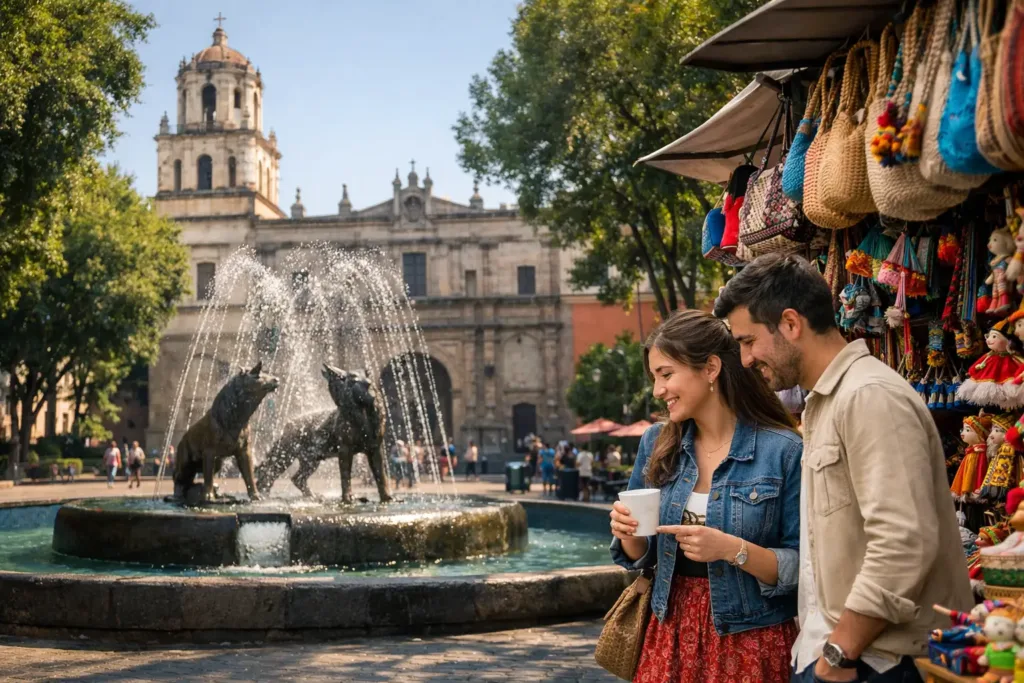
Coyoacán has a way of slowing the city down. A jacaranda-lined street opens onto a colonial plaza, someone is selling warm churros nearby, and a guitarist’s notes drift past the fountain. If you are deciding what to do in coyoacan, do not try to rush through it as a checklist. This is a neighborhood best experienced between museum visits, long lunches, and unplanned turns down quiet residential streets.
Once a separate village south of the historic center, Coyoacán still feels distinctly itself. Its cobblestones, courtyard homes, independent bookstores, and deeply rooted food culture invite a different rhythm from the polished energy of Roma or Condesa. Plan for a full day if you can. The best moments here tend to happen when you leave room for them.
Start at Jardín Centenario and Plaza Hidalgo
Begin where Coyoacán gathers: the twin plazas of Jardín Centenario and Plaza Hidalgo. Jardín Centenario is recognizable for its central coyote fountain, a nod to the Nahuatl name often interpreted as “place of coyotes.” Around it, benches fill with families, students, dog walkers, and visitors taking a break from the city’s faster neighborhoods.
Cross toward Plaza Hidalgo, where the parish of San Juan Bautista anchors the scene. The church is worth stepping into for its ornate interior and sense of stillness, especially on a weekday morning. Outside, the square is less about a landmark photo and more about watching the neighborhood move around you. Grab a coffee from a nearby café, take a seat under the trees, and let the day begin without an agenda.
Weekends are lively, with street vendors, performers, and a steady flow of families. That energy can be fun, but visitors who prefer a quieter, more reflective Coyoacán should arrive early or visit midweek.
Visit Frida Kahlo’s Casa Azul, with a plan
For many travelers, the Museo Frida Kahlo is the reason Coyoacán is on the itinerary. Known as Casa Azul for its saturated blue walls, the home offers a personal view of Frida Kahlo’s life, work, relationships, clothing, collections, and physical world. It is moving precisely because it feels intimate rather than monumental.
It also gets very busy. Reserve ahead when possible, choose an earlier entry time, and give yourself enough time to take in the house and garden without trying to photograph every room. The museum rewards attention: the pre-Hispanic objects, the studio details, the vivid colors, and the garden all add texture to the story beyond the paintings.
Casa Azul is essential for first-time visitors with an interest in art and Mexican cultural history. But it is not the only reason to come. If tickets are unavailable, do not treat the day as lost. Coyoacán is full of worthwhile alternatives, and a less scheduled visit can be just as memorable.
Add Anahuacalli for a different side of Diego Rivera
If you have more time, pair Casa Azul with Museo Anahuacalli. Designed by Diego Rivera, this volcanic-stone building holds his extensive collection of pre-Hispanic art and feels dramatically different from Frida’s domestic blue house. Its architecture alone is worth the trip.
The two museums are not next door to each other, so this works best when you are comfortable using a ride-share or taxi between stops. Anahuacalli is often less crowded and especially rewarding for travelers drawn to design, architecture, and ancient Mexican art.
Make the market your lunch plan
Coyoacán Market is one of the most satisfying answers to what to do in coyoacan when hunger arrives. This is a working neighborhood market, not a food hall designed for quick photos. You will find produce, flowers, spices, cookware, juice stands, and prepared-food counters serving the kind of meals that make a long afternoon possible.
Come with curiosity and a little flexibility. A tostada piled high with seafood or chicken, a plate of chilaquiles, fresh tortillas, or a fruit juice can be a far better lunch than a rushed reservation. Look for a counter with local diners and a confident, busy rhythm. If you do not know what to order, ask what is most popular that day.
For something sweet, Coyoacán is also known for churros, ice cream, and small bakeries. A classic churro stop is part of the local ritual, though lines can build on weekends. If you would rather sit, choose a café near the plazas and let lunch stretch into an unhurried afternoon.
Wander the streets beyond the main square
The central plazas are beautiful, but Coyoacán becomes more interesting a few blocks away. Walk toward the quieter streets around Santa Catarina, where colorful facades, stone paths, small gardens, and older homes create a more residential feel. This is where the neighborhood’s village character feels least staged.
Plaza Santa Catarina itself is small and lovely, framed by the yellow chapel of the same name. It is a good place to pause after the market, particularly if you want a calmer setting than Plaza Hidalgo. Nearby streets reward slow walking, but remember that these are people’s homes. Keep voices low, avoid blocking doorways for photos, and treat the neighborhood as lived-in rather than as a backdrop.
Coyoacán is generally easy to walk, though the uneven sidewalks and cobblestones call for comfortable shoes. A compact umbrella is also useful during the rainy season, when afternoon showers can arrive quickly and leave the streets shining.
Choose culture based on your mood
Coyoacán has enough museums and cultural spaces to fill more than one visit. The key is choosing one or two rather than trying to collect them all. Beyond Casa Azul and Anahuacalli, the area has spaces devoted to Leon Trotsky, Mexican popular culture, watercolor, and contemporary programming.
The Leon Trotsky House Museum offers a sharply different historical lens. The house, where Trotsky lived in exile and was assassinated in 1940, remains charged with the political history of the period. It is a thoughtful choice for visitors who want context beyond Mexico’s better-known art icons.
For a lighter stop, browse a bookstore, look for a small gallery, or check whether there is a concert, film screening, or cultural event happening near the plazas. Coyoacán is not always about headline attractions. Sometimes the right cultural plan is simply an hour with a book and a coffee in a sunlit courtyard.
Stay for the evening rhythm
As daylight softens, return to the center for a drink, dinner, or another walk around the plazas. Early evening is one of Coyoacán’s best hours: the crowds loosen, lights come on in the trees, and the neighborhood feels social without becoming rushed.
Choose dinner according to the day you want. A traditional Mexican meal suits travelers looking for depth and ritual, while a casual cantina-style spot works well after a museum-heavy afternoon. Coyoacán has many familiar names, but the smaller places just off the busiest streets can offer more atmosphere and a gentler pace. Ask about seasonal dishes, local moles, or a house specialty instead of defaulting to the safest item on the menu.
If you are visiting from central neighborhoods such as Roma, leave enough time for traffic on the return journey. Coyoacán is very manageable by ride-share, taxi, and public transit, but Mexico City distances can look shorter on a map than they feel after a full day of walking.
A better way to spend your Coyoacán day
The temptation is to arrive for Frida Kahlo, eat a churro, take a few photos, and move on. There is nothing wrong with those classics, but Coyoacán offers more when you give it time. Build the day around one major museum, one market meal, and one long wander. Everything else can be decided by the light, the weather, and what catches your eye.
That is the real pleasure of Coyoacán: it does not ask you to optimize every hour. Find a bench, order the thing you cannot pronounce yet, and follow the street that looks a little quieter than the rest. The neighborhood will do the rest.