
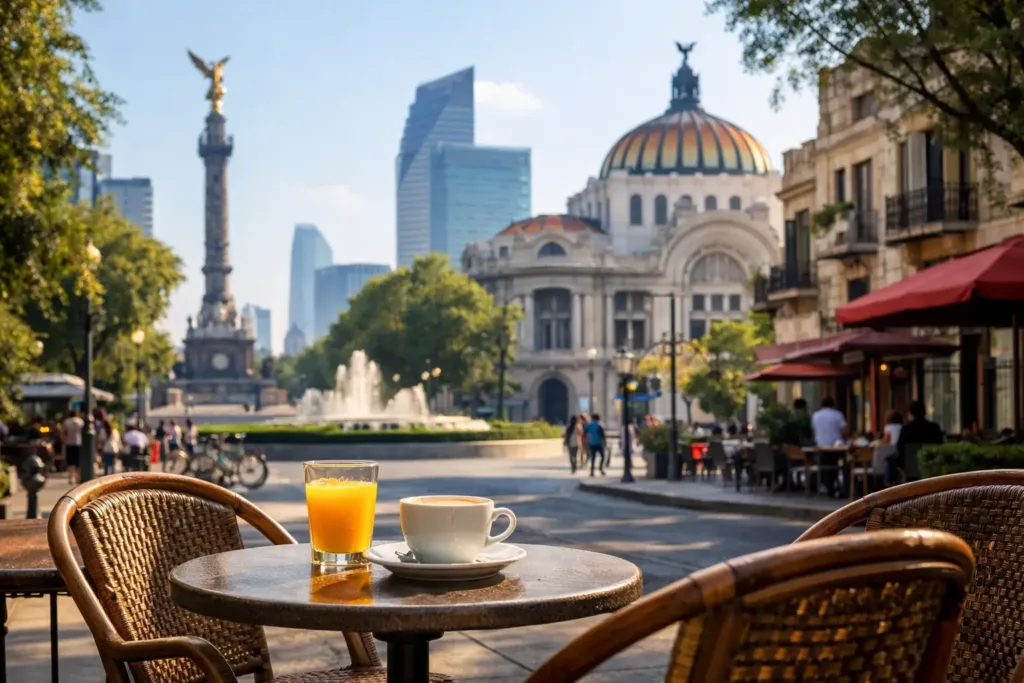
Mexico City can change character in the span of a few blocks. One morning you are walking past Art Deco facades and coffee bars opening onto tree-lined streets, and by afternoon you are in a grander, faster, more polished part of town where the rhythm feels completely different. That is why the best neighborhood to stay in Mexico City depends less on a postcard image and more on how you want your days to unfold.
If your trip is about good walking, memorable meals, design-forward spaces, and the feeling that the city is meeting you at street level, your neighborhood choice matters as much as any museum or reservation. Some areas invite slow mornings and spontaneous evenings. Others are better for business dinners, big avenues, and a more structured pace. The right answer is rarely universal, but it becomes clear once you know what kind of traveler you are.
How to choose the best neighborhood to stay in Mexico City
Start with your natural rhythm. If you like to wake up, grab a coffee nearby, work for a few hours, then walk to lunch and stay out through dinner, you will want a neighborhood with daily life built into the streets. If you prefer a quieter, more residential feel with a deeper sense of history, your ideal base will look different.
It also helps to think in terms of atmosphere, not just attractions. Mexico City is large, and traffic can shape your experience quickly. Staying somewhere that fits your pace can make the city feel intuitive instead of overwhelming. A neighborhood that keeps your favorite kinds of places within a 10 to 20 minute walk often feels better than one that simply looks impressive on a map.
Roma is often the best neighborhood to stay in Mexico City
For many travelers, Roma is the sweet spot. It feels stylish without trying too hard, central without feeling overly corporate, and busy in a way that still leaves room for neighborhood life. You can spend a full day here moving between bakeries, galleries, wine bars, taquerías, leafy plazas, and excellent restaurants without ever feeling like you are checking items off a list.
Roma works especially well for visitors who want to feel plugged into the city’s creative energy. The architecture is one part of the appeal, but the real draw is the mix. Old houses sit next to contemporary concepts. A low-key lunch spot can turn into one of your favorite meals of the trip. You might plan one thing and end up following the neighborhood instead.
There are trade-offs. Roma can be lively, and some pockets are louder than others, especially on weekends. Not every street has the same mood. Roma Norte tends to be busier and more social, while parts of Roma Sur feel a little calmer and more residential. If you like having culture, food, and walkability close at hand, though, Roma is one of the most rewarding places to base yourself.
Condesa suits travelers who want ease and green space
Condesa is often mentioned alongside Roma, and the two do share a certain lifestyle appeal. But Condesa has its own personality. It feels more polished, a bit more relaxed, and slightly more residential overall. The parks shape the atmosphere here. Tree cover is generous, streets are pleasant to walk, and the neighborhood often feels softer around the edges.
This is a strong choice for travelers who care about routine. If your ideal day includes a morning run, a leisurely breakfast, a few hours of remote work, and a dinner that does not require crossing half the city, Condesa fits naturally. It is easy to settle into.
The trade-off is that Condesa can feel less surprising than Roma. It is beautiful and comfortable, but some visitors find it a little more contained. If you want your days to include more contrasts, more independent galleries, or a rougher-around-the-edges creative pulse, Roma may leave a stronger impression. If comfort, walkability, and greenery rank highest, Condesa is hard to beat.
Polanco makes sense for a more polished, high-end trip
Polanco is not usually the first answer for every traveler, but it is the right answer for some. It is more refined, more spacious, and more conventionally upscale. The streets are wider, the retail is more luxury-oriented, and the overall feeling is less bohemian than Roma or Condesa.
If your trip revolves around business meetings, formal dining, major museums, and a cleaner, more structured urban experience, Polanco can work very well. It is also a good fit for travelers who prefer a neighborhood that feels orderly and established rather than eclectic.
What Polanco gives you in polish, it may give you less of in intimacy. It is not the neighborhood most people choose for that casual, local, wander-all-day feeling. You can certainly eat well and spend time beautifully here, but the street life lands differently. For experience-driven travelers who want a stronger sense of everyday Mexico City culture at eye level, Roma or Condesa often feel more alive.
Coyoacán is ideal if you want history and a slower pace
Coyoacán offers a very different version of the city. It is older in feel, deeply atmospheric, and shaped by plazas, markets, and cultural landmarks rather than trend cycles. The pace is slower, and the neighborhood invites lingering. If you are drawn to history, traditional architecture, and a more romantic rhythm, Coyoacán can be a lovely base.
This area appeals to travelers who do not need to be in the center of every scene. You come here for mornings in shaded squares, long lunches, museum afternoons, and the pleasure of moving through a neighborhood that still feels rooted in its own identity.
The obvious trade-off is location. Depending on your plans, staying here can mean longer rides to other parts of the city. If your itinerary is concentrated in central neighborhoods, Coyoacán may feel less convenient. But if your goal is depth rather than coverage, it can offer one of the most memorable stays in Mexico City.
Juárez and San Miguel Chapultepec are worth considering
If you already know Roma and Condesa, or want something a little less expected, Juárez and San Miguel Chapultepec deserve a look.
Juárez has evolved quickly. Some streets feel energetic and design-minded, with interesting restaurants, cocktail spots, and a mix of old buildings and newer concepts. It can feel a bit more urban and uneven than Condesa, but that is also part of the appeal. For travelers who like being near Reforma while still having personality around them, Juárez can be a smart choice.
San Miguel Chapultepec is quieter and more understated. It is close to Chapultepec Park and has a residential calm that appeals to travelers who want access without constant stimulation. It is not as packed with options as Roma or Condesa, but that can be a strength if you want room to breathe.
So what is the best neighborhood to stay in Mexico City?
For most experience-led travelers, Roma is the strongest all-around choice. It captures the balance that many people hope to find in Mexico City – beauty, food culture, walkability, creativity, and a real sense of neighborhood life. It gives you enough energy to feel part of the city and enough texture to keep each day interesting.
Condesa comes close, especially if you value greenery, routine, and a more relaxed version of urban life. Polanco is better for travelers who want polish and predictability. Coyoacán is best when history and atmosphere matter more than centrality. Juárez and San Miguel Chapultepec are excellent alternatives if you want something slightly less obvious.
The truth is that the best neighborhood is the one that matches your pace. Mexico City rewards curiosity, but it also rewards choosing a base that lets you move naturally. If you want to spend your trip walking to great coffee, lingering over lunch, discovering small cultural moments between bigger plans, and feeling like the city is opening up block by block, start in a neighborhood that lives well during the day, not just one that photographs well.
That is often why Roma stays with people. It is not just convenient. It is a place where Mexico City feels close, layered, and easy to return to, even after you have gone home.